
The Tool Desk
Outbyte PC Repair FREEClear out junk files and repair common Windows errorsFree Scan →Outbyte Driver Updater FREEScan for outdated or missing drivers - takes under a minuteDriver Scan →iTechGuides is reader-supported. When you buy through links on our site, we may earn an affiliate commission. As an Amazon Associate I earn from qualifying purchases. Learn more
Meet Jelly, a phone with a 2.4-inch display and Android Nougat: the original Unihertz Jelly was a 2017 Kickstarter smartphone with a 2.45-inch, 240 × 432 touchscreen, 4G LTE, Android 7.0, and a weight of about 60 grams. Jelly offered genuine smartphone features in a credit-card-sized body, but its tiny screen made everyday use difficult.
Jelly was never intended to compete with a conventional flagship. Unihertz designed the phone as a small secondary, travel, fitness, emergency, or distraction-reduction device that could still run Android apps, connect to cellular data, use GPS, and take calls.
Key takeaways
- The original Unihertz Jelly launched through Kickstarter in May 2017 with Android 7.0 Nougat and 4G LTE.
- The display was 2.45 inches with a 240 × 432-pixel resolution, which explains headlines rounding the size to 2.4 inches.
- The standard Jelly reportedly had 1 GB of RAM and 8 GB of storage, while the Jelly Pro increased those figures to 2 GB and 16 GB.
- Jelly could run Android applications, but the tiny touchscreen made typing, reading, browsing, navigation, and video substantially less comfortable.
- As of August 18, 2026, the original Jelly is best treated as a historical or niche backup phone rather than a current primary smartphone.
What was the Unihertz Jelly?
The Unihertz Jelly was an unusually small 4G Android smartphone announced through Kickstarter in May 2017. Launch coverage described the phone as a 2.45-inch Android Nougat handset aimed at people who wanted smartphone functions without carrying a conventional large phone; 9to5Google’s launch report covered the Kickstarter campaign and its 4G positioning.
Unihertz, a Shanghai-based manufacturer, offered two closely related versions: the standard Jelly and the higher-spec Jelly Pro. The product’s defining idea was not speed or screen quality. The defining idea was fitting a real Android phone into a body roughly comparable in footprint to a credit card, although “credit-card-sized” should be understood as a general portability comparison rather than an exact dimensions claim.
#1 Best Overall

- US Carrier support T-mobile & Verizon & AT&T only
- Verizon: please check our forum/facebook or contact customer support about how to set it in Verizon network
- If you own a Unihertz Jelly 2 device and plan to switch to the AT&T network, please contact customer support on user manual
- Ultra-Compact Design: Experience the world's smallest Android 11 smartphone in a credit card-sized form factor - the Unihertz Jelly 2 is designed for ultimate portability.
- Versatile Navigation: Navigate with confidence using GPS, Beidou, and Glonass, ensuring accurate location services wherever you are.
Jelly was marketed as a smartphone rather than a feature phone. The distinction mattered because Jelly included access to Android applications, Wi-Fi, Bluetooth, GPS, cameras, mobile data, and a touchscreen interface instead of limiting the user to calls and basic text messages.
Why was Jelly described as having a 2.4-inch display?
The original Jelly had a 2.45-inch touchscreen, not an exactly 2.4-inch panel. Headlines rounded 2.45 inches down to “2.4 inches,” while the screen resolution was 240 × 432 pixels, according to Android Authority’s launch-era Jelly review.
The important limitation was the physical size of the screen and its on-screen keyboard, not simply the number of pixels. A 240 × 432 display can show basic Android interfaces, but a 2.45-inch panel leaves very little room for touch targets, text, menus, and virtual keys.
Quick wins for a faster PC:
Scan for outdated or missing drivers - takes under a minuteDriver Scan →Repair Windows errors before they cause bigger problemsFix Now →On Jelly, short interactions could be practical. A user could answer a call, send a brief message, check an authentication code, change a music track, or glance at a simple notification. Longer interactions required more scrolling and zooming, and two-thumb typing was particularly awkward.
| Task | How the original Jelly handled it | Practical trade-off |
|---|---|---|
| Calls | Suitable in principle as a 4G smartphone | Current voice service still depends on carrier, region, LTE bands, and VoLTE support |
| Short texts | Possible through Android messaging apps | Small keys made typing slow and error-prone |
| Reading | Possible for short notifications and messages | Long articles and email were tiring because of the tiny display |
| Web browsing | Available through Android browsers | Frequent scrolling and zooming made browsing inconvenient |
| Maps and navigation | GPS and mobile data enabled basic navigation | Map detail and touch controls were difficult to use on 2.45 inches |
| Video and social media | Technically possible with compatible apps | The screen size made sustained viewing a poor experience |
What were the original Jelly and Jelly Pro specifications?
The following are historical launch-era specifications for the original Jelly family. The standard Jelly and Jelly Pro were not interchangeable: the Pro version’s principal upgrade was its greater memory and storage.
| Specification | Jelly | Jelly Pro |
|---|---|---|
| Display | 2.45-inch touchscreen | 2.45-inch touchscreen |
| Resolution | 240 × 432 pixels | 240 × 432 pixels |
| Operating system at launch | Android 7.0 Nougat | Android 7.0 Nougat |
| Cellular capability | 4G LTE | 4G LTE |
| RAM | 1 GB | 2 GB |
| Storage | 8 GB | 16 GB |
| Rear camera | 8 MP | 8 MP |
| Front camera | 2 MP | 2 MP |
| Battery | Approximately 950 mAh | Approximately 950 mAh |
| SIM | Dual Nano-SIM, dual standby | Dual Nano-SIM, dual standby |
| Connectivity | Wi-Fi, Bluetooth, GPS, and mobile data | Wi-Fi, Bluetooth, GPS, and mobile data |
| Weight | Approximately 60 grams | Approximately 60 grams |
Launch-era reporting strongly supports the 2.45-inch display, Android version, 4G concept, and approximately $79 starting price. Camera, battery, and memory figures appear in historical product references and campaign-era documentation, but specifications can be inconsistently reproduced by later databases and reseller listings. Readers should therefore check the specific model rather than assume that every listing describes the same Jelly variant.
The original Jelly’s reported launch price was approximately $79 for the base model, with Kickstarter backers receiving a campaign discount relative to the expected retail price. The reported $79 price was a 2017 launch-era figure, not a verified current 2026 market price.
Recommended Free Tools
Rank #2
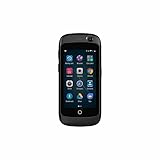
- Extra Replacement Battery is available, please contact customer service
- Super Mini 4G Smartphone, Impossibly small. Amazingly cute. Totally functional. Extremely Portable, Handy and Simplicity, Fits the coin pocket on your jeans.
- MP3 player, Global 4G LTE, Easier to your exercise, 60.4g, World Smallest, Dual SIM Dual Standby, Minimalist Design
- Built-in GPS and Pedometer let you easily track your steps, distance, pace and time. Built‑in Bluetooth enable you wirelessly connect to headphones, making it easier to your exercise.
- Handy little MP3 player, Enjoy wonderful music anytime, anywhere. Using the built-in music player or download your favorite music app. Easily enjoy your music time.Also supporting Bluetooth-enabled headphones.
What did Android Nougat mean on Jelly?
Android 7.0 Nougat gave Jelly access to the Android app ecosystem and familiar smartphone features instead of a proprietary feature-phone interface. The Kicktraq record for the Jelly Kickstarter identifies Android Nougat and 4G as central parts of the product’s launch proposition.
In 2017, Android 7.0 was new enough for Jelly to feel like a remarkably complete smartphone in miniature. Users could install compatible applications, use mobile data, connect to Wi-Fi, pair Bluetooth accessories, use GPS, and access ordinary Android functions.
Android compatibility did not mean that every application was comfortable or fully functional on Jelly. An application still needed to support Android 7.0, work with the device’s hardware and Google Play environment, and display its interface correctly on a 2.45-inch screen. Performance and storage constraints also mattered, especially on the standard model with reported 1 GB of RAM and 8 GB of storage.
In 2026, Android 7.0 is extremely old. Current applications may require a newer Android release, newer Google Play services, newer security certificates, or stronger device-security guarantees. Banking, payment, enterprise, password-management, and authentication applications may refuse to install or may operate unreliably. “Runs Android” describes the original product’s capability in its launch period; it is not a promise of current app support.
What could Jelly actually do well?
Jelly’s tiny size made several specific tasks more attractive, even though the same size made long interactions frustrating.
- Calls and short messages: Jelly could serve as a compact communications device, subject to present-day carrier compatibility.
- Travel backup: A user could carry a small emergency handset instead of risking a larger and more expensive primary phone.
- Fitness and running: The light body was easier to carry during exercise than a conventional smartphone, and GPS and music functions added utility.
- Emergency use: A charged, compatible phone could provide a communications fallback, although a used Jelly’s battery and network status must be checked.
- Two-factor authentication: Short codes and lightweight authentication tasks were more realistic than managing a complete modern security workflow on Android 7.0.
- Digital minimalism: The small screen naturally discouraged long browsing and media sessions while retaining more capability than a basic feature phone.
- Small-pocket portability: Jelly could fit in places where a normal phone was inconvenient, including a coin pocket or compact fitness gear.
Jelly’s strengths were situational rather than universal. The device was useful when portability, low distraction, or backup communication mattered more than typing speed, screen comfort, or modern software.
What were Jelly’s biggest weaknesses?
Jelly’s tiny body created nearly all of its usability problems. The same 2.45-inch display that made the phone memorable also made many ordinary smartphone tasks laborious.
Rank #3

- Ultra-Compact Design: The Unihertz Jelly 2E combines a sleek silver finish with a mini form factor, offering a unique and compact Android experience.
- Dual Carrier Compatibility: Seamlessly use your device with T-Mobile and Verizon networks, providing versatile connectivity options.
- Reliable 4G Connectivity: Enjoy fast and reliable 4G connectivity for smooth browsing, streaming, and communication on the go.
- Capable Performance: Experience smooth performance for everyday tasks with a device that's designed to handle your essential applications.
- Typing: The virtual keyboard offered very small touch targets, making long messages and searches frustrating.
- Reading: Text-heavy websites, email, documents, and books required excessive scrolling and often zooming.
- Navigation: Maps were available, but selecting locations and reading route details on such a small panel was inconvenient.
- Media: Music controls were plausible, but video and social-media feeds were poorly matched to the device’s screen.
- Camera handling: The camera could be useful for quick snapshots, but framing and reviewing images on a tiny display were not comfortable.
- Battery aging: The approximately 950 mAh battery was a historical specification, not a guarantee of endurance from a used device years later.
- App layouts: Apps designed for larger displays could hide controls, force dense layouts, or become difficult to navigate.
- Software longevity: Android 7.0 limits current compatibility and creates security concerns.
Was the original Jelly practical as a main phone?
The original Jelly could serve as a primary phone for a very specific user who accepted tiny typing and limited software longevity, but it was better understood as a secondary or situational smartphone. Most people would find a conventional current phone much easier for messaging, reading, maps, banking, work, and media.
| Reader priority | Original Jelly fit | Why |
|---|---|---|
| Smallest possible Android form factor | Strong historically | Its 2.45-inch screen and approximately 60-gram body were the central design statement |
| Calls and occasional texts | Potentially suitable | Actual use depends on carrier approval, LTE bands, voice support, and device condition |
| Fitness or travel backup | Potentially suitable | Small size and smartphone functions were useful when a large phone was inconvenient |
| Digital minimalism | Good in principle | The tiny display reduced the appeal of extended browsing and media use |
| Comfortable typing | Poor | The physical display leaves little room for a usable keyboard |
| Modern apps and security | Poor | Android 7.0 is obsolete by 2026 |
| Banking, work, and password management | Poor | Important applications may require newer Android versions or security guarantees |
| Collecting or nostalgia | Strong | The original Jelly is a distinctive example of early ultra-small Android hardware |
Jelly made the most sense for a user who wanted a phone that could disappear into a pocket, accompany a run, remain available as a backup, or reduce screen temptation. Jelly made much less sense for anyone who needed reliable current applications, comfortable writing, or a secure primary device.
How are Jelly, Jelly Pro, Jelly 2, Jelly 2E, Jelly Star, and Jelly Max different?
The original Jelly belongs to an expanding product family, but later names describe materially different hardware generations. A product listing that says “Jelly” may not refer to the 2017 Android Nougat model.
| Model | Generation or role | Key distinction | How it relates to the original Jelly |
|---|---|---|---|
| Jelly | 2017 original | 2.45-inch display, Android 7.0 Nougat, 4G LTE | The historical model discussed in this article |
| Jelly Pro | 2017 higher-spec variant | Reportedly 2 GB RAM and 16 GB storage instead of 1 GB and 8 GB | Same basic tiny-phone concept with more memory and storage |
| Jelly 2 | Later successor | 3-inch display, Android 11, 6 GB RAM, 128 GB storage, and 2,000 mAh battery | Newer and more capable, but not the original Nougat phone |
| Jelly 2E | Later compact successor | Lower-spec member of the later Jelly family | Must not be confused with the 2017 model |
| Jelly Star | Later compact Android model | Newer hardware and software generation than the original Jelly | A different modernized interpretation of the tiny-phone idea |
| Jelly Max | Larger, newer category | Prioritizes newer performance and a larger body over extreme 2.45-inch compactness | Not a direct replacement for the original Jelly’s ultra-small format |
The official Unihertz Jelly 2 product page identifies Jelly 2 as a later 3-inch Android 11 phone and compares it with Jelly 2E and Jelly Star. The Jelly 2’s 6 GB of RAM, 128 GB of storage, and 2,000 mAh battery belong to Jelly 2, not to the original 2017 Jelly.
Can you still use the original Jelly in 2026?
You may be able to use an original Jelly in 2026, but successful use depends on the exact handset, country, carrier, LTE bands, VoLTE support, battery condition, and the applications you need. A 4G label alone does not guarantee that an old phone will register for voice service on a current network.
Free tools Windows power users keep installed
One-click scans. No signup required.
Check carrier and network compatibility first
Before buying or activating an original Jelly, verify the exact LTE bands supported by the specific regional model. Confirm that the carrier permits the handset on its network, supports the phone’s voice technology, and allows VoLTE for that device. Network policies and legacy 3G shutdowns can affect calling even when LTE data remains available.
Carrier compatibility is regional and time-sensitive. Readers should consult the carrier’s current device-compatibility checker rather than assume that an unlocked 4G handset works universally.
Rank #4

- US Carrier support T-mobile & Verizon only
- Verizon: please check our forum/facebook or contact customer support about how to set it in Verizon network
- The New Star of Jelly Series with Transparent Back Design and LED Light, Dynamic LED Notification , New 48 MP Camera, Still Small, Yet Powerful
- 3-Inch Display, Octa-Core 6nm MediaTek Helio G99 processor, Large Memory with 8GB RAM and 256GB of storage memory, 2000 mAh Battery
- Android 13 OS, NFC, Programmable Button, 3.5 mm Audio Jack, Dual Nano SIM Cards, Infrared Port, Fingerprint Unlock, USB OTG, FM Radio, GPS
Assume serious Android 7.0 limitations
Android 7.0 may prevent current applications from installing or functioning. Google Play services, app minimum-version requirements, certificate handling, and device-security checks can all create problems beyond the operating system’s age itself.
The original Jelly should not be recommended for sensitive current workloads such as banking, payments, password management, work accounts, or other high-risk services when current security updates and application compatibility cannot be verified.
What’s actually slowing this PC down?
Pick the symptom - the matching free tool is one click away.
Inspect battery and support condition
An original Jelly purchased today is a many-year-old device. A used unit may have substantially degraded battery capacity, and replacement batteries, official firmware, accessories, repair options, and warranty protection may be difficult to obtain. Do not infer present-day battery life from the approximately 950 mAh launch specification.
No current official sales listing for the original Jelly was verified in this research pass. Present-day availability, condition, seller reliability, and price can therefore vary widely. The historical $79 launch figure should not be used as a current buying benchmark.
Independent reader supportYour contribution helps us test, update, and keep practical guides available for everyone.Who should consider the original Jelly—and who should not?
The original Jelly is worth considering mainly as a collectible, a curiosity, or a narrowly defined backup device. It is not a sensible general recommendation for a secure, current primary smartphone.
The original Jelly may suit you if:
- You specifically want an early ultra-small Android phone.
- You need a lightweight travel, running, or emergency backup and have verified network support.
- You prefer a device that makes extended browsing and media consumption inconvenient.
- You understand that Android 7.0 and old hardware limit current app compatibility.
- You are buying for collecting, experimentation, or nostalgia rather than dependable modern productivity.
The original Jelly is a poor choice if:
- You need current banking, payment, authentication, enterprise, or password-management applications.
- You type long messages, read articles, navigate frequently, or watch video on your phone.
- You require guaranteed carrier activation or modern VoLTE support.
- You expect official updates, easy repairs, a fresh battery, or a normal warranty.
- You want a fully modern smartphone rather than an intentionally compromised miniature one.
What is the closest practical alternative?
The closest later interpretation is the Unihertz Jelly 2, which keeps the compact-phone concept but moves to a 3-inch display, Android 11, 6 GB of RAM, 128 GB of storage, and a 2,000 mAh battery. Jelly 2 is still an older Android handset by 2026 standards, so readers must verify current app support, LTE bands, VoLTE, stock, price, returns, and warranty before purchasing.
Do these 3 things before closing this tab:
1Clear out junk files and repair common Windows errors2Scan for outdated or missing drivers - takes under a minute3Repair Windows errors before they cause bigger problemsJelly 2E and Jelly Star are other later members of the compact Jelly family, while Jelly Max belongs to a larger and newer category. A newer model may be a more defensible purchase than the original Jelly, but none should be presented as equivalent to a current mainstream Android flagship without checking its software and network status.
Best Value

- Extra Replacement Battery is available, please contact customer service
- Handy little MP3 player, Enjoy wonderful music anytime, anywhere. Using the built-in music player or download your favorite music app. Easily enjoy your music time.Also supporting Bluetooth-enabled headphones.
- Built-in GPS and Pedometer let you easily track your steps, distance, pace and time. Built‑in Bluetooth enable you wirelessly connect to headphones, making it easier to your exercise.
- MP3 player, Global 4G LTE, Easier to your exercise, 60.4g, World Smallest, Dual SIM Dual Standby, Minimalist Design
- Super Mini 4G Smartphone, Impossibly small. Amazingly cute. Totally functional. Extremely Portable, Handy and Simplicity, Fits the coin pocket on your jeans.
Frequently Asked Questions
Was the original Unihertz Jelly exactly 2.4 inches?
No. The original Unihertz Jelly was specified with a 2.45-inch display, while “2.4-inch” was a rounded headline description. The screen resolution was 240 × 432 pixels.
What version of Android did the original Jelly use?
The original Unihertz Jelly launched with Android 7.0 Nougat in 2017. Android 7.0 is obsolete in 2026, so current app compatibility, Google Play services, and security should not be assumed.
Could the original Jelly be used as a primary phone?
The original Jelly could work as a primary phone for a niche user who accepted tiny typing and old software, but it was better suited to backup, travel, fitness, emergency, or digital-minimalism use. Carrier support, LTE bands, VoLTE, battery condition, and app requirements must be checked.
Is the original Jelly still sold for $79?
No current $79 price should be assumed. Approximately $79 was a historical launch-era price reported in 2017, not a verified 2026 retail price, and no current official original-Jelly sales listing was verified in this research pass.
Is Jelly 2 the same phone as the original Jelly?
No. Jelly 2 is a later model with a 3-inch display and Android 11, while the original Jelly has a 2.45-inch display and Android 7.0 Nougat. Jelly 2’s newer specifications should not be attributed to the 2017 phone.
The Bottom Line
The original Unihertz Jelly was an impressive 2017 experiment: a roughly 60-gram, 2.45-inch 4G Android phone that delivered real smartphone features in an exceptionally small body. Its compactness was also its central flaw. In 2026, treat the original Jelly as a historical, collectible, or carefully verified backup device—not as a modern primary phone.
Quick Recap
Product prices and availability are accurate as of the date/time indicated and are subject to change. Any price and availability information displayed on Amazon at the time of purchase will apply.

