What’s actually slowing this PC down?
Pick the symptom - the matching free tool is one click away.
iTechGuides is reader-supported. When you buy through links on our site, we may earn an affiliate commission. As an Amazon Associate I earn from qualifying purchases. Learn more
Ever thought about the importance of cached data and whether you should clear them on your device? This article teaches everything you need to know about this temporal data.
Overview
Cached data are temporary data saved in your device’s secondary storage (HDD, SSD, or eMMC drive). It is like a special temporal memory system within your device’s storage.
Furthermore, users frequently access these data from a website or application and contain multimedia like files, images, and scripts.
Additionally, cached data automatically stores on your device the first time you visit a website or open an application. Hence, your device uses them to quickly load a website or application any time you subsequently revisit or open it.
#1 Best Overall

- [Color] PCB color may vary (black or green) depending on production batch. Quality and performance remain consistent across all Timetec products.
- DDR3L / DDR3 1600MHz PC3L-12800 / PC3-12800 240-Pin Unbuffered Non-ECC 1.35V / 1.5V CL11 Dual Rank 2Rx8 based 512x8
- Module Size: 16GB KIT(2x8GB Modules) Package: 2x8GB ; JEDEC standard 1.35V, this is a dual voltage piece and can operate at 1.35V or 1.5V
- For DDR3 Desktop Compatible with Intel and AMD CPU, Not for Laptop
- Guaranteed Lifetime warranty from Purchase Date and Free technical support based on United States
Basically, cache data help to make applications and websites you previously opened load faster when you open them in the future. Besides, the process of storing cached data on a device is known as caching.
However, you may ask, “where does your device keep cached data?”. Well, a simple answer to that question is that devices store cached data on a component called cache.
According to various sources, including wikipedia.org, a cache can be a hardware or software component. For your information, the word “cache” is usually pronounced as “cash.”
Crashes, No Sound, or Screen Glitches?
Random freezes, missing sound and display glitches usually trace back to one bad driver. Find and replace yours safely.Free scan · under a minuteWindows Errors? Fix Them Before They Spread
Repair common Windows errors and clear accumulated junk for a smoother, more stable PC - no reinstall needed.Free scan · no reinstallOne more thing – you can clear cached data on your smartphone or PC without having a negative effect on your device. You can do this if your device is running low on space or the data are making your device lag.
Having said all that, let us learn how cached data works in the subsequent section below.
How Does Cached Data Work?
When you run a newly installed application on your phone or PC, the application caches some data within your device. Essentially, it extracts frequently accessed files, scripts, or images of the application into the device’s cache memory.
Thus, the next time you open the application, your device’s processor will not need to fetch the data from the application again. Instead, the CPU will fetch the data from the cache memory, which in turn speeds up load time.
Also, it makes operation faster and more efficient. Similarly, when you browse a website for the first time, your browser stores frequently accessed data from the website on your device.
Rank #2

- Boosts System Performance: 32GB DDR5 RAM laptop memory kit (2x16GB) that operates at 5600MHz, 5200MHz, or 4800MHz to improve multitasking and system responsiveness for smoother performance
- Accelerated gaming performance: Every millisecond gained in fast-paced gameplay counts—power through heavy workloads and benefit from versatile downclocking and higher frame rates
- Optimized DDR5 compatibility: Best for 12th Gen Intel Core and AMD Ryzen 7000 Series processors — Intel XMP 3.0 and AMD EXPO also supported on the same RAM module
- Trusted Micron Quality: Backed by 42 years of memory expertise, this DDR5 RAM is rigorously tested at both component and module levels, ensuring top performance and reliability
- ECC Type = Non-ECC, Form Factor = SODIMM, Pin Count = 262-Pin, PC Speed = PC5-44800, Voltage = 1.1V, Rank And Configuration = 1Rx8
These data are stored in your device’s cache memory, meaning they are cached data. Therefore, when you browse the website next time, the cached data will allow the website to load faster.
This is because your device will not have to fetch every piece of information from the web server before loading them. Rather, it fetches the cached data from the cache memory.
However, you cannot control which data your device cache or don’t cache. Nevertheless, application developers and website developers know which data users regularly access.
The Tool Desk
Outbyte Driver Updater FREEScan for outdated or missing drivers - takes under a minuteDriver Scan →Outbyte PC Repair FREERepair Windows errors before they cause bigger problemsFix Now →Hence, they ensure such data automatically caches to your device as soon as you open the app or visit the website.
Features of Cached Data
Cached data is quite different from other types of data on your personal computer or smartphone. Specifically, it differs in terms of its storage location, speed, and many other factors.
Hence, this section will look into some of the major features that make cached data unique.
Cached Data Reside Within a Cache
A cache is a small memory location on a device for temporarily storing data. This memory may be located within the CPU of a device or close to it.
Do these 3 things before closing this tab:
1Clear out junk files and repair common Windows errors2Scan for outdated or missing drivers - takes under a minute3Repair Windows errors before they cause bigger problemsImpressively, a cache’s operation speed is between 10 to 100 times faster than ordinary RAM. This allows a device’s processor to access data faster from a cache than from RAM.
Rank #3
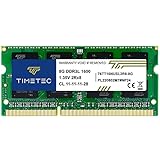
- [Specs] DDR3L / DDR3 1600MHz PC3L-12800 / PC3-12800 204-Pin Unbuffered Non ECC 1.35V CL11 Dual Rank 2Rx8 based 512x8
- [Size] Module Size: 8GB Package: 1x8GB
- [Voltage] JEDEC standard 1.35V, this is a dual voltage piece and can operate at 1.35V or 1.5V
- [Compatibility] Compatible with DDR3 Laptop / Notebook PC, Mini PC, All in one Device
- [Color] PCB Color is Green
Apart from the CPU’s cache, a device’s secondary storage (HDD, SSD, or eMMC) also has a location used for cache storage.
Hence, while a CPU has a cache that helps it process requests faster, a device’s secondary storage also has cache data that supports that fast processing.
So, when a website’s or application’s data is cached in a cache, it will be faster for the device’s CPU to access the data. This, in turn, results in a faster website or application load time.
They are Stored Automatically but can be Cleared Manually
As mentioned earlier, browsers automatically cache frequently accessed data of a website into your device on your first visit. Likewise, applications do the same when you open them for the first time.
Hence, you as a user cannot decide what data should be cached or should not be cached. However, when cached data continue to build up on your device, it can take up a reasonable amount of space.
This can cause your device to slow down or lag during operation. Thankfully, there are several applications that you can use to scan and manually select which cached data to delete on your device.
An example of such an application is CCleaner. Besides, you can also clear websites’ cached data from your browser’s settings.
Quick wins for a faster PC:
Clear out junk files and repair common Windows errorsFree Scan →Scan for outdated or missing drivers - takes under a minuteDriver Scan →Your Device Stores Different Types of Cached Data
Cached data consist of multimedia such as files, images, and scripts. These are major and frequently accessed data of a website or application.
Rank #4
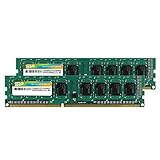
- Efficient performance: A lower voltage of 1.35 V is applied to reduce 20% power, enabling to effectively decrease hardware power consumption.
- System upgrade: With our high quality memory module, ideal for virtualization, cloud computing and multitasks handling, 100% factory-tested for stability, durability and compatibility.
- Durability Armed: 100% factory-tested to make sure the high stability, durability and compatibility.
- Compatibility is imperative: Compatible with major DDR3L / DDR3 motherboards.
- 【NOTE】The DDR3L UDIMM is backed by a lifetime warranty to promise complete services and technical support.
Hence, if such data are cached on your device, the website will be able to load faster. Likewise, if an application’s frequently accessed data is cached on your device, the application will load faster.
Similar but Different from Cookies
Both cached data and cookies are temporary data. However, cookies store only the user’s preference data.
Meanwhile, cached data are automatically stored on your device. This allows a website or application to load faster.
Pros of Cached Data
They Help Applications and Websites Load Faster
The main purpose of caching data is to make websites and applications load faster.
Hence, when you first open a new application, it automatically saves frequently accessed data in your device’s cache. Thus, when you open the application in the future, your device will be able to access the data from the cache rapidly.
Due to this, the application will load faster. Likewise, when you visit a website for the first time, your browser automatically saves frequently accessed data in your device’s cache.
This cached data allows the website to load faster when you visit it in the future.
You Can Easily Clear Cached Data on your Device
You can easily clear cached data on your device from the settings.
Also, you can make use of third-party applications such as CCleaner to clear cached data on your computer or smartphone. That’s not all; you can also clear a website’s cached data on your device via your browser settings.
They Improve a User’s Browsing Experience
When a website takes time to load, it might frustrate you or make you close it sooner.
However, if your device already has cached data of the website, the website will load faster. In doing so, it improves your browsing experience.
It Saves your Device Energy
Caching can help save battery energy and improve performance in other areas too.
For example, if an application should re-download data and other files every time it loads, it’ll use more battery life. However, when those items are retrieved directly from the cache, the device uses less energy and loads the application quickly.
Free tools Windows power users keep installed
One-click scans. No signup required.
Cons of Cached Data
It Takes Up a Valuable Amount of Space
While caching helps applications and web browsers to work faster, it consumes a valuable amount of space on the device.
Hence, if you are running short of space on your device, you might want to clear your cache memory.
Best Value

- [Color] PCB color may vary (black or green) depending on production batch. Quality and performance remain consistent across all Timetec products.
- DDR3L / DDR3 1600MHz PC3L-12800 / PC3-12800 240-Pin Unbuffered Non-ECC 1.35V / 1.5V CL11 Dual Rank 2Rx8 based 512x8
- Module Size: 32GB KIT(4x8GB Modules) Package: 4x8GB ; JEDEC standard 1.35V, this is a dual voltage piece and can operate at 1.35V or 1.5V
- For DDR3 Desktop Compatible with Intel and AMD CPU, Not for Laptop
- Guaranteed Lifetime warranty from Purchase Date and Free technical support based on United States
You Have No Control Over Caching
As a computer or mobile phone user, you don’t have control over which data your device caches.
Basically, the software developer or the website developer determines that. This further means that your device can cache what you don’t need.
Security Risk
Sometimes, cached data pose security risks to people.
This is because hackers can include viruses and malware in cached data. Hence, when such viruses infiltrate your device, it can cause it to malfunction or personal information to be stolen.
However, you can always clear your cache often in order to prevent something like this from happening. Alternatively, you can browse the internet using private windows or incognito mode.
Corrupt Data in the Cache Can Cause a Device to Malfunction
Sometimes cached data can get corrupt.
When this happens, it causes the device where it is stored to malfunction. In fact, it can affect other applications and cause websites to load incorrectly.
Hence, if you face such an issue, the best thing to do is to clear the cached data on your device.
Conclusion
If you’ve been using smartphones or PCs before now, your device should likely have cached data. These are important data as they help applications and websites load faster.
However, too much cached data on your device can slow it down or even increase the risk of malware attacks. Thus, you should always pay attention to the level of cached data on your device.
This means that while taking advantage of its usefulness, clear your device’s cache from time to time. This will ensure the optimal performance of your device and prevent any unwanted problems.
I hope I was able to comprehensively explain what this technology is all about and how it works. I also hope that you found the article easy to understand and helpful?
Recommended Free Tools
If you found this article helpful, click on “Yes” beside the “Was this page helpful” question below. You may also express your thoughts and opinions by using the “Leave a Comment” form at the bottom of this page.
Finally, you may find other helpful articles on our Storage & Disk Technology Explained page.
Quick Recap
Product prices and availability are accurate as of the date/time indicated and are subject to change. Any price and availability information displayed on Amazon at the time of purchase will apply.