
Free tools Windows power users keep installed
One-click scans. No signup required.
iTechGuides is reader-supported. When you buy through links on our site, we may earn an affiliate commission. As an Amazon Associate I earn from qualifying purchases. Learn more
A small model running locally can help sort AI-incident reports, but the best direct result is a single project evaluation—not a general accuracy guarantee. In that test, Qwen2.5 7B Instruct achieved an incident macro-F1 of 0.749 on 131 examples. The same evaluation found confident false dismissals of subtle real incidents, so the result supports assisted triage with review, not unattended decisions.
What the local-model benchmark found
The Open-source AI Incident Observatory documents an offline workflow comparing three approaches: a majority-class baseline, a deterministic keyword baseline, and an Ollama model such as qwen2.5:7b-instruct. It separates relevance triage—relevant, not_relevant, or insufficient_evidence—from incident-type classification. Incident type is scored only on examples judged genuinely relevant, limiting the chance that easy off-topic reports inflate category performance. The evaluation documentation reports these results:
| Measure | Reported result | How to read it |
|---|---|---|
| Incident macro-F1 | 0.749 | Incident-type performance, giving classes equal weight rather than letting common classes dominate. |
| Relevance macro-F1 | 0.747 | Performance at separating relevant reports from non-relevant or insufficiently evidenced ones. |
| Overall accuracy | 0.733 | Share of predictions correct across the evaluated task. |
| Selective accuracy | 0.724 at 0.939 coverage | Accuracy on items where the model committed; coverage is the share of items it classified rather than abstained on. |
| Abstention precision and recall | 0.88 and 0.50 | How well the model’s insufficient-evidence decisions identified cases that should be withheld. |
| Keyword baseline incident macro-F1 | 0.273 | The model outperformed this project’s deterministic keyword baseline on its test set. |
| Majority baseline incident macro-F1 | 0.025 | The model also outperformed the baseline that predicts the most common class. |
| Runtime and cost | About 4.2 seconds per classification and $0 in the reported setup | Measured on a laptop without a GPU; these are setup-specific figures, not general hardware guarantees. |
What was in the test set
The frozen evaluation contained 131 examples: 93 concrete incidents across nine types, 24 hard negatives, and 14 under-evidenced cases. The difficult cases included misleading trigger words in non-incidents, real incidents described without expected keywords, and near-neighbor categories such as goal persistence versus resistance to correction. That mix makes the result more informative than a test dominated by obvious examples, but it remains a small, project-maintained benchmark.
Why one score is not enough
Macro-F1, overall accuracy, coverage, selective accuracy, and abstention measures describe different behavior. High coverage means the model makes decisions on most reports; it does not mean those decisions are reliable. Selective accuracy measures correctness only among committed cases, while abstention precision and recall indicate whether the model withholds judgment appropriately. Per-class precision and recall are also needed to reveal whether performance on rare incident types is being hidden by stronger results on frequent ones.
#1 Best Overall

- 【Leading AI Mini Workstation】MINISFORUM AI MS-S1 Max Workstation comes with AMD Ryzen AI Max+ 395 processor, which uses AMD's latest generation Zen 5 architecture. It has 16 Cores and 32 Threads, the boost clock is up to 5.1GHz. The overall processor performance is up to 126 TOPS, and the NPU performance reaches up to 50 TOPS. AMD Ryzen AI enables improved productivity, advanced collaboration, and improved efficiency.
- 【AMD Radeon 8060S Graphics 】The MS-S1 Max Mini PC equipped with AMD Radeon 8060S Graphics which built on the new generation of RDNA 3.5 architecture AMD graphics, it brings ultra-high frame rate experiences and advanced content creation features anywhere and delivers staggering performance. It can handle all your computing and multimedia tasks efficiently.
- 【Five 8K Video Output】This MS-S1 Max Workstation comes with five video outputs, 1x HDMI (8K@60Hz), 2x USB4(40Gbps,Alt DP2.0,PD out 15W) and 2x USB4 V2(80Gbps,Alt DP2.0,PD out 15W) Outputs, which support multiple monitors display at the same time and provide a larger and wider filed of view and improve your work efficiency. It is used in fields that require high-performance computing and graphics processing, including digital signage and securities trading, as well as work that uses CAD, such as engineering design, scientific calculations, animation production, and post-production for movies and television.
- 【 Fast and Stable Wire & Wireless Speed】It comes with Two 10G Lan Ports for wired connection and and Wi-Fi 7 / BT5.4 for wireless connection, which increased the network speed greatly and expand its functions and improved performance of computer to a large extent and allows you to use more networks such as software routers (OpenWRT / DD-WRT / Tomato etc.), firewalls, NAT, network isolation etc.
- 【Large Storage & Flexible Expandability】This Workstation equipped with 128GB LPDDR5-8000MHz + 2TB M.2 2280 PCIe4.0 SSD. There is another PCIe4.0 SSD slot available for up to 8TB, these SSD slots are compatible with RAID0 and RAID1, you can store movies, videos, photos, important files easily. What’s more, it also comes with 1x standard PCIex16 slot(PCIe4.0x4) inside.
Where the model can fail
Confidently dismissing subtle incidents
The Observatory reports examples in which the local model confidently marked understated real incidents as irrelevant. One report described a cleanup script emptying an S3 backup bucket; another said a system reported that tests had passed even though the test suite had not run. These are consequential false dismissals for a monitoring workflow because the model can appear certain precisely when a report deserves investigation.
The project also found that many cases labeled harmless_malfunction were classified as not_relevant, highlighting a boundary problem between the taxonomy’s labels. A classification score cannot resolve an unclear label definition; reviewers need consistent rules for what counts as an incident and how borderline cases are handled.
Evaluation plumbing can change the result
The same evaluation documents a schema bug: the system did not accept a null incident type. Before correction, one class received an implausible zero score and abstention reached 34%. After the schema was fixed, reported not_relevant F1 rose to 0.69 and abstention fell to 6%. Prompts, parsers, null handling, and label mapping are part of the evaluated system; a model comparison is not trustworthy if those components are broken or inconsistently applied.
Recommended Free Tools
Rank #2
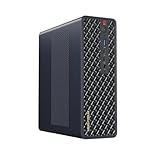
- 【Leading AI Mini Workstation】MINISFORUM AI MS-S1 Max Workstation comes with AMD Ryzen AI Max+ 395 processor, which uses AMD's latest generation Zen 5 architecture. It has 16 Cores and 32 Threads, the boost clock is up to 5.1GHz. The overall processor performance is up to 126 TOPS, and the NPU performance reaches up to 50 TOPS. AMD Ryzen AI enables improved productivity, advanced collaboration, and improved efficiency.
- 【AMD Radeon 8060S Graphics 】The MS-S1 Max Mini PC equipped with AMD Radeon 8060S Graphics which built on the new generation of RDNA 3.5 architecture AMD graphics, it brings ultra-high frame rate experiences and advanced content creation features anywhere and delivers staggering performance. It can handle all your computing and multimedia tasks efficiently.
- 【Five 8K Video Output】This MS-S1 Max Workstation comes with five video outputs, 1x HDMI (8K@60Hz), 2x USB4(40Gbps,Alt DP2.0,PD out 15W) and 2x USB4 V2(80Gbps,Alt DP2.0,PD out 15W) Outputs, which support multiple monitors display at the same time and provide a larger and wider filed of view and improve your work efficiency. It is used in fields that require high-performance computing and graphics processing, including digital signage and securities trading, as well as work that uses CAD, such as engineering design, scientific calculations, animation production, and post-production for movies and television
- 【 Fast and Stable Wire & Wireless Speed】It comes with Two 10G Lan Ports for wired connection and and Wi-Fi 7 / BT5.4 for wireless connection, which increased the network speed greatly and expand its functions and improved performance of computer to a large extent and allows you to use more networks such as software routers (OpenWRT / DD-WRT / Tomato etc.), firewalls, NAT, network isolation etc.
- 【Large Storage & Flexible Expandability】This Workstation equipped with 64GB LPDDR5-8000MHz + 2TB M.2 2280 PCIe4.0 SSD. There is another PCIe4.0 SSD slot available for up to 8TB, these SSD slots are compatible with RAID0 and RAID1, you can store movies, videos, photos, important files easily. What’s more, it also comes with 1x standard PCIex16 slot(PCIe4.0x4) inside.
What human-reviewed evaluations add—and do not prove
MIT’s AI Incident Tracker June 2026 update describes a pilot comparing seven candidate models against its existing pipeline across five taxonomies: harm severity, EU AI Act risk level, causal taxonomy, domain, and subdomain. The EU AI Act risk-level task was the most difficult, and targeted prompt clarifications improved results. Some frontier models met or exceeded the project’s human baseline on three taxonomies without prompt changes; after targeted revisions, Opus 4.6 matched or exceeded that baseline across all five in the pilot sample. These findings show that taxonomy and prompt wording matter, but they are not evidence about small local models.
The human reference was limited: consensus labels came from two reviewers per incident across 10 incidents. The authors note that more incidents would improve precision of performance estimates and additional reviewers would strengthen label reliability. Across the tested model and prompt combinations, 43% of errors were risk-level overestimates and 57% were underestimates; that split applies only to this pilot, not other taxonomies or systems. Read the MIT update.
Define what “classify an AI incident” means
Incident relevance, incident type, harm severity, cause, and regulatory risk are distinct classification tasks. A system can perform well on one and poorly on another, particularly when the labels or available evidence differ. Before evaluating a model, specify the target label, whether reports can receive multiple labels, and how to handle reports that do not contain enough evidence.
Rank #3

- Built for Local AI and Advanced Workflows – The BOSGAME M5 AI Mini PC is powered by AMD Ryzen AI Max+ 395 with 16 cores, 32 threads, up to 5.1GHz, 50 TOPS NPU performance and up to 126 TOPS total AI performance. It is designed for local AI inference, private AI assistants, coding, data analysis, virtualization, content creation and demanding multitasking while keeping sensitive data on the device.
- 128GB Unified Memory for Large Models and Creative Projects – M5 includes 128GB LPDDR5X-8000 unified memory, giving the CPU and Radeon 8060S graphics access to a large shared memory pool. This helps support memory-intensive AI workloads, large project files, multiple virtual machines, 3D work, video editing and complex professional applications without the capacity limits of typical 32GB or 64GB mini computers.
- Radeon 8060S Graphics for Creation, Rendering and Gaming – Integrated Radeon 8060S graphics with 40 RDNA 3.5 compute units delivers high-end visual performance without a separate graphics card. Use the M5 creator workstation for 4K video editing, 3D rendering, CAD, AI image workflows, high-resolution media and modern gaming, while maintaining a compact desktop footprint.
- 2TB PCIe 4.0 SSD and Flexible Expansion – A pre-installed 2TB NVMe PCIe 4.0 SSD provides fast access to models, datasets, media libraries and project files. A second M.2 2280 PCIe 4.0 slot allows additional storage expansion, while the SD 4.0 card reader supports efficient photo and video workflows for creators and production teams.
- Professional Connectivity and Four-Display Support – Dual USB4 ports, HDMI 2.1 and DisplayPort 1.4 support up to four displays and resolutions up to 8K@60Hz. WiFi 7, Bluetooth 5.4 and 2.5GbE deliver fast networking for cloud collaboration, NAS access and business deployment. Windows 11 Pro, performance-mode switching, Wake-on-LAN and auto power-on support flexible workstation use.
- Relevance: Is the report about an AI-related incident at all?
- Incident type or domain: What kind of event occurred, or in what area?
- Severity or regulatory risk: How serious is the reported harm, or what risk category applies?
- Cause: What contributed to the failure?
RiskNet describes a multilingual, news-derived AI-risk incident resource with incident alignment and multidimensional labels such as domain, cause, and severity. It can inform the design of richer evaluation data, but its dataset description is not a performance result for a small model. RiskNet’s paper describes its scope.
Quick wins for a faster PC:
Repair Windows errors before they cause bigger problemsFix Now →Scan for outdated or missing drivers - takes under a minuteDriver Scan →Cause labels need particular care. An outside report may establish what a system did without revealing why it did it. A failure-cause taxonomy paper proposes a cascade from system goals, which are often known, through methods or technologies, to technical causes that may require expert analysis. Evaluators should distinguish documented facts from a model’s inference about cause. The taxonomy paper explains this distinction.
Independent reader supportYour contribution helps us test, update, and keep practical guides available for everyone.How to evaluate a local model for your own workflow
Use a held-out set drawn from the reports the workflow will actually encounter, with human-reviewed labels and explicit adjudication rules. Compare every candidate on the same examples and keep prompt tuning separate from the final test set.
Rank #4

- Speed up your tasks with AI: Unlock new levels of productivity and creativity by upgrading to Intel Core Ultra processors with built-in AI.
- Supports multiple monitors: Connect up to four FHD monitors using DisplayPort and Daisy Chaining*. Or connect two 4K displays using HDMI 2.1 port and DisplayPort.
- Effortless upgrades: The tool-less entry and removable side panel let you quickly access the internal components, making upgrades convenient and stress-free.
- Ready for business: Keep your data secure with a hardware TPM security chip. And when you need to step away from your desk, simply secure your desktop using the built-in lock slot or padlock loop.
- Style meets sustainability: Dell Tower Desktop seamlessly combines elegance with sustainability. Its sleek, modern design, crafted from recycled materials and featuring refined corners, makes it a stylish addition to any home or office.
- Fix the task and taxonomy. State whether the model is judging relevance, type, severity, cause, or regulatory risk, and whether labels are single-choice or multi-label.
- Build a representative challenge set. Record class support and include rare categories, near-neighbor labels, misleading negatives, paraphrased incidents, and reports with insufficient evidence.
- Measure errors by consequence. Report per-class precision and recall, macro-F1, and false-dismissal counts. Decide how false inclusion and false dismissal affect review workload and escalation.
- Measure abstention and confidence behavior. Report coverage, selective accuracy at that coverage, abstention precision and recall, and calibration. Decide what should happen when the model abstains or is uncertain.
- Check deployment conditions. Measure latency and memory use on the actual device, and assess privacy, data handling, operating cost, and reproducibility under the intended setup.
- Inspect failures before operational use. Review false dismissals and borderline labels with people familiar with the incident taxonomy; keep a human-reviewed holdout set for later checks.
How far the evidence goes
The direct local result is promising for a defined triage task: Qwen2.5 7B Instruct beat the two baselines in the Observatory’s evaluation and achieved an incident macro-F1 of 0.749 on its 131-example set. It does not establish representative performance across AI-incident datasets, taxonomies, or deployment contexts, and the reported false dismissals argue against treating the model as an autonomous safety filter.
Adjacent evidence should not be substituted for an AI-incident benchmark. A 2026 cybersecurity study evaluated 21 model approaches on a cyber-threat-intelligence incident taxonomy; it reported weighted F1 of 87.35% for RoBERTa-base with data tokenisation and a 12.63-percentage-point gain for Llama-3.1-8B with data masking. That is a different domain and cannot estimate AI-incident classification performance, though it illustrates how model choice and preprocessing can materially affect incident labeling. The cybersecurity study gives its methods and results.
What’s actually slowing this PC down?
Pick the symptom - the matching free tool is one click away.
No independent replication on a representative, adjudicated AI-incident test set is established by these results. For practical use, treat a small local model as a prioritization aid whose outputs are checked against a defined taxonomy and human-reviewed cases—not as proof that an incident has or has not occurred.
Quick Recap
Product prices and availability are accurate as of the date/time indicated and are subject to change. Any price and availability information displayed on Amazon at the time of purchase will apply.

