
iTechGuides is reader-supported. When you buy through links on our site, we may earn an affiliate commission. As an Amazon Associate I earn from qualifying purchases. Learn more
“No bootable devices found” means the PC has not found a usable way to start Windows. It does not, by itself, prove that Windows must be reinstalled or that the SSD has failed. First check whether UEFI/BIOS can see the internal drive and whether Windows Boot Manager is available; those results determine whether to investigate firmware settings, Windows recovery, or possible hardware trouble.
What the message means
The message describes a startup failure, not one specific diagnosis. The PC may not be detecting its internal storage, may not be selecting the Windows Boot Manager entry, may be using a firmware mode that does not match the Windows installation, or may have damaged startup files. Similar phrases such as “boot device not found” are used by different manufacturers and are not necessarily the same official error code. Microsoft’s boot-device troubleshooting guidance discusses inaccessible storage as one possible startup problem.
Check whether UEFI/BIOS sees the drive
Restart the computer and enter its UEFI/BIOS setup using the key or method documented for that exact PC model. The key and menu names vary by manufacturer, so use the PC maker’s instructions rather than assuming a universal path. Look for the internal SSD or hard drive in the storage or device information, then check whether Windows Boot Manager appears among the boot choices.
- The internal drive is not listed: The issue is at the device-detection level. A connection problem or hardware fault is possible, but this screen alone cannot identify which component is responsible.
- The drive is listed, but Windows Boot Manager is absent or not selected: Check the boot selection and firmware configuration using the manufacturer’s model-specific instructions.
- The drive and Windows Boot Manager are listed: If Windows still will not start, proceed to recovery tools.
UEFI and legacy/CSM boot modes affect how Windows starts. Do not switch modes, toggle Secure Boot, or change storage-controller settings as a general fix: the correct configuration depends on the PC and how Windows was installed. Microsoft’s Windows 11 and Secure Boot guidance directs users to their PC manufacturer for device-specific firmware steps.
#1 Best Overall
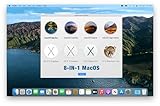
- ✅8-IN-1 USB drive 3.2: Big Sur 11.7、Catalina 11.15.7、Mojave 11.14.6、High Sierra 11.13.6、El Capitan 10.11.6、Yosemite 10.10.5、Mavericks 10.9.5、Mountain-Lion 10.8.5, Can be fully installed on your Mac
- ✅1. Plug-In USB Drive
- ✅2. Holding the "Option" key , and Power On
- ✅3. it will appear startup menu, choose USB drive from startup menu
- ✅4. After that, the installation will begin.
Try Startup Repair if the drive is detected
If Windows Recovery Environment (WinRE) opens, use its Startup Repair tool:
- Select Troubleshoot > Advanced options > Startup Repair.
- Choose the Windows installation if prompted and follow the on-screen instructions.
- Review the result. If Startup Repair cannot resolve the problem, Microsoft says it provides a report.
Microsoft describes Startup Repair as a tool that can fix certain problems that prevent Windows from starting, including some boot-configuration and system-file issues. It cannot repair every cause of a missing boot target.
Rank #2

- ✅4-IN-1 USB drive 3.2: Tahoe 26、Sequoia 15、Sonoma 14、High Sierra 10.13.6, Can be fully installed on your Mac
- ✅Support Type-C and USB Port, Included instruction and technical support
- ✅1. Connect USB Drive and Power off Mac
- ✅2. Holding the "Power Button" for 12 seconds, it will appear startup menu
- ✅3. Choose USB drive from Startup Menu, it will be booting and install macos
If local recovery does not open
Microsoft documents creating Windows installation media on a working computer and booting the affected PC from it to reach recovery options. Follow Microsoft’s current instructions for creating and using the media; requirements can vary. Installation media can provide another route to recovery, but it will not make a drive appear in firmware if the PC cannot detect it.
Recommended Free Tools
Before choosing reset or reinstall options, consider the files on the PC and whether they are backed up. Microsoft warns that some recovery options can cause data loss. On an encrypted device, recovery tools may also require the BitLocker recovery key. See Microsoft’s Windows recovery options guidance before proceeding.
Rank #3

- 1. 9-in-1 Linux:32GB Bootable Linux USB Flash Drive for Ubuntu 24.04 LTS, Linux Mint cinnamon 22, MX Linux xfce 23, Elementary OS 8.0, Linux Lite xfce 7.0, Manjaro kde 24(Replaced by Fedora Workstation 43), Peppermint Debian 32bit (being replaced by MX Linux 32bit) for older PC, Pop OS 22, Zorin OS core xfce 17. The versions you received might be latest than above as we update them to latest/LTS when we think necessary.
- 2. Try or install:Before installing on your PC, you can try them one by one without touching your hard disks.
- 3. Easy to use: These distros are easy to use and built with beginners in mind. Most of them Come with a wide range of pre-bundled software that includes office productivity suite, Web browser, instant messaging, image editing, multimedia, and email. Ensure transition to Linux World without regrets for Windows users.
- 4. Support: Printed user guide on how to boot up and try or install Linux; please contact us for help if you have an issue. Please press "Enter" a couple of times if you see a black screen after selecting a Linux.
- 5. Compatibility: Except for MACs,Chromebooks and ARM-based devices, works with any brand's laptop and desktop PC, legacy BIOS or UEFI booting, Requires enabling USB boot in BIOS/UEFI configuration and disabling Secure Boot is necessary for UEFI boot mode. Packing: The bootable USB drive comes in a colored PET/CPP zipper bag with instructions on how to get started. The box pictured is not included.
Choose the next step from what you found
| What you see | Relevant next step | Limit to keep in mind |
|---|---|---|
| Internal drive is absent from UEFI/BIOS | Run the manufacturer’s diagnostics or arrange model-specific hardware/connection service. | The message does not establish which component, if any, has failed. |
| Drive is present, but Windows Boot Manager is missing or not selected | Check the boot selection and firmware mode with the PC maker’s instructions. | There is no universal firmware setting that is correct for every installation. |
| Drive is present and WinRE opens | Run Startup Repair. | It addresses only problems it can detect and repair. |
| Local recovery is unavailable | Use Windows installation media on a USB drive to reach recovery options. | Reset or reinstall choices can risk data loss; encrypted devices may require the BitLocker recovery key. |
When to get hardware help
Contact the PC manufacturer or a qualified repair service if firmware cannot detect the internal drive, built-in diagnostics report a hardware issue, or you are not comfortable opening the computer. Use instructions for the exact model; steps documented for one product line should not be assumed to apply to another. Microsoft’s Surface startup guidance is specific to Surface devices and includes support or service as an escalation route when its remedies do not work.
Quick Recap
Rank #4

- 1. COMPATIBLE WITH WINDOWS 11, 10, 8.1 & 7 Designed for compatible 64-bit PCs and laptops that support USB booting. Works with Windows 11, Windows 10, Windows 8.1 and Windows 7 installation and recovery options.
- 2. INSTALL, REINSTALL & REPAIR Provides access to installation and recovery options for startup failures, boot errors, system crashes, failed updates, system repair and reinstallation. Results depend on the condition of the computer and the cause of the problem.
- 3. READY-TO-USE BOOTABLE USB Reusable installation and recovery media that helps eliminate the need to download large system files or create bootable media yourself. Insert the USB drive, open the computer’s boot menu and select the appropriate installation or recovery option.
- 4. HELP KEEP OLDER PCS USEFUL Refresh, reinstall or maintain a compatible older computer before deciding whether replacement is necessary. Suitable for home computers, office workstations, PC enthusiasts and technicians who regularly work with supported systems.
- 5. IMPORTANT COMPATIBILITY & LICENSE INFORMATION Supports compatible 64-bit computers with UEFI or Legacy BIOS USB booting. No Windows license, activation key or product key is included. Activation may require an existing digital license or a separately purchased valid product key. Back up important files before installation or repair.
Product prices and availability are accurate as of the date/time indicated and are subject to change. Any price and availability information displayed on Amazon at the time of purchase will apply.

