
iTechGuides is reader-supported. When you buy through links on our site, we may earn an affiliate commission. As an Amazon Associate I earn from qualifying purchases. Learn more
The Swiss-cheese model is a way to analyze how an accident or other harm can occur despite multiple safeguards. Each safeguard is treated as a defensive layer with potential weaknesses; harm becomes possible when those weaknesses align and a hazard passes through. Applying the model means examining how the defenses and the conditions around them interacted, rather than blaming only the person closest to the event.
What does “Swiss-cheese application” mean?
“Swiss-cheese application” is not shown to be a uniquely standardized term. In safety and risk management, it usually means using the Swiss-cheese model to examine a system of defenses. The model is commonly associated with James Reason; an aviation safety-management teaching deck names him in connection with the model.


Imagine several slices of cheese arranged as barriers between a hazard and a harmful outcome. The holes represent weaknesses in those barriers. A single weakness may not cause harm if other defenses stop the hazard. An event becomes possible when weaknesses across layers line up and allow it to pass through.
This is an explanatory model, not a predictive formula. It helps organize an analysis of how defenses and surrounding conditions may have interacted; the analogy alone does not prove what caused a particular event.
#1 Best Overall
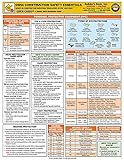
- 2024 OSHA Construction Safety Book is the seventh edition with the new OSHA HazCom final rule on 5/20/24. While the rule takes effect 7/19/24, the compliance dates don’t begin until 1/19/26 per 29 CFR 1910.1200(j).
- Construction Site Book offers quick access to essential OSHA regulations, jobsite hazards, and practical safety tips. It also helps employees identify hazards and prevent injuries and illnesses.
- Features easy-to-read format, full-color images, chapter quizzes with answer key, and comes in a compact size making it a convenient reference for employees.
- Critical topics include Confined Space Entry; Cranes & Derricks; Electrical Safety; Emergency Response; Ergonomics & Back Safety; Excavations; Fall Protection; First Aid & Bloodborne Pathogens; HazCom; Health & Wellness; Jobsite Exposures; Lockout/Tagout; Ladders & Stairways; Materials Handling/Storage; Motor Vehicles; PPE; Scaffolds; Site Safety & Security; Slips, Trips & Falls; Tool Safety; Welding, Cutting & Brazing; and Work Zone Safety.
- Specifications: 5 1/4” x 7 1/4", English, Soft bound. 7th Edition. Copyright 2024.
How do you apply the model to a safety event?
Use the model to trace the path from a hazard to possible harm and examine the defenses along that path. The following sequence is a practical way to structure that analysis, not a formal protocol prescribed by the cited teaching material.
- Identify the hazard and possible harm. State what could cause damage and what the unwanted outcome would be.
- List the intended barriers. Include procedures, equipment, checks, training, supervision, and other safeguards relevant to the event.
- Examine each barrier for weaknesses. Ask how it might be absent, misunderstood, incomplete, bypassed, or ineffective in the circumstances.
- Look for conditions that shaped those weaknesses. Consider organizational decisions, supervisory practices, the work environment, time pressure, and the information or training available.
- Trace how the weaknesses interacted. Explain how the hazard could pass through the defenses and what might have interrupted that path.
The point is not to excuse a frontline action or assume every layer failed in the same way. It is to identify the interacting conditions and defenses that matter to preventing a recurrence.
What does an aviation example show?
An aviation safety-management teaching example describes a Boeing 737-300 diverted to Adelaide in August 1998. During overnight maintenance, staff removed all three life rafts, although the over-water-return check should have involved removing one. During a later preparation check, the two permanent rafts were not checked because staff assumed the installation program was complete. The aircraft subsequently flew over water to Wellington without the legally required life rafts.
The Tool Desk
Outbyte Driver Updater FREEFix the driver behind crashes, sound loss and screen glitchesFind Drivers →Outbyte PC Repair FREEClear out junk files and repair common Windows errorsFree Scan →The teaching material maps contributing conditions across organizational influence, unsafe supervision, preconditions for unsafe acts, and unsafe acts. It lists a protracted modification process, training deficiencies, unfamiliarity with the procedure, ambiguous instructions, misunderstanding of a job card, and time pressure. Seen through the model, the incident is not reduced to one final action: the analysis also asks how work processes, supervision, information, and checks shaped the available defenses.
Rank #3

- FMCSA regulations book includes Parts 40, 380, 382, 383, 387, 390-397, 399 and Appendix G of the FMCSRs. Also covers the ELD rules found in Part 395, Subpart B.
- FMCSA handbook includes a driver receipt page. Helps in documenting that the carrier has supplied drivers with proper regulatory information.
- FMCSR handbook is reprinted every month, ensuring access to up-to-date Federal Motor Carrier Safety Regulations. You will receive the latest edition when you order.
- FMCSR handbook contains regulatory info on a wide range of fleet safety topics: alcohol & drug testing; CDL standards; financial responsibility for motor carriers; driver qualification; safe operation of commercial motor vehicles; hours of service; vehicle inspection, repair & maintenance; transporting hazardous materials; texting ban; employee safety & health standards; minimum periodic inspection standards; & much more.
- Federal Motor Carrier Safety Regulations FMCSR Pocketbook is softbound (perfect bound) with 624 pages and measures 5" x 7".
This is an instructional example from aviation training slides dated 12 May 2023, not an independently verified accident investigation in the sources cited here. Its value is to illustrate the model’s layers, not to establish a complete causal finding.
How is the public-health use different?
The Swiss-cheese metaphor also appears in public-health writing, where it describes layering interventions that are each only partly effective. A 2017 CDC report on community mitigation for pandemic influenza says that nonpharmaceutical interventions can complement one another by plugging different transmission gaps. It likens their combined effect to layering slices of Swiss cheese.
In that context, the analogy is about combining interventions, with the report discussing how to layer them according to pandemic severity and local transmission patterns. It is related to the general idea of imperfect layers, but it is not the same task as analyzing how organizational conditions and safety defenses interacted in an event.
Quick wins for a faster PC:
Clear out junk files and repair common Windows errorsFree Scan →Fix the driver behind crashes, sound loss and screen glitchesFind Drivers →Repair Windows errors before they cause bigger problemsFix Now →What the model can—and cannot—tell you
- It can structure an inquiry: the model directs attention to multiple defenses and to the conditions that can weaken them.
- It can broaden the analysis: a single-person explanation may miss upstream contributors such as supervision, training, procedures, or organizational decisions.
- It does not provide a success rate: the sources cited here supply no named statistic for the model’s effectiveness or a measured reduction in accidents.
- It does not establish causation by itself: the metaphor helps frame questions; evidence about the actual event is needed to support conclusions.
The CDC’s 2017 report says its staff reviewed and synthesized approximately 191 articles, and that authors of 14 systematic reviews and meta-analyses had reported approximately 475 individual studies. Those figures describe a historical review of pandemic-influenza interventions—not studies of the Swiss-cheese model or evidence of its effectiveness. The report’s literature review covered papers through September 2016.
Quick Recap
Product prices and availability are accurate as of the date/time indicated and are subject to change. Any price and availability information displayed on Amazon at the time of purchase will apply.

