
Do these 3 things before closing this tab:
1Fix the driver behind crashes, sound loss and screen glitches2Repair Windows errors before they cause bigger problems3Scan for outdated or missing drivers - takes under a minuteiTechGuides is reader-supported. When you buy through links on our site, we may earn an affiliate commission. As an Amazon Associate I earn from qualifying purchases. Learn more
A working AI demo shows that a system can produce selected results under particular conditions. It does not establish that the system is accurate enough for its intended use, safe and reliable in real workflows, supported over time, or authorized to serve as an official record. Treat a demo as a starting point for evaluation—not proof of production readiness or recordkeeping authority.
What an AI demo proves—and what it does not
A demonstration can show that a model or application performs a chosen task with a selected set of inputs. Its value is evidence of that behavior in the conditions shown. Unless the test conditions and evidence are representative of actual use, it cannot establish how the system will behave with different users, data, edge cases, integrations, or consequences.

NIST’s AI Risk Management Framework (AI RMF) describes validity and reliability in relation to intended use: a system should meet requirements for that use and perform as required across relevant conditions and over time. NIST recommends realistic, representative testing with documented methods, and ongoing testing or monitoring after deployment. A successful demo is not a substitute for that evidence. NIST: Validity and Reliability
- A demo can support: a claim that a particular behavior occurred under the demonstrated conditions.
- A demo alone cannot support: claims about general performance, robustness, reliability, security, suitability for a specific consequential use, or readiness to become an authoritative record.
Why a prototype is not a production system
Production readiness is not just a model-quality question. It depends on the complete system and the organization operating it: data and interfaces, users and review steps, access controls, downstream effects, security and privacy protections, monitoring, incident handling, and accountable ownership. NIST’s AI RMF treats deployment as including system validation and integration into production processes; its operations guidance includes ongoing monitoring, periodic testing, incident and error tracking, and response. NIST AI RMF 1.0
#1 Best Overall
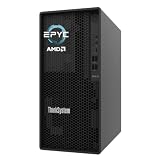
- Powerful AMD EPYC Performance – Powered by AMD EPYC 4244P processor with up to 6 cores, delivering exceptional performance for virtualization, business applications, databases, and growing workloads.
- Memory – Supports DDR5 ECC UDIMM memory for higher bandwidth, improved efficiency, and automatic error correction to help maximize system reliability and reduce data corruption. This build comes with 16GB DDR5 RAM.
- Scalability and Flexibility – Tower servers are designed for easy upgrades and expansion, making them an ideal choice for development teams and growing businesses. They provide a dedicated environment for software development, testing, and deployment. This server is sold without an operating system, allowing you to select and install the OS and software that best fit your specific needs during setup.
- Designed for Small Business and Remote Offices – Quiet tower design with enterprise-grade reliability makes it ideal for file sharing, collaboration, backup, virtualization, and office applications without requiring a dedicated server room.
- Easy to Manage – Features multiple networking options and room for future upgrades, helping protect your investment as your business grows. This server is designed to run 24 hours a day, 7 days a week.
The distinction matters because a prototype may rely on curated inputs, manual setup, or an expert who knows when an answer looks wrong. Those conditions can disappear once a system is used at scale or connected to business processes. A production system needs defined operating conditions, known limits, a way to detect and respond to errors, and a documented process for changes and review. NIST’s measurement guidance emphasizes documenting context, operating conditions, limitations, measures, methods, and outcomes. NIST AI RMF Measure Playbook
Can an AI tool be your system of record?
“System of record” is an organizational designation, not a conclusion established by a successful AI demonstration. Whether an AI system can create or maintain authoritative records depends on the organization’s purpose, governance, applicable legal and sector requirements, retention rules, and controls for accuracy, provenance, review, and correction. NIST’s AI RMF provides voluntary risk-management guidance; it does not itself authorize a system to serve as a recordkeeping authority or settle jurisdiction-specific obligations. NIST AI RMF resources
Rank #2
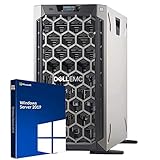
- 3.5 Inch Hot Plug Hard Drive PowerEdge T340 Tower Server Chassis
- Microsoft Windows Server 2019 Standard Operating System
- Processors: Intel Xeon E-2124 Quad-Core 3.3GHz 8MB CPU, Up To 4.3GHz Turbo
- Memory: 32GB (2 x 16GB) DDR4 PC4-21300 2666MHz Unbuffered Memory
- Hard Drive: 8TB (4 x 2TB) 7.2K RPM 6Gb/s SATA 3.5 Inch HDDs in RAID
Before assigning that role, decide what counts as the authoritative record, which outputs are drafts or recommendations, who approves changes, and how a record can be traced, corrected, retained, and audited. Those choices should be documented alongside the system’s intended use and limits—not inferred from the fact that the interface works.
Recommended Free Tools
What to establish before operational use
Use these questions to organize a readiness review. They are not a universal certification checklist: tailor them to the use case, impact, jurisdiction, and sector.
Rank #3

- HP ProLiant DL360 G7 Business Server, the perfect enterprise server or small business server!
- Processors: Dual (2) Xeon X5675 6-Core 3.06 GHz 12MB CPUs Max Turbo 3.46 GHz
- Memory: 72GB (4 x 16GB) DDR3 PC3-10600R Memory; Storage: 3.6TB (4 x 900GB) 10K 12Gb/s SAS 2.5" HDDs
- Power: Redundant Power Supplies; RAID: HP Smart Array P410i-a 12Gb/s with 4×GigaBit NIC
- Hard drives and memory upgrades included separately NOT installed, installation required.
- Purpose and scope: What is the intended use? Which users, inputs, settings, and consequences are in scope, and what uses are explicitly out of scope?
- Conditions and limits: What conditions must hold for the system to be used? What limitations are documented, and how will users recognize cases requiring human judgment or intervention?
- Evidence: Do test cases reflect realistic, representative conditions? Are methodology, outcomes, errors, limitations, robustness, reliability, and the impact of failures documented?
- Integration: Has the complete system been validated in its production process—including people, interfaces, data, access controls, and effects on downstream systems?
- Ownership and response: Who approves use and changes, monitors performance, handles incidents, and decides when to intervene, roll back, or stop use?
- Traceability: Are logs, provenance, responsibilities, and control status sufficient for auditing and troubleshooting?
- Reevaluation: Which changes trigger renewed testing, recalibration, or approval? How often will periodic testing take place?
NIST’s governance guidance connects technical practices to organizational policies, risk tolerance, responsibilities, and the full lifecycle, including third-party software, hardware, and data. The AI RMF is voluntary, and NIST says version 1.0 is being revised; consult NIST’s current status information when using it. NIST AI RMF
Keep AI-generated changes inside review and approval controls
If AI contributes requirements, code, configurations, test results, or deployment inputs, route those outputs through established development and security controls. NIST’s DevSecOps reference model says: “AI-generated outputs are always reviewed through established DevSecOps processes, including peer review, security validation, automated testing, and approval workflows.” It also calls for outputs to be traceable to their source context, logged for auditability, and approved by accountable stakeholders before use. In that model, AI assists with execution; it does not independently deploy or modify production environments. NIST SP 800-204E, DevSecOps Practices for Secure Software Development
This principle applies beyond software changes: an AI-generated action should not alter production state without appropriate review and approval. Define the control gates before connecting an AI tool to systems where its output could change data, configurations, or services.
Plan for the system’s operational responsibilities
Security, privacy, and cyber supply-chain planning are part of responsible operations, not proof that an AI model is valid for its task. NIST SP 800-18 Rev. 2, finalized June 30, 2026, describes plans that identify a system’s purpose, selected-control status, and the responsibilities and expected behavior of people who manage, support, and access it. It is security-planning guidance, not a universal AI production-readiness certification. NIST SP 800-18 Rev. 2
Best Value

- Powerful 9th Gen Processor - The Dell OptiPlex 7070 desktop computer driven by the Intel 8 Core 9th generation i7-9700 processor upto 4.70 Ghz for efficient multitasking.
- Microsoft Windows 11 Pro - This Dell small form factor desktop is Pre-installed with the Windows 11 Professional operating system,Microsoft has re-imagined how the PC should work for you and with you. This Windows 11 desktop computer is redefining productivity.
- Multitask Smoothly - The Dell OptiPlex is equipped with a blazing fast New 1TB M.2 NVMe SSD to store important files and applications, support faster Boot speed and faster storage rates.
- High Performance Office Desktop- The business desktop computer is a solid workstation that is suitable for both home and business computing. The roomy desktop tower case allows for future expansion making it a great fit for an office PC.
- Rich Ports - This Dell OptiPlex Computer with 5 x USB 3.1 ports,4 x USB 2.0 ports, 2 x display ports,which support for two displays. Also wireless keyboard & mouse.
Likewise, there is no universal accuracy percentage, number of test cases, or uptime threshold that turns a prototype into a production system. The appropriate evidence and controls depend on intended use and the consequences of error. Risk management also involves trade-offs among trustworthiness characteristics, so organizations need accountable decisions rather than a single demo score. NIST: Trustworthiness Characteristics
Quick Recap
Product prices and availability are accurate as of the date/time indicated and are subject to change. Any price and availability information displayed on Amazon at the time of purchase will apply.

