
iTechGuides is reader-supported. When you buy through links on our site, we may earn an affiliate commission. As an Amazon Associate I earn from qualifying purchases. Learn more
Real-time location systems (RTLS) can help hospitals find tagged equipment and, where appropriate, monitor the location of people or environmental conditions. Their clearest safety contribution is operational: teams can locate equipment, manage its availability, and organize maintenance more effectively. NHS England reported that a 2023/24 trial at Mid Cheshire reduced clinical incidents related to tracked equipment by 75% and saved frontline staff up to 30 minutes a day searching for devices. Those are results from one local case—not a measure of how much safer hospitals become worldwide.
What RTLS does in a hospital
RTLS combines tags attached to assets or worn by people with a receiving infrastructure and software that estimates location. Depending on the design, the system may also show equipment details, maintenance status, or alerts. It gives staff a shared view of where tagged items are, rather than relying only on memory, phone calls, or manual searches.

There is no single universal RTLS architecture. At Mid Cheshire, RFID and Bluetooth Low Energy tags communicated through hospital Wi-Fi; Cisco DNA Spaces and an AeroScout engine were used to estimate location. Staff could view location and device or maintenance information in a portal. That configuration is one implementation, not a requirement for every hospital.
What the Mid Cheshire case shows
NHS England Digital’s case study, last edited 22 May 2025, describes a trial at Leighton Hospital, a 540-bed site within a trust providing acute care to around 300,000 people and employing more than 5,000 staff. Those figures describe the setting, not the system’s effectiveness.
#1 Best Overall
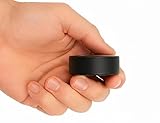
- GPS tracker for vehicles and assets. View your device's location and location history on a live map through the iOS and Android companion app. Mini GPS tracker suitable for cars, trucks, trailers, and other assets.
- Recover Stolen Vehicles Fast: Real-time location updates every 3 seconds, instant alerts, police reporting mode. Track cars, trucks, ATVs, and assets across 150+ countries with trip history.
- Premium Build: True global GPS signals with updates as fast as every 3 seconds. Extended battery life lasting weeks. USA-based support.
- Fleet and Asset Tracking: Fleet managers and business owners use SpaceHawk for real-time location data, smart alerts, and live support. Suitable for fleet management and asset tracking.
- Mini GPS Tracker, Full Featured: Waterproof build, geofence alerts, police reporting mode, easy iOS and Android app setup. See live location from your phone in seconds.
Equipment availability and search time
NHS England reported a 75% decrease in clinical incidents related to tracked equipment during the 2023/24 trial. It also reported that frontline staff saved up to 30 minutes per day locating equipment. The case describes an earlier pilot involving 400 infusion pumps and an initial rollout of 200 tags; at a later stage described in the case, 450 tags/devices were active. These counts refer to different stages and should not be treated as one simultaneous deployment total.
The practical mechanism is straightforward: if staff can see where a device is, they may spend less time searching and be less inclined to hoard equipment near their ward. Jackie Cox, the trust’s Chief Nursing Information Officer, said the loan store was “rarely not stocked” after rollout and that biomedical engineering staff were alerted when replenishment was needed. This is the trust’s account of its experience, not a controlled comparison establishing that every RTLS deployment will have the same result.
Rank #2

- Premium GPS Tracker — The LandAirSea 54 GPS tracker provides accurate global location, real-time alerts, and geofencing. Easily attaches to vehicles, ATVs, golf carts, or other critical assets.
- Track Movements in Real-Time — Track and map (with Google Maps) in real-time on web-based software or our SilverCloud App. Location updates as fast as every 3 seconds with historical playback for up to 1 year.
- Powerful & Discreet — The motion-activated GPS tracker will sleep when not in motion for extended periods, preserving the battery life. The ultra-compact design and internal magnet create the ultimate discreet tracker.
- Lifetime Warranty — This GPS tracker is built to last. LandAirSea, a USA-based company and pioneer in GPS tracking offers a unconditional lifetime warranty that covers any manufacturing defects in the device encountered during normal use.
- Subscription Required — Affordable subscription plans are required for each device. Fees start as low as $9.95 a month for annual plans and $19.95 for monthly plans. No contracts, cancel anytime for a hassle-free experience.
Maintenance and device readiness
RTLS can support maintenance as well as retrieval. At the point described in the case study, no tracked device had missed planned preventative maintenance. The system let staff order tagged devices by maintenance date so the team could prioritize equipment nearing its maintenance window. That can help teams find devices that need servicing and reduce the risk of overlooking them; it does not by itself prove that a device is safe or properly maintained.
Free tools Windows power users keep installed
One-click scans. No signup required.
What the wider evidence can—and cannot—establish
A 2021 systematic review included 42 articles on RTLS in healthcare. The authors classified 24 studies as observational, 12 as descriptive, and 6 as experimental. The settings included emergency departments in 12 studies, entire hospitals in 7, and surgical wards in 6. The review concluded that RTLS can be a useful adjunct for process and quality improvement, workflow analysis, and patient safety.
Rank #3

- GPS Tracker - Track Cars and Trucks - Hardwired Installation - Requires a 2 wire Easy direct on Car’s Battery installation (Positive and Negative).
- Flexible Subscription: Enjoy the benefits of an affordable monthly subscription at USD 12.95, with the freedom to cancel at any time. Transparent pricing ensures no undisclosed fees, providing a cost-effective solution for your GPS tracking needs. Cancel Anytime - No Contract - No Hidden Fees.
- Real-time Tracking Precision: Tracks every 30 seconds and on every turn. Upgrade to 10-second reporting. Responsive tracking on corners provides a comprehensive view of vehicle movements, enhancing overall tracking precision.
- Email and Text Message Alerts for Movement, Speeding, Leaving or Entering Areas, Energy Disconnected - Driving Reports – 1 Year Tracking Historical Data Saved During Service.
- Nationwide Coverage: Enjoy reliable GPS tracking coverage across the entire USA, providing a seamless and robust tracking experience wherever your vehicles operate.
The study mix matters. Observational and descriptive work can reveal where systems are used and how workflows change, but it does not necessarily show that RTLS caused a safety improvement. The review also noted that relatively few studies used quantitative techniques to analyze RTLS data effectively. The literature therefore supports potential and practical uses more strongly than a single, generalizable estimate of clinical benefit.
An older, three-year qualitative study examined 23 U.S. hospitals through 80 semi-structured interviews. In those studied contexts, asset tracking emerged as the best use, and the authors emphasized whole-hospital deployment and centralized control. This is historical implementation evidence from that period, not a current ranking of hospital technology or proof that one approach fits every institution.
Rank #4

- Accurate, Discreet, Real-Time GPS Tracker with POWERFUL Twin Magnet Case.
- Requires a monthly subscription.
- Battery Life up to 2 months reporting at the default 1 minute update setting.
- Set up custom INSTANT ALERTS – text and/or email.
- Customizable position updates up to every 10 seconds.
Where hospitals may use RTLS for safety
Finding and managing equipment
Locating pumps and other tagged devices can support availability, return, cleaning, and maintenance routines. This is the best-supported use in the Mid Cheshire case, where the reported outcomes concern tracked equipment.
Patient and staff safety applications
HID describes product applications including infant security, vulnerable-patient wander management, and staff duress alerts. These are vendor-described capabilities; the product information does not independently establish that they reduce injuries or improve clinical outcomes. Any hospital considering such a use needs to assess the specific workflow, coverage, alert handling, and governance requirements.
Workflow and environmental visibility
Vendor materials also describe hand-hygiene monitoring, wayfinding, and environmental monitoring. These can make processes or conditions more visible, but visibility is not the same as compliance or a better outcome. Results depend on how reliable the data are and whether staff can act on alerts and information in time.
Independent reader supportYour contribution helps us test, update, and keep practical guides available for everyone.What a hospital should plan before deployment
RTLS is an operational system, not simply a set of tags. NHS England’s Mid Cheshire case highlights several practical conditions that affect whether location information is useful:
- Current maps and zones: Floor plans and named areas must reflect the actual building so that displayed locations make sense to staff.
- Wireless coverage: Survey coverage before rollout; gaps can undermine location estimates and alerts.
- Usable staff routines: The process for finding, returning, cleaning, or servicing a device should be easy to follow. Engage frontline teams so the system fits how care is delivered.
- Integration and action: Decide how location, asset records, maintenance dates, and alerts will reach the people responsible for acting on them.
- Ongoing support and scale: Plan for system maintenance, tag management, and expansion rather than treating installation as the end of the work.
- Information governance: Tracking people raises different privacy and governance issues from tracking equipment. Mid Cheshire initially avoided person tracking because the information-governance requirements were complex.
How to assess an RTLS proposal
Hospitals should start with a defined safety or workflow problem, then assess whether a proposed system can address it in that setting. Useful questions include:
What’s actually slowing this PC down?
Pick the symptom - the matching free tool is one click away.
- Is the target use case asset tracking, people tracking, or environmental monitoring?
- What location granularity and coverage are needed for the intended task?
- Are tags compatible with the existing infrastructure, and what network or map changes are required?
- How will data connect to clinical or asset-management systems, and who is responsible for alerts and maintenance actions?
- Can staff use the system without adding unworkable steps to care routines?
- What privacy, access, retention, and information-governance controls apply, particularly if people are tracked?
- How will the hospital measure outcomes against a baseline, and distinguish system effects from other operational changes?
The available evidence does not establish a representative global effect size or provide a neutral current vendor comparison. A hospital should therefore evaluate a deployment against its own use case and baseline rather than assume that a published local percentage will transfer to its site.
Quick Recap
Product prices and availability are accurate as of the date/time indicated and are subject to change. Any price and availability information displayed on Amazon at the time of purchase will apply.

