
Crashes, No Sound, or Screen Glitches?
Random freezes, missing sound and display glitches usually trace back to one bad driver. Find and replace yours safely.Free scan · under a minuteWindows Errors? Fix Them Before They Spread
Repair common Windows errors and clear accumulated junk for a smoother, more stable PC - no reinstall needed.Free scan · no reinstalliTechGuides is reader-supported. When you buy through links on our site, we may earn an affiliate commission. As an Amazon Associate I earn from qualifying purchases. Learn more
WordPress portfolios can be built with custom themes, classic themes, page builders, portfolio-focused tools, or block themes. In its September 28, 2026 roundup, Colorlib reports examining theme files, plugin folders, and generator tags across 32 portfolio sites. Its findings include 19 classic-theme sites, 14 of them custom-built or adapted, eight page-builder sites, three Semplice sites, and two block-theme sites. These are Colorlib’s reported attributions, not an independent audit or a ranking of which approach is best.
The examples show how to make creative work easier to browse, give projects useful context, and connect a portfolio to services, publishing, or a shop. The source’s available descriptions are more detailed for some sites than others, so the examples below focus on the cases it specifically describes rather than guessing at missing details.

What the 32 examples show about WordPress portfolio approaches
Colorlib’s roundup spans graphic and UX design, illustration and art, photography, architecture and interiors, writing, and WordPress development. The reported implementations range from bespoke and adapted classic themes to visual builders and block themes. The named tools include Semplice, Divi, Elementor, Beaver Builder, Astra, Kadence, Ollie, Minimalio, and Ohio.
Free tools Windows power users keep installed
One-click scans. No signup required.
The counts describe the roundup’s sample, not the share of all WordPress portfolios using each approach. They also do not establish that one theme or builder performs better than another. Colorlib describes its attributions as based on inspecting site code and theme-related files; individual sites and their software may change over time.
#1 Best Overall
Portfolio examples with useful ideas to borrow
Mackey Saturday: frame projects as case studies
Colorlib identifies Mackey Saturday’s site as using Semplice. Its project pages open with the question the work addressed, giving visitors a reason to look beyond the finished visuals. A similar structure can help a designer explain the problem, constraints, and decisions behind a project.
Anthony Burrill: separate the portfolio from the shop
The roundup describes Anthony Burrill’s custom theme as separating the showcase, shop, archive, and profile. It reports that the shop uses WooCommerce. The useful design idea is the clear division between browsing work and shopping, rather than making commerce the center of every portfolio.
Ingrid Picanyol Studio: let visitors filter by discipline and sector
Colorlib reports that Ingrid Picanyol Studio uses a bespoke theme and WPML, with filters for discipline and sector and longer case studies. Those filters can help prospective clients reach relevant work without scrolling through an undifferentiated gallery.
The Tool Desk
Outbyte PC Repair FREEClear out junk files and repair common Windows errorsFree Scan →Outbyte Driver Updater FREEScan for outdated or missing drivers - takes under a minuteDriver Scan →Rank #2
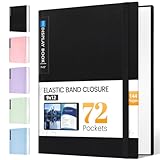
- 72-Pocket Large Capacity Portfolio: The art binder includes 72 bound (non-refillable) top-loading clear sheet protectors, displaying up to144 pages. Fits 9”x12" letter size or smaller. Measures 12 7/8" (L) x 9 11/16" (W) x 1 1/2" (G).
- Elastic Band for Secure Protection:For total peace of mind, a sturdy elastic band keeps your portfolio securely fastened. Your important papers stay put, organized, and protected from damage.
- High Transparency & Tailor-Made Spine Title: Our presentation book with crystal clear PP sheet protectors offers complete transparency for checking through and organizing. You can label and identify your watercolors, sketches, scrapbook, art pieces, sheet music, certificates, and other projects by customizing the reversible spine insert.
- Archival Grade & Heavy Duty Cover: Made from robust yet light weight, polypropylene which is archival quality, acid-free and non-glare, and water-proof. Thickened and sturdy cover won’t easy to crack and keeps your clear sleeves from being damaged.
- Multi-Function: Not only suitable for long-term storage but also for displaying your paintings, photos, artwork, drawing, stencils. Great gift for students, teachers, office workers, secretaries, musicians, painters, etc.
Andrew Webb: account for confidential projects
The roundup says Andrew Webb uses Divi projects and password-protected case studies for confidential work. This is one way to show that a project exists while limiting access to its details. A password gate is useful only when the material actually needs restricted access; it should not obstruct public work.
Christoph Niemann: make a varied archive navigable
Christoph Niemann’s archive can be filtered by strands such as magazine covers, visual essays, and site-specific art, according to Colorlib. The approach suits a creator whose work spans distinct formats: visitors can browse by the kind of work they want to see.
James Maher and Ami Vitale: connect photography to related content
Colorlib identifies James Maher’s site as an Astra child theme combining a photography archive, print gallery, and column, with WooCommerce. Ami Vitale’s site organizes photographs into stories and includes a shop for prints, a book, portfolio reviews, and classes. Both examples show that a portfolio can sit alongside other parts of a creative practice when those additions serve the audience.
Rank #3

- HIGH-QUALITY MATERIALS: Black front and back covers made of sturdy polypropylene and 12-pocket/24-pages made of clear non-glare polypropylene to provide long-lasting, spill-proof, stain-resistant durability paper report covers can't provide.
- DISTINCTIVE DETAILING: Rounded corners, sturdy weight front and back cover, and a full-page front exterior clear pocket to complement your polished presentation.
- ACCOMMODATING: Each pocket holds back-to-back sheets for times when a book-style presentation is preferred to a front page only display.
- ADDENDUM POCKET: Back cover includes a slanted clear poly interior pocket to hold extra documentation or materials
- CLASSIC LOOK: Black 0.375" spine, front/back covers with heat-welded seams for a polished lay-flat look to complement your work
Rozana Montiel: make collaboration visible
The roundup names Hello Elementor and Elementor Pro for Rozana Montiel’s site and notes that project pages foreground collaborators and credits. For work produced by a team, credit information helps visitors understand who contributed and what the portfolio owner did.
Karen Rempel and Mark Root-Wiley: orient visitors before they browse
Karen Rempel organizes writing samples by document type. Mark Root-Wiley places audience and service focus before project examples. These are two ways to help a potential client decide quickly whether the work and services match their needs.
Cory Hughart and Carrie Dils: use block themes for developer portfolios
Colorlib identifies Cory Hughart and Carrie Dils as developer examples using block themes, including custom or child-theme work. For a developer, the implementation can itself be part of the portfolio, but it still needs to make the projects and services easy to find.
Rank #4

- Come with Black Inner Sheets: Each sleeve has a black inner sheet which makes for a great background if your inserted art is smaller than 11.18" x 17.4". Not only make your paintings flat and wrinkle-free but also let you insert or remove the drawings fast and easily.
- Customizable Spine Title: You can customize your watercolors, sketches, newspaper pages, art pieces and illustrations by using the reversible spine insert. It’s a good choice for a better classification and easily find the artwork you want.
- High Transparency & Lies Flat When Open: Our presentation book with crystal clear PP sheet protectors offers complete transparency for checking through and organizing. Bound sheet protector lies flat when open, free your hands.
- Heavy Duty & Excellent Protection: Made from durable polypropylene which is archival quality, acid-free, non-stick, and non-glare, and water-proof. Thickened and sturdy cover won’t easy to crack and keeps your clear sleeves from being damaged.
- Large 11x17 or A3 Art Portfolio Folder: Folder measures 17 3/4" (L) x 11 13/16" (W) x 13/16" (G). Suitable for artwork storage and displaying your 11.18" x 17.4" or A3 artwork.
How to choose an approach for your own portfolio
Use the roundup as inspiration, not as a controlled comparison. Choose around the work you need to publish, the way visitors should browse it, and the amount of technical upkeep you are willing to handle.
| Approach | What it can suit | Trade-off to consider |
|---|---|---|
| Custom or adapted classic theme | A distinctive presentation or a project archive shaped around a specific practice. | Custom work can mean more responsibility for changes and ongoing maintenance. |
| Page builder | Creators who want to assemble layouts visually; the roundup names Divi, Elementor, and Beaver Builder among its examples. | Consider how much the site depends on a builder and its related plugins, and whether you are comfortable maintaining them. |
| Portfolio-focused editor | A workflow centered on presenting individual creative projects; Colorlib reports three Semplice sites in its sample. | Check that the project structure and editing workflow fit your needs before committing. |
| Block theme | Creators who want to build and edit layouts with WordPress’s block-based approach; the roundup reports two examples. | Confirm that the theme’s available patterns and project organization support the presentation you want. |
These trade-offs are selection questions, not measured comparative results. The roundup does not establish a universal winner for cost, speed, or ease of use.
Design the project archive before choosing visual effects
A portfolio works best when a visitor can find relevant work and understand what they are looking at. Before settling on a theme, decide how projects will be grouped and what information belongs on each project page.
Best Value

- Includes 24 bound non-refillable top-loading sleeves displaying 48 viewable pages, plus 24 acid-neutral black mounting paper inserts.
- Ideal for artwork, prints, certificates, watercolors, modeling portfolio, collectibles, posters and sketches.
- Black mounting paper provides a polished display for artwork, photos, certificates, and documents.
- Protects artwork and documents from ink lift-off, yellowing, and everyday wear.
- Fits 9" × 12" Artwork
- Make browsing purposeful. Use project categories or filters when they help visitors narrow a substantial body of work, such as by discipline, sector, format, or service.
- Give each project context. Add the brief or question, your role, collaborators, client or credits where appropriate, and the decisions or outcome that matter. A gallery of images alone may not explain the work.
- Choose a clear next step. Make contact, services, or availability easy to find for visitors who want to work with you.
- Keep access proportional. Public examples should be straightforward to open; reserve password protection for work that genuinely needs it.
When to add a shop, blog, or other publishing
A portfolio can share a site with a shop or editorial content if those features support the creator’s work. The examples in Colorlib’s roundup include photographers and artists selling prints, books, or classes; the roundup also describes a site that publishes print sizes and prices and accepts orders by email. Selling is optional, not a requirement for a professional portfolio.
Before adding commerce, decide what visitors need to buy, how orders will be handled, and whether a dedicated shop section will keep the portfolio easy to browse. If the main goal is to win client work, make sure products or posts do not obscure the projects and contact route.
WordPress software, hosting, and upkeep
WordPress is the publishing software; hosting is the service that makes a site available online. Colorlib describes its examples as self-hosted WordPress sites and names providers including Bluehost, SiteGround, Flywheel, Kinsta, and WP Engine. Those mentions are part of the roundup, not an independent comparison of hosting services.
Quick wins for a faster PC:
Scan for outdated or missing drivers - takes under a minuteDriver Scan →Clear out junk files and repair common Windows errorsFree Scan →Fix the driver behind crashes, sound loss and screen glitchesFind Drivers →Plan for maintenance whichever theme approach you choose. Serve appropriately sized images, use caching where suitable, keep plugins maintained, and check the site after updates. Image-heavy portfolios especially need attention to image delivery. Colorlib reports homepage transfer observations for some sites, but the available account does not establish a reproducible test protocol, so those observations should not be treated as general performance benchmarks.
Quick Recap
How to use the examples without copying their stack
- Identify the visitor. Decide whether the portfolio is meant for prospective clients, employers, readers, buyers, or another audience.
- Map the work. List the projects and the categories or filters that would help that audience browse them.
- Choose the project-page structure. Determine which details—such as brief, role, credits, or outcome—are useful for each kind of work.
- Pick the editing approach. Compare a classic or custom theme, a builder, a portfolio-focused editor, and a block theme against your layout needs and comfort with maintenance.
- Add only useful extras. Include a shop, blog, or other content when it supports the audience’s next step.
- Review the live experience. Check navigation, images, project pages, contact routes, and key features after changes or updates.
Product prices and availability are accurate as of the date/time indicated and are subject to change. Any price and availability information displayed on Amazon at the time of purchase will apply.

