
Recommended Free Tools
iTechGuides is reader-supported. When you buy through links on our site, we may earn an affiliate commission. As an Amazon Associate I earn from qualifying purchases. Learn more
PingFederate’s Reference ID Adapter can pass user attributes between an application and PingFederate through HTTP(S), but it does not itself exchange or validate Microsoft Entra tokens. A broker could use the adapter’s reference-based handoff as one part of an Entra account-linking design: keep the reference out of browser-visible token handling, retrieve attributes server-side, and bind the resulting connection to the authenticated portal user. That is a proposed architecture, not a verified end-to-end PingFederate–Entra integration.
What the Reference ID Adapter does—and does not do
Ping Identity describes the adapter as a way for user attributes to pass into and out of PingFederate through direct HTTP(S) calls. It provides a reference-based bridge to attributes associated with a PingFederate adapter instance; it is not, by itself, an Entra token broker or a mechanism that proves an Entra token is valid.
The Agentless Integration Kit documents two routes: /ext/ref/dropoff accepts user-session attributes, and /ext/ref/pickup retrieves attributes. The routes and the adapter’s behavior are described in Ping Identity’s Reference ID Adapter endpoint documentation. The attributes and reference are the handoff; any Entra-specific token exchange, validation, or refresh-token use requires separate application or identity-provider logic.
What’s actually slowing this PC down?
Pick the symptom - the matching free tool is one click away.
How an Entra-linking broker could use the handoff
The proposed pattern is to put a trusted server-side broker between the portal and the attribute retrieval step. The reference should be treated as an opaque, short-lived retrieval handle—not as an Entra access token, a user identity, or a credential that can safely be exposed as a durable browser value.
#1 Best Overall

- Supports FIDO2 biometric authentication services and FIDO U2F services requiring security key functionality. Secure and flexible authentication across multiple platforms.
- Exceptional biometric performance, 360° readability, and advanced anti-spoofing technology.
- Designed for portability, it comes with a cover to protect the security key when not in use.
- Aligns with cybersecurity measures that comply with key privacy laws and regulations, including GDPR, BIPA, and CCPA. Approved for use in U.S. federal government institutions.
- Passkey compatibility with Microsoft, Google, and Apple for a convenient and secure sign-in experience. Certified for Microsoft Entra ID for secure multifactor integration with Microsoft services.
- Authenticate the person to the portal. The portal establishes its own authenticated session and has a subject identifier from its token.
- Obtain a reference through the relevant PingFederate flow. The design depends on a component creating or returning a valid reference for the adapter instance. The reference itself is not evidence that the user’s Entra credentials have been verified.
- Send the opaque reference to the broker. Keep it out of logs, URLs, and persistent browser storage where possible; the broker should handle retrieval on the back channel.
- Have the broker authenticate to the configured pickup endpoint. The broker retrieves the associated attributes with
/ext/ref/pickupusing the endpoint authentication method configured for that deployment. - Bind before storing a connection. The proposed article says to compare the retrieved subject with the portal token’s
sub, test the refresh token by redeeming it, and store the connection encrypted. These are design claims from the article, not independently verified integration behavior.
The indexed article describing this approach explicitly says the live PingFederate/Entra path has not been verified end to end. Its flow should therefore be treated as a design pattern to evaluate and test in the target environment, not as a supported recipe or a demonstrated integration. See the article’s description of the proposed broker pattern.
Choose how the broker authenticates to the endpoints
The integration documentation describes four endpoint authentication approaches. They differ in credential handling and transport; Ping Identity’s guidance does not provide a comparative security ranking. Select one that meets the deployed environment’s policy and is supported by the client and server configuration.
Rank #2

- POWERFUL SECURITY KEY: The Security Key C NFC is the essential physical passkey for protecting your digital life from phishing attacks. It ensures only you can access your accounts.
- WORKS WITH 1000+ ACCOUNTS: Compatible with Google, Microsoft, and Apple. A single Security Key C NFC secures 100 of your favorite accounts, including email, password managers, and more.
- FAST & CONVENIENT LOGIN: Plug in your Security Key C NFC via USB-C and tap it, or tap it against your phone (NFC) to authenticate. No batteries, no internet connection, and no extra fees required.
- TRUSTED PASSKEY TECHNOLOGY: Uses the latest passkey standards (FIDO2/WebAuthn & FIDO U2F) but does not support One-Time Passwords. For complex needs, check out the YubiKey 5 Series.
- BUILT TO LAST: Made from tough, waterproof, and crush-resistant materials. Manufactured in Sweden and programmed in the USA with the highest security standards.
| Method | Credential and transport | Configuration or fit |
|---|---|---|
| Bearer access token | Access token in the HTTP Authorization header |
Configure the Access Token Manager, allowed client IDs, and required bearer scopes for the adapter. |
| Client certificate | Client’s SSL private key and corresponding public certificate, exchanged during TLS negotiation | Uses the back-channel port; the certificate is not sent as an HTTP header. |
| Custom headers | Configured username and pass phrase in ping.uname and ping.pwd |
Vendor guidance positions this for clients that cannot use Basic encoding or certificate authentication. |
| HTTP Basic | Base64-encoded configured username and pass phrase in the HTTP Authorization header |
Requires a client capable of sending Basic authentication and matching adapter credentials. |
These mechanics are from Ping Identity’s endpoint authentication documentation. Do not assume Entra credentials are accepted directly by the Reference ID Adapter: the proposed broker design does not establish that, and endpoint authentication is a separate configuration.
Reference IDs are short-lived, single-use handles
Ping Identity’s development guidance says a reference ID is a long hexadecimal string whose length is configurable; the documented default is 30 bytes. Each reference belongs to the adapter instance that issued it. A reference is single-use and expires after a configurable interval, with a documented default of three seconds. The short lifetime is intended to reduce replay risk.
Rank #3

- Supports FIDO2 biometric authentication services and FIDO U2F services requiring security key functionality. Secure and flexible authentication across multiple platforms.
- Exceptional biometric performance, 360° readability, and advanced anti-spoofing technology.
- Designed for portability, it comes with a cover to protect the security key when not in use.
- Aligns with cybersecurity measures that comply with key privacy laws and regulations, including GDPR, BIPA, and CCPA. Approved for use in U.S. federal government institutions.
- Passkey compatibility with Microsoft, Google, and Apple for a convenient and secure sign-in experience. Certified for Microsoft Entra ID for secure multifactor integration with Microsoft services.
- Coordinate delivery and pickup carefully: a three-second default leaves little room for avoidable network delay.
- Keep application-server and federation-server clocks reasonably synchronized. Increase the configured duration only as needed to tolerate clock skew.
- Use the reference with the same adapter instance that issued it, and do not assume it can be retried after use.
- An invalid reference produces an empty attribute set; incorrect client credentials can produce HTTP 401.
These defaults and behaviors are described in Ping Identity’s development considerations. Treat them as adapter behavior to confirm against the deployed version and configuration.
Adapter configuration shapes the attribute contract
The PingFederate administrator documentation describes configuration for the application authentication endpoint and credentials, optional certificate distinguished-name restrictions, logout settings, an extended adapter contract, a unique user-key setting, pseudonym flags, log masking, and contract mappings. Mappings can draw on adapter values, defaults, datastore queries, request context, text, or expressions. Token Authorization can check criteria before the adapter contract is issued.
Rank #4
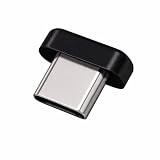
- FIDO2 + FIDO U2F certified security key, supports PIV credential authentication
- Sits with a low-profile when plugged-in
- Works in every browser without installing any drivers
- Supports desktops, laptops, tablets, and Android mobile devices via USB-C
- Helps protect your accounts from phishing and other cyber-attacks. Prevents your devices from unauthorized use.
For an account-linking design, the contract is where the relevant attributes and identity key need to be deliberately defined. The broker should not infer that a returned attribute is an Entra identity or proof of token validity merely because it came through the adapter. Confirm which component supplies each attribute, how it is mapped, and which subject the value represents. The configuration overview is in Ping Identity’s Reference ID Adapter administration documentation.
Free tools Windows power users keep installed
One-click scans. No signup required.
Version and compatibility matter
PingFederate’s administrator page cited here is on the 12.2 documentation branch and identifies version 12.2.8 in its page header; it also offers documentation selectors for 12.3 and 13.x. Verify the branch against the installed PingFederate release rather than assuming that a page for one branch describes every deployment.
Best Value
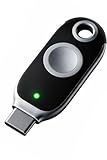
- FIDO2 + FIDO U2F certified and supported USB security key
- Supports Computers, Laptops, Tablets, and Mobile Devices with a USB-C port and/or NFC
- Works without downloading any drivers. Supported OS: Android, Chrome OS, Windows, MacOS, Linux
- Durable design made to last for a long time with everyday use. Water-resistant (IP67)
- Helps protect your accounts from phishing and other cyber-attacks. Prevents your devices from unauthorized use.
The Agentless Integration Kit changelog records bearer-token authentication as added in version 2.1 in March 2025, a correction in version 2.3.1 in February 2026, and version 2.4.0 in September 2026. Check the installed kit version and its compatibility with the PingFederate release before relying on a feature or behavior. The dated entries are in the Agentless Integration Kit changelog.
Security questions to resolve before implementation
The proposed broker approach suggests safeguards, but the available article description does not establish that they have been tested. Review them as design requirements and verify their behavior in your own deployment:
- Can each link intent be bound to the initiating portal owner and consumed only once?
- Does the broker compare the retrieved subject with the authenticated portal token’s
subbefore associating credentials? - Are requested scopes limited to an explicit allowlist?
- Is a returned refresh token redeemed promptly to verify the intended flow before a connection is accepted?
- Are stored credentials encrypted, and are they cleared if a later scope-escalation event requires renewed consent?
These checks address the broker’s ownership and credential lifecycle; they do not replace independent Entra token validation or testing of the full flow. Establish the end-to-end behavior—including expiry, replay, clock skew, authentication failures, and error handling—before treating the design as operational.
Quick Recap
Product prices and availability are accurate as of the date/time indicated and are subject to change. Any price and availability information displayed on Amazon at the time of purchase will apply.

