
What’s actually slowing this PC down?
Pick the symptom - the matching free tool is one click away.
iTechGuides is reader-supported. When you buy through links on our site, we may earn an affiliate commission. As an Amazon Associate I earn from qualifying purchases. Learn more
A grocery store can learn from a stockout by recording the event consistently, finding whether the item was missing from the building or only from the shelf, linking it to inventory and supply records, and assigning a fix to the cause. The loop is only successful if the store then checks whether availability improved without unacceptable increases in waste, labor, capacity pressure, or cost.
What causes grocery store stockouts?
“Out of stock” describes what a shopper experiences, not necessarily what went wrong. A product may be unavailable because the store did not receive enough, an order was late or too small, the inventory record was wrong, or stock already in the building never reached the shelf. Some events involve more than one cause.


That distinction matters: a supplier or ordering fix will not solve a product sitting in the backroom, and more store-level replenishment will not fix a shipment that never arrived.
Quick wins for a faster PC:
Clear out junk files and repair common Windows errorsFree Scan →Fix the driver behind crashes, sound loss and screen glitchesFind Drivers →Why is the shelf empty when the store says it has stock?
A system quantity is a record, not a physical count. If the record overstates stock, the ordering system may believe there is enough inventory and delay a replenishment order even after the physical supply has run low. If the record understates stock, the store may order more than it needs.
#1 Best Overall

- EASY TO USE - The inventory and sales log book are easy-to-use inventory books that help you track inventory, purchases, sales, balances, unit and total costs, and manage reorders - all in one place. Easy track your inventory for small businesses.
- MONITOR YOUR DATAS - Using a sales inventory book to store all your data, you can consult your records whenever needed. Optimize your business and generate the most benefit.
- UNIQUE DESIGN - We make sure you can tailor this inventory log book to your enterprise business needs to take full advantage of its capabilities. It will work for online, consignment, home or in-store businesses.
- HIGH QUALITY - This sales book for your business, sales book size of 5.8" x 8.5", just the perfectly size to fit in your backpack, purse or laptop case. Is used to high quality 100gsm pure white paper, elastic band and a back pocket for extra space.
- THE PERFECT GIFT - Use inventory and sales log book for your personal or samll business finances, give it to your friends, family as a gift for Birthday| Easter|Children's Day|Halloween|Thanksgiving|Christmas|Back to school and New Year's Day.
Even when the recorded quantity is accurate, items may be in a backroom, cage, trolley, or wrong location rather than where shoppers can reach them. Receiving or put-away mistakes, misplaced products, unrecorded damage or waste, theft, and checkout or adjustment errors can also create a mismatch between the record and reality. ECR Retail Loss describes these as potential contributors to shelf gaps in its on-shelf availability work.
How can stores tell whether an item is out of stock or just missing from the shelf?
Separate a store out-of-stock (no usable stock on the premises) from a shelf out-of-stock (stock may be in the building but unavailable to shoppers). ECR Retail Loss uses this distinction because the two conditions call for different investigations and remedies.
| What the check finds | Likely area to investigate | Example response |
|---|---|---|
| No physical stock on the premises | Supplier availability, delivery timing, forecast, order quantity, or replenishment rules | Compare the order and expected delivery with what arrived; review demand assumptions and supplier timing. |
| Stock in the building but not on the shelf | Inventory accuracy, receiving and put-away, product location, or shelf-replenishment routine | Locate and move the stock, correct the record or process, and check whether the shelf routine is working. |
| System and physical quantities disagree | Record accuracy and the transactions that changed the quantity | Check receiving, sales, adjustments, waste, damage, and counts before changing the record. |
Do not assign a cause from a single signal. A high system quantity alongside an empty shelf, for example, is a reason to check physical stock and transaction history—not proof that a specific team or process failed.
Windows Errors? Fix Them Before They Spread
Repair common Windows errors and clear accumulated junk for a smoother, more stable PC - no reinstall needed.Free scan · no reinstallCrashes, No Sound, or Screen Glitches?
Random freezes, missing sound and display glitches usually trace back to one bad driver. Find and replace yours safely.Free scan · under a minuteWhat should the store record when a stockout happens?
Use an agreed definition of availability and capture enough detail to reconstruct the event. At a minimum, record:
- Item, store, date, and time.
- Whether the shelf was empty or partly available, and whether the item could be found elsewhere in the building.
- System inventory and any physical quantity checked.
- Recent sales and whether a promotion was active.
- Known receiving, put-away, replenishment, or delivery events.
Consistent definitions make comparisons meaningful across stores and trading partners. FMI’s 2015 taskforce summary called for a baseline on-shelf availability definition, agreed event-forecast data, aligned retailer and supplier timing, and contingency thresholds for events: FMI taskforce summary.
How can a store connect the event to its cause?
Bring the stockout record together with the signals that explain how stock should have moved. Compare sales and inventory with physical audits, receiving and put-away events, shelf or gap checks, promotion details, supplier and delivery signals, and the replenishment actions taken. Then ask whether the recorded stock matched the physical product and whether orders were placed and received as expected.
Rank #3
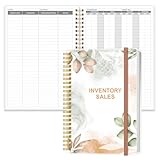
- EASY TO USE - The inventory and sales log book are easy-to-use inventory books that help you track inventory, purchases, sales, balances, unit and total costs, and manage reorders - all in one place. Easy track your inventory for small businesses.
- MONITOR YOUR DATAS - Using a sales inventory book to store all your data, you can consult your records whenever needed. Optimize your business and generate the most benefit.
- UNIQUE DESIGN - We make sure you can tailor this inventory log book to your enterprise business needs to take full advantage of its capabilities. It will work for online, consignment, home or in-store businesses.
- HIGH QUALITY - This sales book for your business, sales book size of 5.8" x 8.5", just the perfectly size to fit in your backpack, purse or laptop case. Is used to high quality 100gsm pure white paper, elastic band and a back pocket for extra space.
- THE PERFECT GIFT - Use inventory and sales log book for your personal or samll business finances, give it to your friends, family as a gift for Birthday| Easter|Children's Day|Halloween|Thanksgiving|Christmas|Back to school and New Year's Day.
Periodic manual checks can verify what is physically present, but they may miss short-lived patterns between visits. Continuous signals, such as electronic point-of-sale data, can help surface repeated timing or record discrepancies sooner. They do not replace physical counts: a sales feed cannot establish that an item is actually in a backroom, and less predictable categories still need careful counting. ECR Retail Loss discusses the use of more continuous signals and root-cause analysis in its on-shelf availability work.
What does the evidence say about learning from stock and audit data?
ECR Retail Loss’s June 2026 report analyzed more than 1.3 million stock-audit observations across six grocery retailers. Depending on retailer and category, its model found that 51% to 84% of items behaved consistently enough for it to often predict whether an inventory-record discrepancy existed. For the predictable subset, 60% to 81% of proposed corrections were exact, and 75% to 93% were within one unit. Those are results under the report’s modeling framework, not a promise of equivalent performance in another retailer.
The report found fresh, short-life, and process-intensive categories less predictable, supporting targeted physical counts where uncertainty or risk is higher. Automated estimates should complement governed correction processes and required stocktakes, not silently override them. See the ECR Retail Loss research library.
Record accuracy can affect sales as well as availability. ECR Retail Loss’s maturity-model report describes a typical grocery distribution in which about 35% of inventory records were correct; that is a figure from the distribution cited in the report, not a current universal benchmark. The report also cites a field experiment in which correcting inaccurate records was followed by sales uplifts of 4% to 11% in test stores. Those results belong to the cited experiment and should not be treated as a guaranteed uplift for other stores: ECR Retail Loss inventory record inaccuracy report.
How should a store choose and own the fix?
Choose an action that addresses the best-supported cause, then name the team responsible for carrying it out. A store-level shelf gap may need an immediate search and move of backroom stock, plus a correction to the replenishment routine. A record mismatch may call for a governed inventory correction and a review of receiving, waste, or adjustment practices. A building-wide shortage may require reviewing demand assumptions, promotion forecasts, order policy, or supplier production and delivery timing.
Ownership may cross store operations, merchandising, supply chain, and suppliers. FMI’s 2015 taskforce summary identified gaps in measurement, process, organization, and technology integration and called for clearer standards and coordination: FMI taskforce summary.
Independent reader supportYour contribution helps us test, update, and keep practical guides available for everyone.How should a grocery store balance availability with freshness and waste?
More inventory can reduce some stockouts, but it can also increase spoilage risk, warehouse pressure, labor demand, and working capital. Less inventory may release cash while making shortages more likely. The right response depends on the product, the cause, and the store’s objective—not on forecast accuracy alone.
FMI’s July 2026 guidance frames a forecast as an input to decisions about replenishment, production, allocation, transportation, and staffing. It recommends defining the business objective and judging the decision by its outcomes, rather than optimizing a forecast in isolation: FMI guidance on AI in food retail.
What should retailers measure besides forecast accuracy?
Check whether the corrective action reduced repeat availability failures, and whether it created a new problem elsewhere. A useful scorecard can include:
The Tool Desk
Outbyte Driver Updater FREEFix the driver behind crashes, sound loss and screen glitchesFind Drivers →Outbyte PC Repair FREERepair Windows errors before they cause bigger problemsFix Now →- On-shelf availability and repeat stockout events.
- Forecast and inventory-record accuracy.
- Waste, freshness, and markdowns.
- Labor required for counting, searching, and replenishment.
- Warehouse or store capacity, margin, and working capital.
- Customer service, including whether shoppers can buy the intended item.
Use these measures together. A higher availability figure is not an unqualified improvement if it comes with excessive waste or labor; an accurate forecast is not enough if orders, deliveries, or shelf execution still fail.
How much do historical stockout figures tell a store today?
Older industry statistics can show why availability matters, but they are not current benchmarks. A 2002 study by FMI, the Grocery Manufacturers Association, and CIES–The Food Business Forum synthesized 52 prior reports and attributed 47% of out-of-stocks to inadequate store ordering and forecasting and 25% to poor shelf management; it reported an average global out-of-stock rate of 8.3%. In that same historical survey, 31% of consumers said they went to another store, 26% substituted another brand, and 9% bought nothing when they faced an out-of-stock situation. These figures describe the study’s period and population, not today’s grocery market: FMI out-of-stock guide.
FMI reported an 8% average out-of-stock rate in a 2016 article and said promoted items often exceeded 10%. Those are period-specific figures, not a current rate for all retailers or categories: FMI’s 2016 article on out-of-stocks.
Quick Recap
Product prices and availability are accurate as of the date/time indicated and are subject to change. Any price and availability information displayed on Amazon at the time of purchase will apply.
Recommended Free Tools

