
Quick wins for a faster PC:
Fix the driver behind crashes, sound loss and screen glitchesFind Drivers →Clear out junk files and repair common Windows errorsFree Scan →iTechGuides is reader-supported. When you buy through links on our site, we may earn an affiliate commission. As an Amazon Associate I earn from qualifying purchases. Learn more
Robot teachers have not been shown to be a reliable replacement for human educators. But that does not mean educational robots always fail: evidence suggests hands-on robotics can support learning, and social robots have different results when they assist a teacher versus replace one. For most learning needs, the better starting point is a specific teaching practice—such as targeted tuition, actionable feedback or structured collaboration—not another device.
Two 2026 meta-analyses help clarify the distinction. A review of educational robotics found positive average learning outcomes across its included interventions. A separate review of social robots found a positive result when robots co-taught, but no benefit in comparisons where a robot replaced a teacher. These syntheses cover different studies and conditions, so their effect sizes are not a head-to-head comparison. Lu and Geng’s educational robotics meta-analysis; Social robots: a meta-analysis of learning outcomes.
Do educational robots improve student learning outcomes?
It depends on what “robot teacher” means. A programmable robot used by pupils to learn coding or engineering is different from a social robot intended to teach a lesson, and both differ from a telepresence robot remotely operated by a human teacher. The OECD’s 2021 review describes robot teachers as an emerging research and proof-of-concept area, while also discussing robotics as a way to teach programming, computational thinking, electronics, mechanical design and collaboration. Those uses are not evidence that a robot can independently replace an educator. OECD Digital Education Outlook 2021.
Crashes, No Sound, or Screen Glitches?
Random freezes, missing sound and display glitches usually trace back to one bad driver. Find and replace yours safely.Free scan · under a minuteWindows Errors? Fix Them Before They Spread
Repair common Windows errors and clear accumulated junk for a smoother, more stable PC - no reinstall needed.Free scan · no reinstallIn the 2026 educational robotics meta-analysis, Yanqun Lu and Shengnan Geng reported an overall effect of g = .756 across 108 effect sizes from 58 studies, with 5,806 participants. The abstract reports g = .738 for cognitive outcomes and g = .808 for affective outcomes. These are averages across the review’s educational robotics interventions, not a guarantee for a particular pupil, classroom or product. Educational Research Review, May 2026.
#1 Best Overall

- CRAFT your own imaginative robot creations with this build-it-yourself toy!
- BUILD early engineering, critical thinking, and other STEM skills!
- EASY-TO-HANDLE pieces help little hands build fine motor skills!
- WORKS with all 1-2-3 Build It! sets!
- AGES 2+
The social-robot meta-analysis points to the importance of the robot’s role: it reported d = 0.88 for co-teaching and d = -0.06 for replacing a teacher. Those findings apply to the studies and comparisons included in that review; they do not establish that every co-teaching design works or that every robot-replacement attempt fails. Social robots: a meta-analysis of learning outcomes, 2026.
Seven evidence-informed ways to support learning
The following approaches address common learning needs through instruction and support. The “additional months” figures are Education Endowment Foundation (EEF) average estimates from evidence syntheses, not promises for individual students. They come from separate evidence bases and should not be read as a direct ranking. Implementation, learner need and classroom context affect results.
1. Target one-to-one tuition to a specific learning need
Use focused individual tuition to address a defined gap, and link it explicitly to what the pupil is learning in regular lessons. The EEF says additional tuition that is clearly connected to classroom learning is more likely to make an impact; it also notes that this approach may be costly.
Rank #2
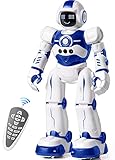
- Remote Control and Hand Gesture Control:This gesture sensing robot not only can be controlled by infrared controller, but also can turn left ,turn right, slide backward, and slide forward according to how your hand gesture commands; Multi function includes auto display and obstacles avoidance as well;The toy robot’s eyes light up with bright blue illuminating LED when it moves;
- Intelligent Programming: This smart robot toy can demonstrating a set of 50 actions inputted by the user.If you switch programming function,this Interactive robot will playback using its moves record feature to repeat the movement one by one as you created like turn left+turn right+walk forward+walk backward+patrol+dance+and many others action mode you selected;
- Premium Material:This Remote Control Robot is made of non-toxic ABS plastic, with flexible multi-joint in shoulder,elbows and thumbs ,and the bottom skating wheels are pretty sturdy to well carry out a various combination of moves;This playful robot really entertain your kids and bring you endless joys;
- Convenient Rechargeable Robot Toy:this RC robot is powered by built-in batteries.Directly connect to USB charging interface like your power bank,plug,computers.Rechargeable way saves your money for batteries and you only recharge the robot about 2 hours, and its playtime is about 60 minutes;
- Ideal Birthday Xmas Gift & Kids Intimate Companion : The infrared control Robot is versatile and vivid can dance,sing,walk,patrol,even can speak.Each robot measures 5.9 x 3.3 x 10.6 inch.
EEF estimate: 5 additional months of progress on average. The toolkit page was reviewed in July 2021. EEF: One to one tuition.
2. Use small-group tuition for shared needs
Small-group tuition means one teacher, trained teaching assistant or tutor works with two to five pupils. It can focus support on a shared, identified need while retaining interaction between pupils and instructor. Training, careful targeting and close interaction matter; simply putting pupils together does not make tuition effective.
EEF estimate: 4 additional months of progress on average. The toolkit page was reviewed in July 2021. EEF: Small group tuition.
Rank #3

- 【BRILLIANT GIFT IDEA FOR KIDS】It's a big surprise to kids as the robot is up to 15.8 inches in height. With various pioneering ways to play, it can build kids' imagination and creativity. Kids will love this Birthday or Christmas gift!
- 【STEM LEARNING ROBOT】With 10 expressions, 9 flexible joints, and 10 songs, this robot moves more dynamically than typical toys—making playtime more engaging and lifelike. It's a fun way for kids to explore basic programming while building logic, creativity, and coordination!
- 【DIVERSE FUNCTIONS】Gymnastics, storytelling, dance, music, and recording—the Ruko robot enriches childhood with creativity and early artistic exploration. More than just a toy, it’s a fun, engaging friend!
- 【RECHARGEABLE & LONG-LASTING】 Enjoy up to 100 minutes of playtime on a full charge, giving kids plenty of time to play, explore, and have fun without frequent battery changes.
- 【CHARGING REMINDER】For proper charging, please use the original cable included in the package. USB-C to USB-C cables are not supported and will not charge the device. Charge Before Use: No response? Charge for 30 mins first.
3. Give feedback learners can act on
Useful feedback tells a learner how their work relates to a learning goal and what concrete next step to take. More marking is not automatically better: the EEF reports that effects vary and that some feedback can worsen outcomes. Focus on clarity, timing and whether the pupil can use the information to improve.
Free tools Windows power users keep installed
One-click scans. No signup required.
EEF estimate: 5 additional months of progress on average, from the Teaching and Learning Toolkit page accessed in 2026. EEF: Feedback.
4. Model planning, monitoring and evaluation
Metacognitive instruction makes the thinking behind learning visible. In a subject lesson, model how to plan an approach, monitor whether it is working and evaluate the result. Then give pupils structured chances to use those steps themselves. The EEF cautions that this practice can be difficult to implement well, so it needs deliberate integration into subject teaching rather than a detached set of slogans.
Rank #4

- S.T.E.M. Alphabots Figures include Variant Letters Robot and Step-by-Step Instruction.
- All Alphabots Figures Can Combine Into Three 7 1/4” Giant Robots! Digit Detachable allows Alphabets to Change into Different robots. Box size:7.87 x 7.68 x 2.56 inches, Each Letter Robot size: 2 × 2 × 0.75 inches
- Higher Quality. Super Durable. Easy to Use. High Quality. Easy to Switch Back and Forth from Letters to Robots.
- Super Value Pack for Education Christmas Xmas Toy. Perfect for Alphabets, Words, and Letters Identification Learning, Holiday Toy Gifts, School Classroom Prize, Treasure Box, Teacher Treats, Easter Gifts, Birthday Gifts, Christmas stocking Presents and more! Create Hours of Fun Play period.
- CHILD SAFETY: Meet US Safety Standard. Safety Test Approved. Non-Toxic.
EEF estimate: 8 additional months of progress on average, from the Teaching and Learning Toolkit page accessed in 2026. EEF: Metacognition and self-regulation.
5. Let pupils take the time they need to reach mastery
Mastery learning keeps the intended learning outcomes consistent while varying the time and extra support pupils receive to reach proficiency. Check progress during learning, provide feedback and support where needed, and move on when pupils are ready. The EEF rates the security of evidence for this approach as low, so its estimate should be treated with that qualification.
The Tool Desk
Outbyte PC Repair FREERepair Windows errors before they cause bigger problemsFix Now →Outbyte Driver Updater FREEScan for outdated or missing drivers - takes under a minuteDriver Scan →EEF estimate: 5 additional months of progress on average. The toolkit review was last updated in September 2021. EEF: Mastery learning.
Best Value

- 【Enlightenment Education Drawing Robot】 The RIVGOT Drawing Robot is designed to inspire early learning and creativity in children. Incorporating Montessori principles, it encourages hands-on exploration, helping kids develop fine motor skills, problem-solving abilities, and independent thinking. Children not only learn to draw but also build cognitive and artistic skills in a fun and educational way.
- 【Children's Drawing Companion】 The RIVGOT Drawing Robot serves as a fun drawing companion, featuring built-in music that makes the drawing experience more enjoyable. This drawing machine helps children stay engaged and focused while they independently follow step-by-step instructions to create beautiful drawings, promoting their creativity, hand-eye coordination, and concentration.
- 【150 Drawing Cards for Endless Creativity】The RIVGOT Drawing Robot comes with 150 drawing cards, offering a wide range of fun and educational themes. Children can easily follow step-by-step instructions to draw everything from animals to everyday objects, helping them build creativity and artistic skills.
- 【Perfect for Birthday & Christmas Gifts】Whether it's for a birthday, holiday, or any special occasion, this drawing robot is the perfect gift for kids. It combines fun, education, and creativity, making it a must-have for parents looking to inspire their children’s artistic abilities.
- 【Complete Set for Creative Fun】The RIVGOT Drawing Robot set includes everything your child needs to start creating: one Drawing Robot, 150 drawing cards, 12 colorful markers, 5 drawing pens, a reusable drawing board, and a Type-C charging cable.
6. Structure collaboration around shared thinking
Set a small group a shared outcome and design the task so every pupil has to explain or contribute their thinking. The EEF identifies groups of three to five as a promising structure. Seating pupils together without a well-designed task is not enough; make individual participation and the group’s goal clear.
EEF estimate: 5 additional months of progress on average, from the Teaching and Learning Toolkit page accessed in 2026. EEF: Collaborative learning approaches.
7. Use educational robotics when the learning objective calls for it
Robotics is a sound option when pupils need to practise programming, computational thinking, electronics or mechanical design. Make the robot a tool within a structured, sustained activity guided by a teacher: set a learning goal, have pupils build or program toward it, and discuss what their choices and results show. The positive average in Lu and Geng’s meta-analysis supports educational robotics as a potential learning approach; it does not show that buying a particular kit causes a specified gain or that a robot can replace teaching.
Meta-analysis result: g = .756 overall across 108 effect sizes from 58 studies and 5,806 participants, as reported in the abstract of the 2026 study. Lu and Geng, Educational Research Review.
Independent reader supportYour contribution helps us test, update, and keep practical guides available for everyone.How to choose an approach for a classroom need
Start with the learning problem rather than the technology. A pupil who needs focused help with a specific gap may need tuition; a class that is not using feedback may need clearer next steps; a lesson about programming may be a natural place for robotics. Before changing the approach, decide what progress should look like and how it will be checked.
- Identify the need: Specify the knowledge, skill or learning behavior pupils need to develop.
- Choose the right structure: Decide whether the need calls for individual support, a small group, whole-class instruction or a collaborative task.
- Keep adult guidance purposeful: Make clear what the teacher will model, observe and adjust. A robot or digital tool should support that plan, not obscure it.
- Connect support to lessons: Ensure additional instruction reinforces what pupils are learning in class and gives them a chance to apply it.
- Check progress against the goal: Use pupil work or performance on the target skill to decide whether to continue, adapt or stop the approach.
- Account for implementation: Consider staff time, training, group size and whether the approach can be delivered consistently.
For a social robot specifically, ask whether it is supporting a teacher or standing in for one, what pupils are expected to do with its feedback, and whether they will apply learning beyond the interaction. The 2026 social-robot synthesis suggests that role and comparison conditions matter; it does not support treating “a robot in class” as one uniform intervention.
Quick Recap
Product prices and availability are accurate as of the date/time indicated and are subject to change. Any price and availability information displayed on Amazon at the time of purchase will apply.
Recommended Free Tools

