
Free tools Windows power users keep installed
One-click scans. No signup required.
iTechGuides is reader-supported. When you buy through links on our site, we may earn an affiliate commission. As an Amazon Associate I earn from qualifying purchases. Learn more
Yes, small language models can run on phones and other edge devices—but “small” does not mean effortless, fast, or suitable for every task. Choose a runtime that fits your platform, then test the complete app on its actual target hardware. At minimum, measure task quality, initialization time, prompt-processing speed, token-generation speed, and peak memory; add power and sustained-load measurements for devices where battery life or heat matters.
What edge deployment means—and why a benchmark is not enough
Edge inference runs on, or near, the device that uses the model’s output. That can reduce the need to send a particular inference request to a remote model, but it does not by itself determine the app’s privacy, performance, or reliability: those depend on the model, runtime, hardware, and the rest of the application architecture.
A model that runs in a demo or scores well in a benchmark may still be a poor production choice. The app has to load it without unacceptable delay, fit it alongside the operating system and other app processes, respond quickly enough for its task, and produce sufficiently good results. Treat deployment as a workload-and-platform decision, not a contest to pick the model with the fewest parameters.
Do these 3 things before closing this tab:
1Fix the driver behind crashes, sound loss and screen glitches2Repair Windows errors before they cause bigger problems3Scan for outdated or missing drivers - takes under a minuteThree deployment routes, three different scopes
Apple Foundation Models, Google LiteRT-LM, and NVIDIA Jetson are distinct platform routes—not interchangeable names for one edge stack. Choose first by where your app runs and what hardware it must support.
#1 Best Overall

- EVOLUTION CORE ULTRA 5 125U MINI PC - GMKtec NucBox K15 is the next evolution in AI mini PC Ultra 5 series. The Core Ultra 5 125U offers 12 cores (six P-cores + eight E-cores + two LPE-cores) and 16 threads with a turbo clock of 4.3 GHz. It is currently one of the best value for performance AI mini PC computers.
- AI NPU - The 125U features an Intel AI Boost NPU, capable of up to 13 TOPS (Tera Operations per Second) for INT8 calculations, which is designed to accelerate AI tasks.
- INTEL ARC 140T GAMING PC - The Arc 140T GPU includes 8 Xe cores and supports features like DirectX 12, OpenGL 4.5, and OpenCL 3, making it capable of handling modern games and creative applications. It also supports Quick Sync Video for efficient video encoding and decoding, as well as AV1 encoding and decoding.
- 32GB DDR5 RAM + 1TB SSD - The NucBox K15 is equipped with Dual 16GB (Total 32GB) SO-DIMM DDR5 4800MT/S memory sticks. 1TB PCIE 4.0 SSD Drive with 3x M.2 2280 Expansion slots. Each slot capable of reading up to 8TB. (24TB MAX)
- QUAD SCREEN 8K DISPLAY SUPPORT - EVO-T1 AI Mini PC support 4-screen 4K/8K output via HDMI 2.1 (8K@60Hz), DisplayPort 1.4 (4K@60Hz), and USB Type-C Transfer speed (supporting PD3.0/DP1.4/DATA). Ideal for gaming, video editing, and multitasking, it provides expansive and crisp multi-display support.1T
| Route | What the cited platform material establishes | What to evaluate for your app |
|---|---|---|
| Apple Foundation Models | Apple describes an on-device model optimized for Apple silicon and a Swift-centric framework with guided generation, constrained tool calling, and LoRA adapter fine-tuning. Apple’s 2025 technical report describes the model as approximately 3 billion parameters. | Supported operating-system and device requirements, framework fit, task quality, context needs, startup behavior, and resource use. The exact requirements should be checked against Apple’s current documentation for the intended release. |
| Google LiteRT-LM | Google documents an on-device inference engine and associated deployment tooling for generative AI. | Supported platform and backend, model format, integration work, initialization, prefill and decode speed, peak memory, and task quality. Do not assume that support for one device or backend implies support for every Android device. |
| NVIDIA Jetson | NVIDIA describes local deployments of compact open models on Jetson and platform-specific optimization approaches. | Board memory and compute, power and thermal limits, model compatibility, sustained throughput, and the deployment environment. A Jetson result does not predict performance on a phone or another edge board. |
Apple’s model and framework are the relevant route when building for Apple platforms; LiteRT-LM is Google’s documented route for on-device generative AI; Jetson is a hardware-specific option for local edge projects. The choice depends on your target platform and workload, not on a single universal “best” runtime.
Benchmark the whole experience, not just tokens per second
Google’s AI Edge Portal describes benchmarking across a fleet of more than 120 Android device types and lists initialization time, prefill speed, decode speed, and peak memory as available metrics. That is a description of Google’s benchmarking material, not a guarantee that your app will match its results. A peer-reviewed ACL study likewise evaluates model capability alongside runtime cost, reinforcing that speed alone is not a useful verdict.
Rank #2
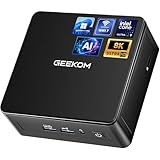
- [The Ideal for Your Productivity AI Companion] Bulk Orders Welcome! Built for IT professionals, video creators, and design experts, the IT15 is driven by the Intel Core Ultra 9 285H powerful compute for AI‑assisted creation, multitasking, and local reasoning. With integrated NPU acceleration, AI workloads run efficiently without bogging down the CPU or GPU. Keep files private while enjoying responsive performance across demanding applications. For stable 24/7 productivity, it features quiet cooling, original‑grade SSD, and rigorous testing. Backed by a 3‑year warranty, the IT15 is a reliable Productivity AI Companion, bridging cloud intelligence and local performance for real‑world work.
- [GEEKOM IT15 For Video Editing, Coding & AI Tasks] Need to edit 4K/8K video, compile code, or run AI models? The GEEKOM IT15 ai mini computer is built for you. Powered by Intel Ultra 9 285H with 99 TOPS AI performance (13 TOPS NPU + 77 TOPS Arc GPU + 9 TOPS CPU), it generates 4K concept art in just 8.3 seconds. Optimized for Adobe, Blender, Unreal Engine, and 3,500+ plugins – this is your portable AI workstation
- [Reliable Business Performance for Office, Education & Warehouse Data Processing] From running complex spreadsheets and video conferencing to handling warehouse data processing and educational software, the geekom it15 285h delivers. With 32GB DDR5 RAM (upgradeable to 128GB) and a 1TB NVMe Gen 4 SSD (75% faster than Gen 3), multitasking across dozens of applications is effortless. Also supports Linux and Ubuntu
- [Arc 140T Graphics Ready for Casual Gaming & Streaming] Yes, you can game on this gaming mini PC. The Intel Arc 140T GPU runs popular titles like League of Legends, Fortnite, and CS:GO smoothly, plus many mid-tier AAA games. Stream 8K content via WiFi 7 (3D beamforming antennas) or 2.5Gbps Ethernet – lag-free remote editing and real-time cloud collaboration included
- [Support 8K Quad Display Setups & eGPU Expansion] Run up to four displays simultaneously (two 8K + two 4K) via dual HDMI (4K@120Hz) and two USB4 Type-C ports (40Gbps with PD 4.0). Connect external GPUs, high-speed drives, and accessories. Perfect for traders, programmers, and content creators who need a command center on their desk
- Task quality: Test representative inputs and judge whether outputs are correct and useful for the app’s actual job. Include difficult and malformed inputs, not only polished demonstrations.
- Initialization time: Measure how long the model takes to become usable, including cold starts where relevant. A long wait before the first answer can make an app feel stalled.
- Prefill speed: Measure processing of the prompt or input context. This affects how long users wait before generation begins.
- Decode speed: Measure token generation after the prompt has been processed. Report the method and conditions so the result can be interpreted for your use case.
- Peak memory: Measure the app’s memory high-water mark while loading and running the model, not just the model file’s size. Google warns that memory consumption can make an app appear frozen or cause a crash.
- Power and sustained behavior: For battery-powered or thermally constrained devices, measure power draw and performance over a representative sustained workload. The cited sources do not establish a comparable cross-platform battery estimate.
Keep the device, model, quantization, prompt, output length, backend, and runtime version fixed when comparing configurations where possible. If you report warm and cold runs, label them separately. A vendor benchmark describes its own setup; do not treat it as a universal result for another device or workload.
What’s actually slowing this PC down?
Pick the symptom - the matching free tool is one click away.
Use a deployment sequence that exposes problems early
- Define the task and acceptance criteria. Specify the inputs, expected output, acceptable quality, and user-facing latency before choosing a model. Test quality against representative examples throughout the evaluation.
- Choose the platform route. Match Apple Foundation Models, LiteRT-LM, or a Jetson deployment to the app’s intended operating environment. Confirm support for the actual target devices and integration path rather than assuming platform compatibility.
- Build a target-device prototype. Load the model through the intended runtime and exercise the real app flow. A development board or a single high-end phone cannot establish performance across your supported device range.
- Measure cold startup, prefill, decode, and peak memory. Capture each separately so you can tell whether a slow response comes from loading, prompt processing, or generation. Watch for memory pressure and failures under the app’s realistic conditions.
- Check sustained operation and quality. Run representative repeated workloads on the target hardware, and verify that generated answers still meet the task’s quality threshold. Add power and thermal measurements where the deployment requires them.
- Set a release threshold and fallback. Decide which devices can run the model acceptably and define what the app does when initialization fails, memory is insufficient, or latency or quality falls below the required bar. The fallback might be a different app path or a remote service, but the right policy depends on the product and its data handling.
Optimization helps, but it does not guarantee a good deployment
Apple’s 2025 reporting describes an approximately 3-billion-parameter on-device model that uses architectural optimizations including KV-cache sharing and 2-bit quantization-aware training. In a 2025 model update, Apple attributes a 37.5% reduction in KV-cache memory usage to sharing relevant caches between layers in its described architecture, and says the design also improves time-to-first-token. These are results Apple reports for its model design—not a general promise that an arbitrary model will gain the same memory reduction or speedup.
Rank #3

- LOW ENERGY HIGH PERFORMANCE MINI PC - The Intel Core Ultra 5 125U is part of the Ultra 5 lineup, using the Meteor Lake architecture with BGA 2049. Intel Hyper-Threading technology is available and effectly doubles the core-count of the P-Cores, to a total of 14 threads. Core Ultra 5 125U has 12 MB of L3 cache and operates at 1300 MHz by default, but can boost up to 4.3 GHz, depending on the workload. With a TDP of 15 W, the Core Ultra 5 125U consumes very little energy but outputs high performance efficiency
- 32GB DDR5 RAM + 512GB SSD - The K15 mini computer is equipped with Dual 16GB (Total 32GB) SO-DIMM DDR5 4800MHz memory sticks. 512GB PCIE 4.0 SSD Drive with 3x M.2 2280 Expansion slots. Each slot capable of reading up to 8TB. (24TB MAX)
- QUAD SCREEN 4K DISPLAY SUPPORT - K15 Mini PC support 4-screen 4K/8K output via HDMI 2.1 (8K@60Hz), DisplayPort 1.4 (4K@60Hz), and USB Type-C Transfer speed (supporting PD3.0/DP1.4/DATA). Ideal for gaming, video editing, and multitasking, it provides expansive and crisp multi-display support
- OCULINK PORT - The Oculink port on the rear interface enables higher bandwidth capabilities, better frame rates and lower lag. The standard also operates at PCIe x4 speeds, compared to Thunderbolt's x3. Gamers and content creators can benefit from Oculink's higher bandwidth, resulting in better performance and lower lag for eGPU setups
- DUAL NIC FAST 2.5GBE + WIFI 6E + BT 5.2 - Dual Ethernet 2.5GbE LAN port design provides more applications, such as firewall, multichannel aggregation, soft routing, file storage server. Built-in WIFI 6E / Bluetooth 5.2 is more stable and efficient to connect multiple wireless devices such as projector, printer, monitor, speakers and etc
Quantization can reduce the amount of storage or memory needed for model weights, but it does not automatically make an app fast or preserve the quality needed for every task. Evaluate the chosen model, quantization, runtime, and hardware together. If a smaller representation improves memory but the app misses its quality threshold, it is not a successful optimization for that workload.
Context length is another resource constraint
Apple’s developer documentation states that its on-device foundation model has a context window of 4096 tokens per session. That figure applies to Apple’s documented model, not to small language models generally. For any deployment, check the selected model’s context limits and test the actual input sizes your app will send; long context can affect both usefulness and resource use.
Rank #4

- 𝗗𝗲𝘀𝗸𝘁𝗼𝗽-𝗖𝗹𝗮𝘀𝘀 𝗔𝗜 𝗣𝗼𝘄𝗲𝗿 𝗳𝗼𝗿 𝗡𝗲𝘅𝘁-𝗚𝗲𝗻 𝗪𝗼𝗿𝗸𝗳𝗹𝗼𝘄𝘀 - Powered by AMD Ryzen AI 9 HX 370 with up to 80 TOPS AI performance and a dedicated XDNA 2 NPU (50 TOPS), the GEEKOM A9 Max AI Mini PC accelerates AI-assisted coding, local AI workflows, machine learning, and image generation. Compatible with Microsoft Copilot+, ChatGPT, Claude, Gemini, Ollama, Stable Diffusion, and ComfyUI for fast, responsive AI computing.
- 𝗔𝗔𝗔 𝗚𝗮𝗺𝗶𝗻𝗴 & 𝗣𝗿𝗼 𝗖𝗿𝗲𝗮𝘁𝗶𝘃𝗲 𝗣𝗼𝘄𝗲𝗿 – Featuring a 12-core, 24-thread Zen 5 processor and Radeon 890M Graphics with 16 RDNA 3.5 Compute Units, this mini PC handles AAA gaming, live streaming, 4K video editing, photo editing and 3D rendering with ease. Enjoy titles like Cyberpunk 2077, Forza Horizon 5, Call of Duty and CS2, while accelerating workflows in Premiere Pro, Photoshop, DaVinci Resolve and Blender—ideal for gamers, streamers and content creators.
- 𝗔𝗱𝘃𝗮𝗻𝗰𝗲𝗱 𝗗𝗮𝘁𝗮 𝗦𝗰𝗶𝗲𝗻𝗰𝗲, 𝗗𝗲𝘃𝗲𝗹𝗼𝗽𝗺𝗲𝗻𝘁 & 𝗟𝗮𝗯-𝗧𝗲𝘀𝘁𝗲𝗱 𝗥𝗲𝗹𝗶𝗮𝗯𝗶𝗹𝗶𝘁𝘆 – Built for software development, virtualization, data analysis, machine learning and enterprise productivity, The A9 Max features 32GB of DDR5 RAM, expandable up to 128GB, and dual PCIe Gen4 SSD slots with 2TB of storage, expandable up to 8TB. Its premium all-metal chassis and IceBlast 2.0 cooling system, with copper heat sinks, dual heat pipes and optimized airflow, help maintain stable performance during AI computing, rendering, gaming and other demanding workloads. Ideal for engineers, researchers, educators and business users; contact GEEKOM for enterprise deployment.
- 𝟴𝗞 𝗤𝘂𝗮𝗱-𝗗𝗶𝘀𝗽𝗹𝗮𝘆 & 𝗡𝗲𝘅𝘁-𝗚𝗲𝗻 𝗖𝗼𝗻𝗻𝗲𝗰𝘁𝗶𝘃𝗶𝘁𝘆 - With pre-installed operating system, GEEKOM A9MAX Mini PC supports up to four 8K displays via dual USB4 and dual HDMI 2.1 ports. Featuring Wi-Fi 7, Bluetooth 5.4, dual 2.5GbE LAN ports, multiple USB ports, and high-speed storage expansion, it is built for content creation, business, software development, financial trading, and home office productivity.
- 𝟱𝟬 𝗧𝗢𝗣𝗦 𝗡𝗣𝗨 𝗳𝗼𝗿 𝗣𝗿𝗶𝘃𝗮𝘁𝗲 𝗟𝗼𝗰𝗮𝗹 & 𝗖𝗹𝗼𝘂𝗱 𝗔𝗜 – Powered by a 50 TOPS NPU, Radeon 890M graphics and a multi-core CPU, this compact PC supports compatible quantized local LLMs, private RAG search, document intelligence, coding assistance, translation and multimodal analysis. Enterprises can process contracts, financial reports, proprietary code, client files and internal knowledge bases locally; professionals and creators can build private research, software-development and content-production workflows. Sensitive files and routine AI tasks can remain on-device, with cloud AI available for larger models or deeper reasoning.
Plan for storage, loading, and failure—not only inference
A production app has to account for model storage and download, runtime integration, supported devices, and the time and memory required to load the model. Make initialization states visible and handle failures deliberately: a user should not be left with an unresponsive screen if loading takes too long or the device cannot run the model. For a phone app, the model’s platform requirements and the app’s distribution constraints matter; a Jetson developer kit is an option for a Jetson-based prototype, not a requirement for phone deployment.
Recommended Free Tools
Local inference can reduce the need to send a given inference request to a remote model. It does not establish that every part of an app is private or offline: other services, telemetry, synchronization, and application behavior still affect data handling. Make privacy claims about the complete system, not just where the model executes.
Quick Recap
Best Value
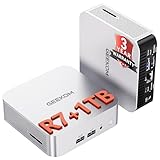
- [Ryzen 7 8745HS & Agentic AI Workstation] Powered by the AMD Ryzen 7 8745HS processor (8 Cores, 16 Threads, up to 4.9GHz), the GEEKOM A8 delivers fast, responsive performance for 4K video editing, graphic design, and heavy coding. It doubles as a cloud-native Agentic PC—seamlessly hosting cloud AI tasks, automating office workflows, and handling intelligent document summarization without complex local deployment. Built for creators, engineers, and professionals who need reliable workstation-class productivity.
- [Upgradeable DDR5 Memory & PCIe 4.0 Storage] Stay productive with 16GB DDR5 memory and a 1TB PCIe 4.0 NVMe SSD for fast boot times, instant responsiveness, and smooth multitasking. Unlike compact PCs with soldered memory, the GEEKOM A8 supports upgrades up to 128GB DDR5 and 4TB SSD storage, making it ideal for large creative projects, virtual machines, business databases, and future performance upgrades.
- [Radeon 780M Graphics for Visual Creativity] Powered by AMD Radeon 780M graphics based on the latest RDNA 3 architecture, the GEEKOM A8 delivers exceptional integrated graphics performance for demanding visual workloads. Edit 4K videos, create complex digital artwork, and enjoy smooth multi-monitor productivity—all without requiring a dedicated graphics card.
- [0.5L Ultra-Compact Design with VESA Mount] Free up valuable desk space without sacrificing performance. The GEEKOM A8 packs workstation-level capability into a sleek 0.5-liter aluminum chassis that fits neatly into home offices, creative studios, and business environments. Mount it behind your monitor with the included VESA bracket for a cleaner, more organized workspace.
- [Efficient Cooling & 24/7 Cloud AI Hosting] Stay productive during extended workloads with an advanced cooling system featuring dual heat pipes, a high-efficiency fan, and optimized airflow. Whether exporting large videos, compiling huge codebases, or executing 7x24 unattended cloud AI-agent tasks, the GEEKOM A8 maintains consistent performance and rock-solid stability while operating quietly.
How to decide whether the model is ready
- Ship on-device when the model meets the task-quality threshold and stays within startup, latency, memory, and power limits on the supported hardware.
- Optimize or narrow the workload when the task is suitable but a measured constraint—such as memory, context, or response time—fails. Re-test quality after each material model or runtime change.
- Use another route or provide a fallback when the target device cannot run the selected stack acceptably, or when the task requires quality or capacity the local deployment does not meet.
Product prices and availability are accurate as of the date/time indicated and are subject to change. Any price and availability information displayed on Amazon at the time of purchase will apply.

