
iTechGuides is reader-supported. When you buy through links on our site, we may earn an affiliate commission. As an Amazon Associate I earn from qualifying purchases. Learn more
Back up important NAS data to a separate destination, keep recoverable versions, and store at least one copy off-site. RAID can help a NAS stay available after some drive failures, but it is not a backup: it cannot by itself restore an earlier file state after deletion or ransomware, or replace data lost with the device or site. A backup is only useful if it includes the data you need and you can restore it.
Why RAID and sync are not enough
RAID combines drives to provide capacity, performance, or continued operation after certain drive failures, depending on its configuration. It does not create an independent historical copy. Changes such as accidental deletion or ransomware encryption can affect the data on the array, and theft or a site disaster can take the NAS and any nearby copies together. Synology recommends the 3-2-1 approach: “3 copies; 2 storage mediums; 1 offsite.” It is a useful strategy, not a guarantee against every loss scenario. Synology’s backup guidance explains the approach.
Synchronization is also different from backup. A sync job generally propagates the current state of files; if ransomware encrypts them, that encrypted state may be synchronized too. Use versioned backup when you need to return to an earlier state. Synology discusses this risk in its article on immutable backups.
Quick wins for a faster PC:
Clear out junk files and repair common Windows errorsFree Scan →Fix the driver behind crashes, sound loss and screen glitchesFind Drivers →Repair Windows errors before they cause bigger problemsFix Now →Choose an independent destination
Pick a destination that is separate from the NAS being protected. Synology documents cloud services, including C2 Storage, remote NAS devices, and external devices as possible destinations; availability depends on the task and configuration. Its destination guidance and C2 Storage overview describe Synology-specific options. Other NAS brands and backup applications may support different destinations and data types.
#1 Best Overall
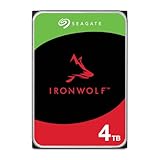
- IronWolf internal hard drives are the ideal solution for up to 8-bay, multi-user NAS environments craving powerhouse performance
- Store more and work faster with a NAS-optimized hard drive providing ultra-high capacity up to 16TB and cache of up to 256MB
- Purpose built for NAS enclosures, IronWolf delivers less wear and tear, little to no noise/vibration, no lags or down time, increased file-sharing performance, and much more
- Easily monitor the health of drives using the integrated IronWolf Health Management system and enjoy long-term reliability with 1M hours MTBF
- Three-year limited warranty protection plan included and three year Rescue Data Recovery Services included
| Destination | What it is useful for | Key trade-off |
|---|---|---|
| Cloud storage | Geographic separation without maintaining a second physical site. | Check supported data types, versioning, encryption, storage and recovery charges, and the upload and restore time your connection allows. |
| Remote NAS | A second device at another location can provide an off-site copy and greater control over the destination. | It requires a separate site, secure access, maintenance, and enough network capacity; transfer and recovery speed depend on the equipment and connection. |
| External drive | A separate local medium that can be disconnected or rotated. | A drive kept beside the NAS is not off-site. For geographic protection, rotate it to another location or pair it with an off-site destination. |
These options are not mutually exclusive. A local external drive can make a useful additional copy, while cloud storage or a remote NAS can address risks affecting the whole premises. Compare each option against your required recovery scope, retention, security, cost, and network capacity rather than assuming a destination name guarantees a particular level of protection.
Set up the backup, then prove it can restore
- Inventory what matters. List shared folders, application or package data, system settings, and LUNs if you use them. Check that your backup software and destination support each item. Do not assume a file-backup task also provides full-system recovery.
- Select an independent destination. Choose cloud storage, a remote NAS, or an external device, and decide which copy will be off-site. Confirm that the destination supports the backup task you plan to create.
- Configure a scheduled, versioned job. Set a schedule that matches how often the data changes and how much data you can afford to lose between recovery points. Set version retention according to your recovery needs and available destination capacity. There is no universal schedule or retention period that suits every NAS.
- Protect access to the backup. Review encryption, account security, and who is allowed to remove backup data. Where the service or software offers retention locks or immutability, assess them as an additional safeguard. They do not replace independent copies or restore tests.
- Run a restore exercise. Restore representative files to a safe location and confirm they open and contain the expected data. Record the required credentials, software, and recovery steps. A completed backup job alone does not demonstrate that a restore will work.
- Recheck coverage over time. Review job status, capacity, retained versions, compatibility, and newly added folders or workloads. Repeat a restore test periodically and after significant configuration changes.
Synology example: verify the task and destination
On Synology systems, Hyper Backup is one documented example of software for scheduled, multi-version backups. Its DSM 7 help describes the application and its backup workflow, while Synology’s technical specifications describe supported capabilities. Consult both before configuring a job: whole-system coverage and destination eligibility are not identical across task types, and details can vary with DSM version. See Hyper Backup DSM 7 help and Hyper Backup technical specifications. These details apply to Synology, not automatically to other NAS manufacturers.
Rank #2

- Store more, compute faster, and do it confidently with the proven reliability of BarraCuda internal hard drives
- Build a power house gaming computer or desktop setup with a variety of capacities and form factors
- The go to SATA hard drive solution for nearly every PC application from music to video to photo editing to PC gaming. Ax. Sustained transfer rate OD: 190MB/s
- Confidently rely on internal hard drive technology backed by 20 years of innovation
- Frustration Free Packaging - This is just an anti-static bag. No cables, no box.
For another Synology overview, see Back up your Synology NAS. For a different NAS brand, use that manufacturer’s documentation to verify supported workloads, destinations, retention features, and the exact restore procedure.
Plan around recovery, not just backup completion
Before choosing a service or schedule, consider how much recent work you could lose, how quickly operations must resume, and whether you can access the backup if the NAS itself is unavailable. Upload bandwidth affects how quickly an initial cloud copy and later changes can be transferred; download bandwidth and service limits affect recovery. Storage and recovery costs depend on the chosen service, plan, data volume, and region. No single destination or retention setting is right for every workload.
Quick Recap
Rank #4

- Available in capacities ranging from 2 to 22TB(1) | (1) 1GB = 1 billion bytes and 1TB = 1 trillion bytes. Actual user capacity may be less depending on operating environment.
- For RAID-optimized NAS systems with unlimited number of bays
- Rated for 550TB/yr workload rate(2) | (2) Annualized Workload Rate = TB transferred x (8760 / recorded power-on hours). The maximum rated workload is specified for operating at typical temperature of 40C. Workload Rate will vary depending on your hardware and software components and configurations.
- Designed to handle the demands of high-intensity 24x7 multi-user NAS environments
- Western Digital partners with a wide range of NAS system vendors for extensive testing to ensure compatibility with most NAS enclosures
Rank #3

- IronWolf internal hard drives are the ideal solution for up to 8-bay, multi-user NAS environments craving powerhouse performance.date transfer rate:6.0 gigabits_per_second
- Store more and work faster with a NAS-optimized hard drive providing 8TB and cache of up to 256MB
- Purpose built for NAS enclosures, IronWolf delivers less wear and tear, little to no noise/vibration, no lags or down time, increased file-sharing performance, and much more
- Easily monitor the health of drives using the integrated IronWolf Health Management system and enjoy long-term reliability with 1M hours MTBF
- Three-year limited product warranty protection plan and three year Rescue Data Recovery Services included
- Keep at least one backup independent of the primary NAS and one copy off-site.
- Prefer versioned backups when you need recovery from unwanted changes, not just a current synchronized copy.
- Confirm the job covers the data and settings you actually need to recover.
- Protect backup credentials and deletion permissions separately where possible.
- Test restores and keep the recovery procedure accessible outside the NAS.
Product prices and availability are accurate as of the date/time indicated and are subject to change. Any price and availability information displayed on Amazon at the time of purchase will apply.

