
iTechGuides is reader-supported. When you buy through links on our site, we may earn an affiliate commission. As an Amazon Associate I earn from qualifying purchases. Learn more
The most useful way to compare local AI models for writing is to measure how much human work each output needs before it is usable. A response that looks impressive in a screenshot can still contain an invented citation, drop a constraint you gave, or need its whole argument reordered. A plainer response may need only a few commas fixed. Run every candidate model on the same task, with the same prompt and source material, and count and grade the interventions a human editor has to make.
No published study currently ranks local models this way, so treat the method below as a test design you can run yourself, not a reported leaderboard. The evidence available supports measuring editing effort directly; it does not establish which local model wins for any given kind of writing.
Who this comparison is for, and what task you are testing
A reader-authored question on r/LocalLLaMA asked for “best small models for copy editing academic articles / books.” That wording is anecdotal, but it shows the typical intent: someone who already has a draft and wants a model that improves it without introducing problems. Copy editing, rewriting, drafting from notes, and technical manuscript revision are different jobs, and a model that handles one may struggle with another. Decide which job you are testing before you open any model.
Recommended Free Tools
What counts as editing burden
Editing burden is the human work required to turn a model’s output into something you would accept under your own name. It has two parts: the number of interventions and the severity of each one. Sort each intervention into one of six categories:
#1 Best Overall

- 【High-Performance APU】The MS-S1 MAX features an AMD Ryzen AI Max+ 395 APU, integrating a Zen 5 architecture CPU (up to 5.1GHz, 16C/32T, 64M L3 Cache), an RDNA 3.5 GPU, and an NPU (50 TOPS). The total system output is 126 TOPS. It provides powerful parallel computing capabilities for demanding AI workflows. It is ideal for running local LLMs, multimodal models, and computationally intensive tasks
- 【128GB UMA Memory】Equipped with up to 128GB of LPDDR5x-8000MT/s unified memory, it enables the CPU and GPU to access a shared, high-bandwidth memory pool with extremely low latency. Ideal for large-scale AI inference, 3D workloads, and complex timelines in video editing. It eliminates traditional VRAM bottlenecks, ensuring smoother data transfer during high-intensity computations. The UMA design maximizes performance stability under high loads
- 【Flexible Expansion】The MS-S1 MAX features USB4 V2 (up to 80Gbps), dual 10GbE LAN, HDMI 2.1 (up to 8K60), a full-length PCIe x16 expansion slot, and dual M.2 slots supporting up to 16TB RAID 0/1. Wi-Fi 7 provides stronger signal coverage and a more stable wireless experience. The slide-out design facilitates upgrades and maintenance. It easily adapts to personal, studio, or rack-mount enterprise environments
- 【High-Efficiency Cooling System】Utilizing an aerospace-grade aluminum alloy chassis, copper base plate, six heat pipes, dual turbine fans, and advanced PCM thermal conductive material, it maintains stable cooling performance even under continuous load. This system supports 130W continuous power and 160W peak power operation, with a built-in 320W power supply. It boasts multiple global certifications including CCC, FCC, UL, CE, and UKCA, ensuring stable and reliable operation in various environments
- 【Cluster Design】Two MS-S1 MAX units can be configured as a dual-unit cluster to run a large 235B Q4 model locally, achieving an output speed of 10.87 tok/s. Supporting 2U rack deployment, multiple MS-S1 MAX units can be cascaded into a distributed cluster to create a high-efficiency AI computing center. A cluster of four MS-S1 MAX units successfully ran a DeepSeek-R1 671B Q4 large model. A reserved cluster power-on interface allows for unified start-up and shutdown
| Category | Typical intervention | Usual severity range |
|---|---|---|
| Factual or unsupported claims | Wrong date, invented reference, claim the source does not support | Substantial to output-blocking |
| Meaning and instruction adherence | Answers a different question, drops a required constraint, reverses a point | Substantial to output-blocking |
| Organization | Sections out of order, missing transition, duplicated paragraph | Cosmetic to substantial |
| Voice and tone | Inflated register, generic phrasing, loss of the author’s style | Cosmetic to substantial |
| Repetitive or unnecessary text | Restated points, filler openers, padding | Cosmetic to substantial |
| Grammar and surface polish | Agreement errors, punctuation, word choice | Cosmetic |
Use three severity levels. Cosmetic fixes take seconds and do not require rereading the passage. Substantial fixes require rereading and rewriting a sentence or paragraph. Output-blocking problems mean the passage must be rewritten from scratch or discarded. This rubric is an editorial proposal. The studies reviewed for this guide do not validate it as a universal scale, so state the categories and severities you used whenever you publish results.
Why raw edit counts mislead
Suppose Model A produces twenty cosmetic fixes and Model B produces three output-blocking factual errors. A simple count makes Model A look worse, yet Model B is the one you cannot use without checking every claim. Always report counts alongside severity, and report them per category, so the trade-off is visible.
Rank #2

- Built for Local AI and Advanced Workflows – The BOSGAME M5 AI Mini PC is powered by AMD Ryzen AI Max+ 395 with 16 cores, 32 threads, up to 5.1GHz, 50 TOPS NPU performance and up to 126 TOPS total AI performance. It is designed for local AI inference, private AI assistants, coding, data analysis, virtualization, content creation and demanding multitasking while keeping sensitive data on the device.
- 128GB Unified Memory for Large Models and Creative Projects – M5 includes 128GB LPDDR5X-8000 unified memory, giving the CPU and Radeon 8060S graphics access to a large shared memory pool. This helps support memory-intensive AI workloads, large project files, multiple virtual machines, 3D work, video editing and complex professional applications without the capacity limits of typical 32GB or 64GB mini computers.
- Radeon 8060S Graphics for Creation, Rendering and Gaming – Integrated Radeon 8060S graphics with 40 RDNA 3.5 compute units delivers high-end visual performance without a separate graphics card. Use the M5 creator workstation for 4K video editing, 3D rendering, CAD, AI image workflows, high-resolution media and modern gaming, while maintaining a compact desktop footprint.
- 2TB PCIe 4.0 SSD and Flexible Expansion – A pre-installed 2TB NVMe PCIe 4.0 SSD provides fast access to models, datasets, media libraries and project files. A second M.2 2280 PCIe 4.0 slot allows additional storage expansion, while the SD 4.0 card reader supports efficient photo and video workflows for creators and production teams.
- Professional Connectivity and Four-Display Support – Dual USB4 ports, HDMI 2.1 and DisplayPort 1.4 support up to four displays and resolutions up to 8K@60Hz. WiFi 7, Bluetooth 5.4 and 2.5GbE deliver fast networking for cloud collaboration, NAS access and business deployment. Windows 11 Pro, performance-mode switching, Wake-on-LAN and auto power-on support flexible workstation use.
How to run a fair comparison
- Define the task and success condition first. Examples: correct grammar without changing meaning; improve flow while keeping the author’s voice; draft a short passage using only the facts you supply. Do not combine these into one score.
- Choose several representative inputs. Include routine paragraphs and difficult ones, such as dense technical passages, sections with citations, and text with an unusual voice. One input is an anecdote, not a comparison.
- Hold everything constant across models. Give each model the same prompt, the same reference material, the same output length limits, and the same sampling settings. Record the model version, quantization level, runtime, and hardware so the run can be repeated.
- Keep the original outputs. Store every raw response before any editing. Have reviewers who do not know which model produced each sample mark their interventions. Where you can, use two or more reviewers and reconcile disagreements, then report that you did so. This improves consistency; it does not guarantee objectivity.
- Categorize and grade every intervention. Use the six categories and three severity levels above. Log the sample, model, task, category, severity, and a short note. Keep a before-and-after example for each severity level so readers can see what a “substantial” fix looked like.
- Report task-level results, not one aggregate rank. A model may need little surface editing but a great deal of fact checking, or it may keep the author’s voice while needing structural work. Say which trade-off matters for your readers, and show the examples behind each conclusion.
What the published evidence does and does not show
Several recent papers and benchmarks are relevant, but none of them measures what a writer most needs to know: how much cleanup a local model’s output requires for everyday editing.
Revision Distance (Ma et al., 2024 preprint)
Yongqiang Ma and coauthors propose Revision Distance, an evaluation approach that counts the revision actions needed to move generated text closer to a reference or to an evaluator’s intended result. Their paper argues that conventional, context-independent metrics can fail to reflect the end-user experience, and states: “Therefore, our study shifts the focus from model-centered to human-centered evaluation in the context of AI-powered writing assistance applications.” The paper reports experiments on easier writing tasks such as emails, letters, and articles, plus more challenging academic writing. The approach supports measuring editing effort directly, but the paper does not prove that a single metric captures all human effort.
Rank #3

- Built for Local AI Development: AMD Ryzen AI Halo is designed for local AI development and inference, featuring 128GB unified memory and support for up to 200B parameter models to build and run intensive AI workloads locally.
- 128GB Unified Memory: Features 128GB LPDDR5x unified memory at 8000 MT/s with 256 GB/s memory bandwidth, providing a shared memory pool across the CPU, GPU, and NPU to support larger AI models.
- AMD Ryzen AI Max+ 395 Processor: Features 16 cores, 32 threads, and Zen 5 architecture, paired with AMD Radeon 8060S integrated graphics featuring 40 RDNA 3.5 compute units and an AMD XDNA 2 NPU with up to 50 TOPS.
- Linux AI Developer Platform: Purpose-built for Linux-based AI development with full AMD ROCm software support and preloaded tools, models, and workflows optimized for local AI development.
- Compact, Connected Design: Includes a 2TB M.2 SSD, 10GbE LAN, Wi-Fi 7, Bluetooth 5.4, USB-C connectivity, and HDMI 2.1b.
Beemo (Artemova et al., NAACL 2025)
Beemo is a benchmark of expert-edited and LLM-edited machine-generated outputs, built to study multiple authorship and editing conditions rather than only pure human and pure machine text. Its findings concern how well detectors recognize these texts, not how good the writing is. Its design does support one useful point for this comparison: human editing of model output and model editing of model output are distinct conditions, and both are worth recording separately.
ReviseBench (Luo et al., Microsoft Research summary, January 2026)
ReviseBench tests whether AI can revise research papers in response to reviewer feedback. The tasks include paper interpretation, experimental implementation, and paper formulation, and the benchmark uses authors’ camera-ready versions as human baselines. Microsoft Research’s summary reports that “even state-of-the art foundation LLMs struggle significantly in this domain, achieving a win rate of less than 10% against human experts, and facing issues like incremental revision, unprofessional revision, and potential data fabrication.” That is an initial result on one demanding revision task with the benchmark’s tested models. It shows how hard substantive revision is; it does not show that every model fails at everyday copy editing.
Rank #4

- Unlock next-generation AI computing with AMD Ryzen AI Max+ 395 processor featuring 16 cores, 32 threads, up to 5.1GHz boost clock, and integrated Ryzen AI engine delivering up to 126 TOPS AI performance. EVO-X3 is designed for local AI models, content creation, development, and professional workloads.
- OCuLink External GPU Expansion – Upgrade Beyond a Mini PC: Take your graphics performance further with a dedicated OCuLink (PCIe 4.0 x4) interface. Connect an external GPU dock to add desktop-class graphics power for AAA gaming, AI acceleration, 3D rendering, video production, and advanced creative applications. EVO-X3 gives you the flexibility of a compact PC with workstation-level expansion capability.
- AI NPU with XDNA 2 ARCHITECTURE - Powered by 16 “Zen 5” CPU cores, 50+ peak AI TOPS XDNA 2 NPU and a truly massive integrated GPU driven by 40 AMD RDNA 3.5 CUs, the Ryzen AI MAX+ 395 is a transformative upgrade and delivers a significant performance boost over the competition. The Ryzen AI Max+ 395 excels in consumer AI workloads like the llama.cpp-powered application: LM Studio. Shaping up to be the must-have app for client LLM workloads, LM Studio allows users to locally run the latest language model without any technical knowledge required and unleash their creativity and productivity.
- AMD RADEON 8090S iGPU GAMING PC - The AMD Radeon RX 8060S offers all 40 CUs with up to 2.9 GHz graphics clock and uses the new RDNA 3.5 architecture. The powerful iGPU is positioned between an RTX 4060 and 4070 laptop GPU and therefore enables gaming in FHD at maximum details in most demanding games. The 8060S can also utilize the full 128GB pool, which is perfect for running LLMs such as Deepseek 70B Q8, which runs comfortably on this machine.
- EIGHT CHANNEL LPDDR5X - LPDDR5X is a new ground breaking memory small form factor installed on-board. With blazing speeds up to to 8000MT/s, it runs 1.5x faster than the DDR5 SODIMMs; 90% better performance over DDR5 SODIMMs in video conferencing and photo editing; 30% better performance in productivity apps; 12% better performance in digital content workloads.
A local manuscript-editing proof of concept (2026)
A 2026 study described in a ScienceDirect abstract, “A local, privacy-oriented multi-agent LLM framework for framework-grounded manuscript editing,” reports a blind assessment of six manuscripts. Suggestions from the multi-agent pipeline, from the same local model given one generic prompt, and from a frontier model were pooled and scored by two co-authors. The abstract says the orchestrated local open-weight 27B model covered more useful domains than the generic-prompt version. Only the abstract is available to assess, and six manuscripts is too few to declare a winner. Its useful lesson is that workflow and prompt design can change results, so record your prompt setup as carefully as the model name.
Figures to read with their limits
Several numbers circulate in discussions of AI editing. Each applies to a specific setting, and none of them converts into an editing-time estimate.
Best Value
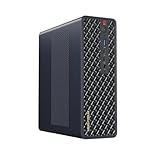
- 【Leading AI Mini Workstation】MINISFORUM AI MS-S1 Max Workstation comes with AMD Ryzen AI Max+ 395 processor, which uses AMD's latest generation Zen 5 architecture. It has 16 Cores and 32 Threads, the boost clock is up to 5.1GHz. The overall processor performance is up to 126 TOPS, and the NPU performance reaches up to 50 TOPS. AMD Ryzen AI enables improved productivity, advanced collaboration, and improved efficiency.
- 【AMD Radeon 8060S Graphics 】The MS-S1 Max Mini PC equipped with AMD Radeon 8060S Graphics which built on the new generation of RDNA 3.5 architecture AMD graphics, it brings ultra-high frame rate experiences and advanced content creation features anywhere and delivers staggering performance. It can handle all your computing and multimedia tasks efficiently.
- 【Five 8K Video Output】This MS-S1 Max Workstation comes with five video outputs, 1x HDMI (8K@60Hz), 2x USB4(40Gbps,Alt DP2.0,PD out 15W) and 2x USB4 V2(80Gbps,Alt DP2.0,PD out 15W) Outputs, which support multiple monitors display at the same time and provide a larger and wider filed of view and improve your work efficiency. It is used in fields that require high-performance computing and graphics processing, including digital signage and securities trading, as well as work that uses CAD, such as engineering design, scientific calculations, animation production, and post-production for movies and television
- 【 Fast and Stable Wire & Wireless Speed】It comes with Two 10G Lan Ports for wired connection and and Wi-Fi 7 / BT5.4 for wireless connection, which increased the network speed greatly and expand its functions and improved performance of computer to a large extent and allows you to use more networks such as software routers (OpenWRT / DD-WRT / Tomato etc.), firewalls, NAT, network isolation etc.
- 【Large Storage & Flexible Expandability】This Workstation equipped with 64GB LPDDR5-8000MHz + 2TB M.2 2280 PCIe4.0 SSD. There is another PCIe4.0 SSD slot available for up to 8TB, these SSD slots are compatible with RAID0 and RAID1, you can store movies, videos, photos, important files easily. What’s more, it also comes with 1x standard PCIex16 slot(PCIe4.0x4) inside.
| Figure | Source and date | What it measures | What it does not tell you |
|---|---|---|---|
| 6.5k texts | Beemo, Association for Computational Linguistics paper authors, 2025 | Human-written texts, outputs from ten instruction-finetuned LLMs, and expert-edited versions across use cases including creative writing and summarization | Which model is best, or how much editing any model needs |
| 13.1k machine-generated and LLM-edited texts | Beemo, Association for Computational Linguistics paper authors, 2025 | Machine-generated and LLM-edited texts used to study varied edit types | Human editing effort or writing quality |
| Less than 10% win rate against human experts | ReviseBench, Microsoft Research summary, January 2026 | Initial evaluation of tested state-of-the-art foundation models on research-paper revision | Results for local models, copy editing, or consumer writing |
| Six manuscripts | 2026 local multi-agent editing study, ScienceDirect abstract | Blind scores of pooled suggestions from three setups | A ranking of models, given the sample size |
| 32 GB GDDR7 | NVIDIA GeForce RTX 5090 specifications, reviewed 2026-10-07 | Memory on one high-end GPU | A minimum requirement for local writing models |
No independently published estimate of writer time saved by choosing a model with lower editing burden was found in the evidence reviewed. Do not turn benchmark sizes, revision counts, or win rates into time-saving claims.
Keep hardware and editing burden separate
Speed and setup friction affect how pleasant a local model is to use, but they are not editorial quality. Ollama’s download page states, “Speed depends on the hardware,” and its local-model guidance says large models run slowly on computers without a strong GPU, and that users should check their GPU and memory before choosing a model. Record latency, load time, and any out-of-memory failures in a separate column from your edit log.
NVIDIA lists 32 GB of GDDR7 memory for the GeForce RTX 5090. That is one high-end example, not a recommended minimum. Check each model’s memory requirements against the hardware you already own. You do not need to buy a new GPU to compare writing quality; a model that runs slowly on your machine can still be evaluated on the same editing test if you allow more time per sample.
The Tool Desk
Outbyte PC Repair FREERepair Windows errors before they cause bigger problemsFix Now →Outbyte Driver Updater FREEFix the driver behind crashes, sound loss and screen glitchesFind Drivers →Quick Recap
Common traps
- Choosing from one striking sample. A single impressive output tells you about that output, not about the model’s typical burden.
- Mixing task types. A model that drafts well from notes may still need heavy copy editing on existing prose.
- Unblinded grading. If reviewers know which model wrote a passage, they will see its flaws differently.
- Reporting only totals. A total without severity or category hides the trade-off that matters to the writer.
- Running once. Rerun the same input to see whether the output and its edits are repeatable. Note the model version and quantization in every run.
Product prices and availability are accurate as of the date/time indicated and are subject to change. Any price and availability information displayed on Amazon at the time of purchase will apply.

