
iTechGuides is reader-supported. When you buy through links on our site, we may earn an affiliate commission. As an Amazon Associate I earn from qualifying purchases. Learn more
Franchising can extend a business through independently operated locations, but it does not guarantee faster growth or success. A business is a stronger candidate when its operations can be taught and repeated, its brand standards can be maintained, its economics can be explained honestly, and its owner is prepared to disclose information and support franchisees. For a U.S. offering, those preparations also include meeting federal disclosure requirements and getting qualified franchise-law advice.
What readiness to franchise really means
Franchising is not simply licensing a name or selling a copy of a successful location. You are transferring a brand and operating format to other operators while taking on continuing responsibilities for standards, disclosure, and franchisee support. The practical question is whether the business can work through a system rather than depend on the founder’s personal judgment at every turn.
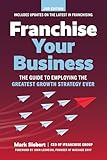


There is no universal readiness test in the sources cited here, and no established figure showing that franchising makes businesses grow faster as a rule. Treat it as one possible expansion route, to weigh against company-owned growth using factors such as capital and staffing needs, geographic reach, operator autonomy, consistency, support workload, and who bears local operating risk. These are decision axes, not guaranteed advantages.
What’s actually slowing this PC down?
Pick the symptom - the matching free tool is one click away.
Can someone else run the business from a system?
Consider whether a capable operator could deliver the customer experience without relying on know-how that exists only in the founder’s head. An operations manual can document required standards, policies, and routine procedures; the International Franchise Association (IFA) describes a dynamic manual as a tool for maintaining uniformity, quality, and control. The SBA-hosted franchisee guide also illustrates how manuals may govern everyday procedures and operating requirements, but it is a contributed article, not a legal rule.
#1 Best Overall
- Can you explain the important tasks, service standards, and decisions clearly enough to teach them?
- Can different operators follow the same processes without constant founder intervention?
- Can the manual and training materials be maintained as products, services, policies, or standards change?
If the answer depends on an experienced employee filling in undocumented gaps, those gaps are operational work to resolve—not evidence that a franchise system is ready.
Can you maintain standards and support franchisees?
Franchisees operate their own businesses, but customers still experience the shared brand. The IFA’s Board-adopted guiding principles say franchisors should support franchisees and enforce brand standards that enhance economic performance for both franchisees and the franchisor. This is association guidance, not law; it points to practical capabilities an owner should plan for.
- Training: teach operators how to use the system and meet its standards.
- Communication: keep operators informed about changes and provide a route to raise issues.
- Monitoring: determine whether locations are meeting brand and operating requirements.
- System improvement: update procedures and communicate changes when the business evolves.
Ask who will do this work, how much time it will take, and whether the business can sustain it as the network grows. Selling franchises without a realistic support plan risks leaving operators to improvise in ways that affect the brand.
Quick wins for a faster PC:
Repair Windows errors before they cause bigger problemsFix Now →Scan for outdated or missing drivers - takes under a minuteDriver Scan →Do the unit economics and any performance claims hold up?
A successful company-owned location is not, by itself, proof that a franchisee will earn the same results. Location conditions, labor, costs, and execution can differ. The Federal Trade Commission (FTC) does not require a franchisor to disclose potential income or sales. If you choose to make an earnings claim, the FTC says it needs a reasonable basis, must appear in Item 19 of the Franchise Disclosure Document (FDD), and must describe the supporting data’s limitations and assumptions.
Rank #3
That makes evidence quality a readiness issue: know what your figures represent, what they leave out, and whether a prospective franchisee can understand the assumptions. Do not present a forecast or a single location’s results as a promise.
The IFA’s 2025 Franchisor Survey reports that 37% of respondents identified labor availability, quality, and cost as their top business challenge; 42% of franchisor executives said unit economics were the single most important factor affecting franchisor-franchisee relationships. These are survey findings among respondents, not universal benchmarks, but they underscore why labor assumptions and the economics of each unit deserve scrutiny.
Rank #4
What U.S. disclosure obligations apply?
For a U.S. franchise offering, the FTC Franchise Rule requires a franchisor to provide a prospective franchisee an FDD containing 23 specified items. The FDD is intended to help a prospect weigh risks and benefits; it is not a performance guarantee. Under the FTC’s guidance, the prospect must receive the FDD at least 14 days before being asked to sign a contract or pay the franchisor or an affiliate. Prospects may request the FDD earlier in the sales process.
The FTC’s guide tells prospective buyers to review all 23 items. It highlights information such as the franchisor’s background, litigation, initial investment, and Item 20 tables covering system growth and owner turnover. The guide also explains how optional earnings claims are treated. Furnishing an FDD alone does not establish that a franchisor is reputable.
These federal sources do not provide a state-by-state map of registration or relationship-law requirements. Before offering franchises, consult qualified franchise counsel about the federal rule and the laws that may apply in the states where you plan to offer or sell.
Independent reader supportYour contribution helps us test, update, and keep practical guides available for everyone.How should a prospective franchisee assess the offer?
If you begin selling franchises, expect candidates to evaluate the offer rather than rely on the brand’s claims alone. The FDD can help them examine:
- Initial investment and other costs, along with the territory and operating restrictions.
- The franchisor’s background and litigation disclosures.
- Item 20 information about growth and owner turnover.
- Training and ongoing support, and the evidence and assumptions behind any Item 19 earnings claim.
SBA Franchise Directory inclusion has a narrower meaning: the SBA says it indicates the brand was reviewed as eligible for SBA financial assistance. It is neither an SBA endorsement nor a guarantee of business success. Do not treat directory status as a substitute for a candidate’s own review or your legal preparation.
Crashes, No Sound, or Screen Glitches?
Random freezes, missing sound and display glitches usually trace back to one bad driver. Find and replace yours safely.Free scan · under a minuteWindows Errors? Fix Them Before They Spread
Repair common Windows errors and clear accumulated junk for a smoother, more stable PC - no reinstall needed.Free scan · no reinstallA practical go/no-go check
Before committing to franchise development, write down what is already repeatable, what still depends on the founder, and what new responsibilities the business must be able to carry. A useful readiness check is whether you can answer yes—or identify a concrete plan to address each point—without relying on unsupported performance promises.
- The core operation can be documented, taught, and updated.
- Brand standards are clear enough to communicate and maintain across locations.
- You have a credible plan for training, communication, monitoring, and system improvements.
- Your unit economics and any proposed performance statements are supported by evidence and transparent assumptions.
- You are prepared to develop and deliver the required U.S. disclosure materials, with qualified counsel involved before making an offer.
If essential operating knowledge, support capacity, or evidence is missing, address that work before selling franchises. Franchising is a growth option to evaluate—not a shortcut around building a business that other operators can run.
Quick Recap
Product prices and availability are accurate as of the date/time indicated and are subject to change. Any price and availability information displayed on Amazon at the time of purchase will apply.

