
Outdated Drivers Are Slowing You Down
One free scan finds every outdated or missing driver and matches the right update for your exact hardware.Free scan · exact hardware matchWindows Errors? Fix Them Before They Spread
Repair common Windows errors and clear accumulated junk for a smoother, more stable PC - no reinstall needed.Free scan · no reinstalliTechGuides is reader-supported. When you buy through links on our site, we may earn an affiliate commission. As an Amazon Associate I earn from qualifying purchases. Learn more
About 94% of the 1,000 most-downloaded PyPI projects published a latest release with either a native Windows on Arm wheel or a platform-independent wheel in Microsoft’s September 2026 scan. That is a major improvement for Python developers using Arm-based Windows PCs, but it is not a guarantee that 94% of complete Python applications will run natively: the result measures published wheel availability, not end-to-end application compatibility.
Microsoft reported the figure on October 14, 2026, alongside the release of Python 3.15’s native-by-default Windows on Arm experience. Python 3.15 now selects the native Arm64 interpreter by default on Windows on Arm devices, while Windows on Arm remains a CPython Tier 2 platform with continuous testing and release-quality commitments.
What the 94% figure actually measures
The denominator is specific: the 1,000 PyPI projects with the most downloads in September 2026. Microsoft checked the latest release of each project and counted it when that release offered either a native Windows Arm64 wheel or a platform-independent wheel. It did not test every version, operating system configuration, or application assembled from those packages.
Do these 3 things before closing this tab:
1Clear out junk files and repair common Windows errors2Fix the driver behind crashes, sound loss and screen glitches3Repair Windows errors before they cause bigger problemsNative Arm64 wheels and universal Python wheels are different
A wheel tagged for win_arm64 contains binaries compiled for Windows on Arm. It can run without translating those native components. A wheel in the py3-none-any family contains architecture-independent Python code and can work on Arm because it has no machine-specific binary, but it does not prove that every dependency in an application is also architecture-independent. Both wheel types count toward the 94% result.
#1 Best Overall

- UNOPENED RETAIL PACKAGING, sold as configured by Lenovo. Includes one year of Courier or Carry-in Lenovo Warranty. Add up to 4 years of Lenovo Premium Care Onsite Plus when you register your computer with Lenovo.
- Amazing Display: 14.5" 3K (2944 x 1840), OLED, Glare, Dolby Vision, Touch, HDR 600 True Black, 100I-P3, 1000 nits (Peak)/500 nits (Typical), 90Hz, Glass
- Experience exceptional performance with the Snapdragon X Elite X1E-78-100 processor, Delivering 45 trillion operations per second, ensuring tasks are more efficient and faster. With exceptional power efficiency expertly managed by the tuning of the Slim 7x, you can enjoy up to 23.5 hours of video playback on a single battery charge.
- Designed to get any job done with memory of 16 GB and even more storage capacity at 1 TB. And power through your day with plenty of connectivity, including: 3x USB-C (USB4 40Gbps), with USB PD 3.1 and DisplayPort 1.4.
- The Snapdragon X Elite X1E-78-100 processor is perfect for those with a creative mind and an eye for design. It delivers top-tier performance while cutting power consumption by 68%, letting your creative juices flow all day without any interruptions.
A top-level wheel does not prove dependency compatibility
A package may publish a platform-independent wheel while depending on another package that includes a native extension. Microsoft therefore advises testing the complete, pinned dependency graph rather than checking only the package named in an application’s requirements file. The relevant question is whether every installed dependency has an Arm64 build, is architecture-independent, or can be handled through emulation.
Why Python 3.15 changes the Windows on Arm experience
On an Arm64 Windows device, the current Python Install Manager can install Python 3.15 with the native Arm64 interpreter selected by default. At startup, verify that the interpreter reports 64-bit (ARM64); that confirms the process itself is native rather than an x64 installation running under emulation.
Native interpreter selection removes a common source of confusion, but it does not convert x64-only extensions into Arm binaries. Projects that still distribute only x64 wheels can continue to run through Windows x64 emulation, provided their dependencies and workloads behave correctly under that compatibility layer.
Rank #2
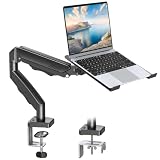
- Versatile 2-in-1 Laptop & Monitor Mount - Stable aluminum laptop arm mount is compatible with Laptop, Monitor, Macbook and Chromebook. With the tray, the laptop stand can hold notebooks up to 17". Simply remove the tray to accommodate monitors ranging from 13-32" with VESA pattern 75x75mm and 100x100mm, holds up to 4.4-19.8lbs. 𝐏𝐥𝐞𝐚𝐬𝐞 𝐧𝐨𝐭𝐢𝐜𝐞 𝐭𝐡𝐚𝐭 𝐢𝐭 𝐢𝐬 𝐧𝐨𝐭 𝐜𝐨𝐦𝐩𝐚𝐭𝐢𝐛𝐥𝐞 𝐰𝐢𝐭𝐡 𝟏𝟎𝟎𝟎𝐑/𝟏𝟓𝟎𝟎𝐑/𝟏𝟖𝟎𝟎𝐑 𝐜𝐮𝐫𝐯𝐞𝐝 𝐬𝐜𝐫𝐞𝐞𝐧𝐬
- Full-Motion Adjustment For Comfortable View -The laptop arm mount offers -45° to +90° tilt, 180°swivel, 360° rotation. Raise your monitor up to 16.9” to support a healthy sitting posture. Whether you’re working from home, gaming through the night, or switching between video calls and documents, getting the screens to your natural line of sight helps relieve neck, shoulder and back strain so you can stay focused longer with less fatigue. 𝐍𝐨𝐭𝐞: 𝟑𝟔𝟎° 𝐫𝐨𝐭𝐚𝐭𝐢𝐨𝐧 𝐢𝐬 𝐫𝐞𝐜𝐨𝐦𝐦𝐞𝐧𝐝𝐞𝐝 𝐨𝐧𝐥𝐲 𝐟𝐨𝐫 𝐦𝐨𝐧𝐢𝐭𝐨𝐫 𝐢𝐧𝐬𝐭𝐚𝐥𝐥𝐚𝐭𝐢𝐨𝐧. When you're using the laptop tray, please do not to rotate the tray to a vertical position to ensure safety
- Space Saving & Keep Your Desk Organized - Elevate your laptop or monitor with this laptop desk mount to free up valuable space and creates a clean work environment. Easily switch between laptop and monitor modes to enhance your multitasking abilities and boosting your productivity while preserving desk space. Built-in cable management guides wires along the arms, keeping cords out of sight and out of the way. Enjoying your working, gaming or viewing hours in a tidy and modern workstation
- Heat Dissipation & Secure - The ventilated tray maximizes airflow and keeping your device cool and running efficiently. The tray includes 4 anti-slip pads and Velcro straps your laptop in place, preventing slips or falls during work or gaming. Ideal for home office professionals, office workers, programmer,designer, gaming enthusiasts and students
- Quick & Easy Setup - Assembly is straightforward with the provided tools and visual user manual. Depending on your desk situation, you can choose clamp or grommet mounting (suitable for desks from 0.39" to 2.76" thick). The hole diameter for grommet base should be 0.39" to 2.36". Do not hesitate to relate with us for any pre-purchase or installation questions
Which parts of the Python stack are available
Microsoft’s October 2026 overview lists broad coverage across scientific computing, web development, packaging and testing. Availability below refers to published native Arm64 or platform-independent packages; individual release versions and transitive dependencies still need checking.
| Area | Packages and tools identified as available | What to verify |
|---|---|---|
| Scientific computing | NumPy, SciPy, pandas, Polars, Matplotlib, scikit-learn, Pillow, h5py, statsmodels and XGBoost | Native wheel tags for the exact release and any compiled dependencies |
| Packaging and Rust extensions | pip, venv, virtualenv, setuptools, build, uv, pydantic-core, Ruff, orjson and tokenizers | Whether your lock file selects an Arm64 wheel instead of an x64 artifact |
| Web and cloud | Django, Flask, FastAPI, Requests, HTTPX and several cloud SDKs | SDK-specific native extensions and service-client dependencies |
| Notebooks and testing | JupyterLab, Jupyter Notebook, ipykernel, pyzmq, psutil, VS Code’s Jupyter experience, pytest, Black, mypy and coverage | Kernel, messaging and test-environment packages in the full environment |
Anaconda’s main channel, as reported by Microsoft, includes more than 2,500 Windows on Arm packages. That gives data-science users another substantial source of Arm-ready binaries, although channel coverage should be checked against the packages and versions in a particular environment.
Where native coverage is still incomplete
Microsoft says broader native wheel coverage is still needed for PyArrow, gRPC, OpenCV and database clients. These components often sit low in a dependency tree, so an application can appear compatible until it installs a connector, image-processing module, analytics engine or RPC library.
Rank #3

- Laptop sitting too low on your desk: Raise it to eye level on a gas spring arm that adjusts from 9 to 18.75 inches and holds where you leave it. A hex key sets the tension, turning one way for heavier laptops and the other for lighter ones.
- Covered for as long as you own it: Mount-It! backs this laptop arm with a lifetime manufacturer warranty and US-based product specialists, available during standard business hours. If setup, tension, or fit raises a question, a product specialist can help.
- Fits laptops up to 17 inches and 13.2 lbs: Side holders open from 9.5 to 16.5 inches wide, and locking buckles, traction pads, and tabs keep the laptop from slipping. The 11.75 x 11 inch tray is ventilated so warm air escapes beneath. Check your laptop's width and weight first.
- Full motion for every working position: A 360 degree swivel, 90 degree tilt, and reach from 10.5 to 23.5 inches let you pull the screen close, push it back, or angle it toward a video call, then reposition it between sitting and standing.
- Screen up high, keyboard and mouse below: This laptop stand arm is a raised screen, not a typing surface, so pair it with an external keyboard and mouse. It clamps to the desk edge instead of a riser taking up space, and cable clips route cords along it.
PyTorch and NVIDIA CUDA components are publicly available for validation. Anaconda provides CUDA Toolkit packages and plans additional builds, but GPU workflows require verification of the exact Python, framework, driver and CUDA combinations rather than assuming that a general Arm64 wheel is sufficient.
How to check whether an application is Arm-compatible
- Start with a native interpreter. On the Arm64 Windows machine, install Python 3.15 through the current Python Install Manager and confirm the startup banner says
64-bit (ARM64). - Freeze the environment. Use the application’s pinned requirements or lock file. Do not audit an unconstrained “latest” installation and assume the result will remain stable.
- Inspect every dependency. Check direct and transitive packages for a
win_arm64wheel or a platform-independent wheel. Pay particular attention to packages that ship C, C++, Fortran or Rust extensions. - Exercise real application paths. Import every major module, run representative tests, and cover database, networking, notebook, image, scientific or GPU features that the production workload uses. Installation success alone does not establish runtime compatibility.
- Build and test natively in CI. GitHub-hosted
windows-11-armandwindows-11-vs2026-armrunners let maintainers compile packages and execute tests on Arm hardware before publishing a release. - Keep an emulation fallback. If one dependency remains x64-only, use the Windows x64 compatibility layer while waiting for a native build, and record that exception so a future dependency update can remove it.
Do Windows on Arm developers still need x64 emulation?
Often, yes. Native support is now broad enough for common web, data-science, notebook and testing workflows, but the remaining gaps are concentrated in important native-extension categories. A project can therefore have a native Python 3.15 interpreter and mostly native dependencies while still requiring emulation for one package.
Use native wheels whenever they exist: they avoid translation overhead and make CI results match the target architecture. Use x64 emulation as a compatibility bridge, not as evidence that the dependency graph is Arm-native. When a package publishes a new Arm64 wheel, update the pin, rerun the full test suite on an Arm runner and remove the exception only after the application’s real workload passes.
Rank #4

- Step Up to Next-Level Performance - Redefine your laptop experience with the Acer Aspire 16 AI. Powered by the Snapdragon X X1-26-100, a premium integrated GPU with up to 1.7 TFLOPs and NPU with 45 TOPs for optimized processing across CPU, GPU, and NPU workloads and delivering best-in-class performance and power efficiency.
- New AI Superpowers - Discover the power of Recall (preview), improved Windows search, and Click to Do (preview) on Copilot+ PCs. Effortlessly locate past content, perform natural searches, and interact with text and images – all while ensuring your data remains private and you stay productive*.
- Built on Brilliant AI Foundations - The Acer Aspire 16 AI harnesses the industry-leading Qualcomm AI Engine with an integrated Qualcomm Hexagon NPU, delivering transformative experiences for creativity, video conferencing, security, and productivity assistants. The Qualcomm AI Engine supports Windows Studio Effects and many other AI-accelerated applications and experiences, to make possibilities endless.
- Screens that Speak to Your Senses - Immerse yourself in a world of vibrant visuals. Enjoy stunning clarity, rich 100% sRGB colors, and sharp detail on the 16" 120Hz WUXGA ultra-high-resolution touchscreen display – acting as a panoramic playground for entertainment, artistic expression, and engaging AI experiences that dazzle the eye.
- Streamline Your Settings with AcerSense - Intelligent Acer AI solutions are at your fingertips. Effortlessly get answers, streamline settings, optimize your video presence, and elevate communication. Experience intuitive AI that’s easy to use and seamlessly enhances your productivity.
What maintainers should measure before claiming Arm support
Package maintainers and application teams should compare five separate properties:
- Whether the project publishes a native Arm64 wheel.
- Whether transitive dependencies contain native extensions without Arm64 builds.
- Whether native CI runners are available for compilation and testing.
- Whether the project’s package-manager channels carry the required versions.
- Whether x64 emulation provides a workable fallback for any remaining gap.
That distinction is why the headline is encouraging but deliberately narrower than “94% of Python applications run natively.” As Chris Anderson, Distinguished Engineer for Windows Platform and Developer, wrote, “This measures published wheel availability, not end-to-end application compatibility.”
What the result means for Python users
For a new Windows on Arm project, the default path is now substantially better: install the native Python 3.15 interpreter, choose Arm-ready or architecture-independent packages, and test the complete locked environment on native CI. For an existing project, expect most mainstream components to be available but plan for targeted investigation around data formats, computer vision, RPC, database drivers and GPU tooling.
The practical takeaway is not to count packages at the top level. Count the binaries your application actually installs, then validate the workload on Arm hardware. The 94% scan shows that the ecosystem has moved close to mainstream usability, while the remaining dependency-level gaps still determine whether a particular application is genuinely native.
Quick Recap
Product prices and availability are accurate as of the date/time indicated and are subject to change. Any price and availability information displayed on Amazon at the time of purchase will apply.

