
Outdated Drivers Are Slowing You Down
One free scan finds every outdated or missing driver and matches the right update for your exact hardware.Free scan · exact hardware matchPC Slower Than It Used to Be?
A free scan shows the junk files, broken settings and background clutter dragging Windows down - then fixes them in one click.Free scan · Windows 10 & 11iTechGuides is reader-supported. When you buy through links on our site, we may earn an affiliate commission. As an Amazon Associate I earn from qualifying purchases. Learn more
If an AgentGPT prototype needs to become a workflow your team can control and maintain, choose a framework around the work it must do—not a universal “best agent” ranking. The six candidates here represent different approaches: explicit orchestration, role-based teams, Microsoft-stack development, scoped assistants and delegation, Google Cloud-oriented development, and TypeScript workflows. Treat them as a shortlist to investigate, not as independently tested winners.
A browser-based agent experience and a developer framework are related but different things. A demo can show what an agent might do; a framework is where developers define how a workflow runs, connects to tools, handles state, and fits into an application. Before selecting one, establish what “real work” means for your project: resumable state, controlled multi-step execution, integrations, deployment fit, and useful traces when a run fails.
| # | Preview | Product | Price | |
|---|---|---|---|---|
| 1 |
|
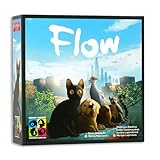
Flow Cooperative Board Game – Strategy Game for 1–4 Players Ages 8+ | $35.00 | Buy on Amazon |
What should replace a browser demo?
For a production-bound prototype, look for a developer framework or SDK that gives your team a suitable execution model and enough operational visibility to support it. A polished demo alone does not establish that a system can preserve state, recover from interrupted work, expose failures, or behave as needed in deployment.
The right choice depends on the shape of the workflow. A bounded assistant that calls tools is not the same problem as a long-running process with approval steps, a team of role-based agents, or an event-driven document pipeline. Match the framework’s model to the task, then verify the specific version’s current documentation for persistence, integrations, deployment, error handling, and observability.
#1 Best Overall
- OFFICIAL GAME OF THE HIT ANIMATED FILM: Immerse yourself in the emotional story and beautiful world of Flow
- REAL TIME COOPERATIVE GAMEPLAY: Work together under pressure where players must make quick decisions to survive the flood and rescue allies.
- PLAYABLE SOLO OR WITH FRIENDS: Designed for 1–6 players, Perfect for game nights with siblings, parents, or friends.
- DYNAMIC GAME BOARD AND RISING WATER MECHANIC: Navigate a modular map that shifts and floods over time, creating new challenges and forcing adaptive strategies.
- ENDLESS REPLAYABILITY: With a variety of tiles and 11 unique scenario cards to shape your next game. Flow is easy to get into but deep as an ocean.
Six AgentGPT alternatives to evaluate
These options are not a ranked list. Their descriptions below reflect the categories in LangChain’s vendor-authored comparison, published June 6, 2026; they are positioning summaries, not independent performance findings. Check each project’s official documentation before relying on a particular feature or capability.
| Option | Documented positioning in the June 6, 2026 comparison | Investigate it if your workflow needs |
|---|---|---|
| LangGraph | A separate orchestration framework for stateful, cyclic multi-agent systems, including loops, persistence, and human-in-the-loop control. | Explicit control over branching or recurring workflow steps, with state and human involvement as requirements. |
| CrewAI | Role-based multi-agent orchestration for rapid prototypes. | A role-oriented way to describe a team of agents; verify how its current execution and operational model fits your application. |
| Microsoft Agent Framework | A unified successor to AutoGen and Semantic Kernel, positioned for Microsoft-stack teams. | Your existing environment makes Microsoft ecosystem fit an important selection criterion. |
| OpenAI Agents SDK | A minimal-abstraction option for scoped assistants and delegation. | You want to assess a comparatively direct assistant or delegation model against your own control and operations needs. |
| Google ADK | A GCP-oriented agent runtime. | Your cloud environment and deployment requirements make Google Cloud fit relevant. |
| Mastra | A TypeScript framework. | Your application team prefers a TypeScript framework; check its present documentation for the workflow features and integrations you require. |
LangChain’s guide also discusses LlamaIndex Workflows, describing them as event-driven orchestration for document-heavy pipelines. It is not included in this six-option lineup, but it may be a relevant candidate if your central problem is coordinating document workflows. Its omission here is editorial selection, not a finding that it is inferior or unsuitable.
How to choose among the six
Start with the workflow shape
- Explicit loops, state, or approval points: Evaluate whether a graph-oriented approach such as LangGraph matches the level of control your process needs.
- Work described as distinct agent roles: Examine CrewAI’s role-based positioning, then confirm how the current framework handles the actual handoffs and failure cases in your design.
- A bounded assistant that delegates: Include OpenAI Agents SDK in the evaluation if its documented abstraction level and model ecosystem suit the task.
- A document-heavy, event-driven process: Add LlamaIndex Workflows to your shortlist rather than choosing from these six by default.
- Cloud or language constraints: Consider Microsoft Agent Framework or Google ADK when their ecosystem alignment matters; consider Mastra when TypeScript is a key fit. Do not infer a complete deployment story from that positioning alone.
Check control, state, and recovery
Write down what must happen between the first model call and a completed task. Identify which steps can repeat, which require human approval, what information must survive a restart, and what should happen after a tool or model error. Then look for documentation that answers those exact questions. Terms such as “stateful” or “orchestration” do not by themselves establish the persistence, checkpointing, or recovery behavior your application needs.
Check integrations and stack fit
List the models, tools, APIs, language, and cloud environment the workflow must use. Verify support in the current official documentation instead of assuming that a framework’s broad category or ecosystem focus guarantees the integration you need. Include the cost of any services and infrastructure your team must supply in the comparison.
Check observability and operating requirements
Before committing, determine how developers can inspect a run, locate the failed step, distinguish model output from tool errors, and evaluate changes. Also establish the deployment path and any additional infrastructure required. A framework may leave some of those responsibilities to your application or surrounding services, so confirm the boundary explicitly.
Independent reader supportYour contribution helps us test, update, and keep practical guides available for everyone.What to verify before committing
The six frameworks do not have an apples-to-apples feature matrix established here, and no hands-on tests or benchmarks support a reliability ranking. Use a small evaluation based on your real workflow rather than treating vendor positioning as proof of production behavior.
- Specify the task. Describe the inputs, tools, decisions, approval points, expected output, and what counts as a failed or incomplete run.
- Define the minimum operational requirements. Decide which state must persist, whether work must resume after interruption, how errors should be surfaced, and what trace details operators need.
- Check official documentation. For the current version, confirm language and model support, integrations, persistence or checkpoint semantics, deployment options, and observability. Record gaps rather than inferring answers from a product label.
- Map total cost separately. Distinguish framework licensing or hosted subscriptions from model/API usage and deployment infrastructure. Verify current prices directly before using them in a budget; pricing and availability can change.
- Exercise a representative workflow. Validate the behaviors your requirements demand, including interruption, tool failure, and human review where relevant. Do not substitute a successful demo run for those checks.
How to read framework comparisons
LangChain’s June 6, 2026 guide compares seven frameworks across developer experience, production reliability, observability and debugging, integrations, and pricing transparency. It is useful as a category map, but it is published by LangChain and includes LangChain’s own ecosystem; its characterizations and judgments are vendor-authored, not an independent evaluation. Treat its reliability framing as a comparison criterion to investigate, not as proof that one option will be reliable for your application.
Quick wins for a faster PC:
Fix the driver behind crashes, sound loss and screen glitchesFind Drivers →Clear out junk files and repair common Windows errorsFree Scan →Capabilities, pricing, and availability can change. Confirm volatile details with each project’s current official documentation and pricing information before making a decision. Do not assume that a framework, hosted service, and the model API it uses share one price or one operational responsibility.
Quick Recap
Product prices and availability are accurate as of the date/time indicated and are subject to change. Any price and availability information displayed on Amazon at the time of purchase will apply.

