
Do these 3 things before closing this tab:
1Clear out junk files and repair common Windows errors2Scan for outdated or missing drivers - takes under a minute3Repair Windows errors before they cause bigger problemsiTechGuides is reader-supported. When you buy through links on our site, we may earn an affiliate commission. As an Amazon Associate I earn from qualifying purchases. Learn more
Smart-wash features can take some repetitive decisions out of laundry, but they are not proof that a washer cleans better. Depending on the exact model, “smart” may mean sensors that adjust a cycle, automatic detergent dispensing, app controls, or a mix of those features. Five model families and models worth checking are below; verify the exact SKU and its current specifications before buying.
What smart-wash features actually do
“Smart wash” is an umbrella term, not a standard feature set. One washer may sense a load and adjust settings; another may dispense detergent automatically or connect to an app. Those functions solve different tasks, and they are not included on every model in a brand’s lineup. Samsung’s laundry comparison page illustrates why it is important to compare exact models rather than assume that every washer in a product family has the same features.
- Automatic sensing: Sensors can assess characteristics such as load size, fabric type or texture, and soil level, then select or adjust cycle settings. The characteristics detected depend on the model.
- Automatic detergent dispensing: A reservoir stores detergent and releases an amount for a wash. The stated number of loads per fill is a manufacturer estimate, not a guarantee of how long the reservoir will last in your household.
- Connected controls: An app may offer functions such as scheduling, notifications, or remote controls. Availability depends on the washer and may require Wi-Fi, an account, a compatible device, and an app.
- Cycle recommendations: Some systems recommend or select settings, but the exact degree of automation varies. Check whether the washer chooses settings automatically or simply offers suggestions.
These manufacturers’ pages describe product features; they do not establish that a smart washer cleans better than a competing washer. Choose automation for the tasks it removes, and weigh it alongside fit, capacity, washer type, and price.
The Tool Desk
Outbyte Driver Updater FREEScan for outdated or missing drivers - takes under a minuteDriver Scan →Outbyte PC Repair FREEClear out junk files and repair common Windows errorsFree Scan →Five washers and model families to investigate
The models below are candidates based on manufacturer descriptions, not hands-on recommendations or independently tested winners. The available information does not establish a complete, current comparison of dimensions, prices, installation requirements, and every app or cycle detail. Confirm those points on the exact product listing for your market before purchase.
#1 Best Overall
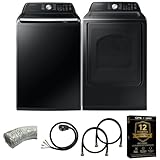
- Exclusive Installation Bundle: Includes 3-Prong and 4-Prong Dryer Power Cords, Washer Hose Set, 8-ft Vent Duct, and 1-Year CPS Protection Plan
- Smart Wi-Fi Enabled: Control washer and dryer remotely via SmartThings app
- 4.7 cu ft capacity Washer with Active WaterJet & vibration reduction tech
- Built-in WaterJet faucet lets you pretreat stains inside the tub
- Self Clean keeps the tub fresh without harsh chemicals
| Washer | What the manufacturer describes | What to verify |
|---|---|---|
| LG WM6700HBA, US product listing | 5.0 cu. ft. smart front-load washer. AI DD 2.0 senses fabric texture, soil level, and load size to select wash motions, temperatures, and other settings. ezDispense holds detergent for up to 18–31 wash cycles, depending on use. | Confirm current availability, dimensions, installation fit, price, and the detergent instructions for your use. |
| LG WM5500HWA, US product listing | 4.5 cu. ft. smart front-load washer with AI DD and TurboWash 360. LG says its built-in intelligence selects wash settings. | LG’s under-30-minute cleaning claim is tied to the specified cycle and load; do not assume every load finishes in that time. Check the product-page conditions and verify dimensions, availability, and price. |
| Samsung Bespoke AI front-load washer, select model | Samsung describes AI OptiWash on select models as sensing fabric, load size, and soil level, then adjusting settings and detergent. Samsung also describes SmartThings connectivity for supported products. | Select a specific SKU and confirm it includes AI OptiWash and the app functions you want. Features vary across Samsung’s product families. |
| GE front-load washer with Adaptive SmartDispense, exact model to verify | GE says select front-load models can hold detergent for up to 32 loads. SmartHQ can identify detergent and dispense the correct amount. | The feature description does not establish an exact current SKU. Find and verify a specific model before comparing or buying. |
| Whirlpool washer with AI Intelligent Wash, exact model to verify | Whirlpool describes AI Intelligent Wash as adjusting water levels, temperature, and wash actions. | Confirm which exact model offers the feature and whether it is front-load or top-load. |
Sources: LG WM6700HBA, LG WM5500HWA, Samsung US laundry comparison, Samsung washer FAQ, GE front-load washers, and Whirlpool smart top-load washers.
Do smart washers choose the cycle automatically?
Some do, within the options and sensing functions of their particular system. LG says the WM6700HBA’s AI DD 2.0 senses fabric texture, soil, and load size, then selects wash motions and temperatures. Samsung says AI OptiWash on select models senses fabric, load size, and soil level and adjusts settings. These are manufacturer descriptions of what the systems are designed to do, not independent proof of better cleaning or fabric care.
Before choosing a washer, check which inputs it senses, what it changes, and whether you can still select a cycle or adjust settings yourself. Do not assume a feature name means the same thing across brands or models.
Free tools Windows power users keep installed
One-click scans. No signup required.
Rank #2

- Large 4.8 Cu. Ft. Capacity : Wash more in fewer loads—perfect for families and busy households with heavy laundry demands.
- UltraFresh Vent System with OdorBlock: Helps eliminate excess moisture after each wash cycle, keeping your washer interior fresh between uses.
- Built-In WiFi with SmartHQ App Integration: Remotely control your washer from your phone—start, stop, monitor, and receive alerts anytime, anywhere.
- Quick Wash Cycle (20 Minutes): Perfect for lightly soiled clothes, this cycle delivers a fast and efficient clean when time is limited.
- Time Saver Mode (35 Minutes): Enjoy a full, deep clean in just 35 minutes—ideal for mixed loads on busy days.
Can a washing machine measure detergent for you?
Automatic dispensers store detergent and release it during washing, reducing the need to measure it for every load. The advertised capacity is expressed as a number of loads, but actual use depends on dosing and household laundry habits.
- LG says the WM6700HBA’s ezDispense reservoir lasts up to 18–31 wash cycles per fill, depending on use.
- GE describes Adaptive SmartDispense on select front-load models as holding detergent for up to 32 loads.
- Whirlpool says Load & Go holds detergent for up to 20 loads on its smart top-load washers.
- Samsung lists Flex Auto Dispense on select products; verify the exact model and its dispenser details.
These are manufacturer-stated figures, not a direct comparison under shared testing conditions. Check the washer’s detergent guidance and reservoir instructions, and make sure the precise SKU includes the dispenser feature.
What app features and requirements should you check?
Connected features can make laundry easier to schedule or monitor, but they depend on the product and its setup. Whirlpool describes app scheduling; GE describes SmartHQ detergent identification; Samsung describes SmartThings connectivity, notifications, and controls for supported products. App functions are not uniform across a brand’s lineup.
Rank #3

- High-Efficiency Front-Load Washer – ENERGY STAR certified design delivers powerful cleaning performance while helping reduce annual energy consumption to approximately 105 kWh/year.
- Large 5.0 Cu. Ft. Capacity – Easily handles bulky items like comforters and large laundry loads, reducing the number of cycles needed.
- Depth With Door Open (Maximum 55 inches) – Requires up to 55 in. of clearance with the door fully open (90°) for convenient loading and unloading.
- Smart ThinQ Technology – Wi-Fi enabled washer allows remote monitoring, cycle control, and notifications through the LG ThinQ app.
- Quiet & Durable Inverter Direct Drive Motor – Designed for reduced vibration, quieter operation, and long-term reliability.
Before relying on remote features, verify the exact model’s Wi-Fi requirements, account and compatible-device requirements, supported app functions, and whether a particular control can be performed remotely. A connectivity label alone does not tell you which tasks the app supports.
Windows Errors? Fix Them Before They Spread
Repair common Windows errors and clear accumulated junk for a smoother, more stable PC - no reinstall needed.Free scan · no reinstallOutdated Drivers Are Slowing You Down
One free scan finds every outdated or missing driver and matches the right update for your exact hardware.Free scan · exact hardware matchHow to choose the right model for your laundry
- Start with the space. Check the washer’s exact dimensions and installation requirements against the laundry area, including any access constraints that affect delivery and setup.
- Choose the washer type and capacity. The two named LG models are front-load washers, while the Whirlpool Load & Go reference is for smart top-load washers. Compare capacity and type against your household’s needs rather than choosing by feature name alone.
- Pick the task you want to simplify. If you want fewer cycle decisions, investigate sensing and cycle-selection behavior. If measuring detergent is the chore, look for a dispenser and its stated capacity. If scheduling or alerts matter, inspect app functions for the exact model.
- Verify the exact SKU. Product families can vary in sensing, auto dispensing, speed cycles, capacity, and connectivity. Confirm the feature list on the current listing for your market, not just a category page or family name.
- Check cycle-time claims in context. A quick-cycle claim applies to the specified cycle and load conditions; it does not mean every wash will finish within that time.
- Compare the full purchase details. Confirm current price, dimensions, installation fit, availability, and any connectivity prerequisites before deciding.
Is automatic dispensing worth it?
It can be useful if measuring detergent for each wash is a recurring nuisance and the washer’s reservoir capacity suits your routine. The load-count claims—up to 18–31 cycles for the LG WM6700HBA, up to 32 loads for select GE models, and up to 20 loads for Whirlpool Load & Go—come from manufacturers and are not directly comparable guarantees. If you prefer to control detergent amount yourself, or do not want to depend on a reservoir, sensing and app features may matter more than automatic dispensing.
Quick Recap
Product prices and availability are accurate as of the date/time indicated and are subject to change. Any price and availability information displayed on Amazon at the time of purchase will apply.

