
Free tools Windows power users keep installed
One-click scans. No signup required.
iTechGuides is reader-supported. When you buy through links on our site, we may earn an affiliate commission. As an Amazon Associate I earn from qualifying purchases. Learn more
No, 5G does not always drain a phone faster than 4G. Battery impact changes with the handset and modem, radio conditions, network architecture, and what the phone is doing. A 5G radio can draw more power at a given moment, yet finish a large transfer sooner and use less energy for that completed task. In other situations, maintaining 5G alongside LTE can increase consumption and heat.
The useful answer is conditional rather than a single percentage. The five myths below explain when 5G may use more energy, when it may use less, why standalone and non-standalone networks behave differently, and when switching to LTE is a sensible troubleshooting step.
What really determines 5G battery use?
Battery life is affected by several variables at once. The same phone can show different results on two networks, in two buildings, or while performing two different tasks. The table summarizes the decision points supported by the available device and network tests.
| Factor | What the evidence shows | What it means for you |
|---|---|---|
| Radio conditions | The 2019 Signals Research Group benchmark reported different results in different radio conditions. | A strong, stable connection can reduce the time a transfer takes; a difficult connection can keep the modem active longer. |
| Workload | Large, fast transfers can benefit from 5G’s shorter transfer time, while speed-limited activity can favor LTE in some tests. | Battery impact for one download is not the same metric as current draw while the radio is transmitting. |
| Network architecture | Samsung documents a Galaxy situation in which 3G or LTE remains connected alongside 5G. A 2023 test also found different efficiency between 5G 2CC standalone (SA) and 5G 1CC non-standalone (NSA). | The 5G icon alone does not tell you how many radios or carriers are active. |
| Device and software | The cited measurements used particular commercial phones, including Galaxy models, and particular network configurations. | Do not apply one phone’s result as a current ranking of every 5G handset. |
Those qualifications are why a universal claim such as “5G costs 20 percent more battery” is not supported by these tests.
#1 Best Overall

- 40% Smaller & Lighter Portable Charger: Powered by the industry’s first TinyCell high-density battery technology, this ultra-compact 10,000mAh portable charger power bank is 40% smaller and 36% lighter than conventional chargers. Whether you are an office user slipping a mini small portable battery into a purse for commuting, or a student looking for lightweight college essentials, you get powerful daily carry convenience without the extra bulk to keep you powered on the go.
- 45W Pro Speed Portable Phone Charger: This 45W fast charger boosts an iPhone 17 Pro Max to 76%, a Galaxy S25 Ultra to 84%, or an iPad Pro to 60% in just 30 minutes (charging from 20%). Whether you are a driver needing a quick portable charger for car, a commuter relying on a desk phone charger, or a gamer wanting a seamless Switch battery pack and Steam deck charger portable, you will spend less time tethered to a wall and more time enjoying your day.
- Detachable Cable for Multiple Devices: Unlike a standard portable charger with built in cable that becomes useless if the cord breaks, INIU's 0.4ft detachable braided USB-C cable can be swapped anytime to save your investment. It effortlessly transforms into a versatile travel charger for multiple devices, ensuring your family or group travelers always have a reliable portable charger for all cell phones to keep everyone connected without carrying messy cords.
- Airline-Safe Travel Essentials: This TSA-compliant, flight safe power bank provides nearly 2 full charges for your smartphone, making it the perfect battery pack flight safe for business trips, cruise vacations, and airplane travel essentials. Beyond flights, it empowers campers, hikers, and outdoor users with ultimate camping essentials and road trip essentials—so you can explore freely without battery anxiety, making it ideal gifts for travelers women and men.
- Trusted Emergency Backup: As the SAFE Fast Charge Pro trusted by over 38 million users, we ensure the safest charging with the highest-grade materials. When unexpected storms or hurricanes strike, it acts as a lifeline—providing a dependable power outage battery backup and emergency phone charger for emergency users.
Myth 1: 5G always drains more battery than 4G
What the benchmark actually found
A 2019 global benchmark conducted by Signals Research Group and commissioned by Qualcomm found that the comparison was “very nuanced and complex.” Its results changed with radio conditions and usage rather than producing one fixed penalty. In good conditions, 5G’s higher instantaneous current could be offset by completing data transfers faster. In other conditions, LTE could be the better performer.
Qualcomm’s summary says the study concluded that 5G smartphones could deliver all-day battery life, but that is a summary of a 2019 commissioned study, not a promise for every phone today. You can read the summary at Qualcomm’s benchmark article and the underlying report at the Signals Research Group PDF.
Why “more power” does not automatically mean “less battery life”
Instantaneous power is the rate at which the phone is drawing energy at a moment. Battery use for a task depends on both that rate and how long the task lasts. A modem that draws more while sending data may still consume less total energy if it finishes quickly and returns to a lower-power state. Conversely, a weak or unstable connection can keep the radio working for longer and erase that advantage.
What to take away
Compare 5G and LTE under the same location, task, and time window if you want to understand your own phone. Treat any result as specific to that device and network, not as proof that 5G is universally better or worse.
Rank #2

- 10,000mAh Power Bank with 4 Built-in Cables: Stay powered throughout the day with a 10,000mAh portable charger featuring 4 built-in cables for iOS, USB-C, and Micro USB devices. Charge an iPhone 16 up to 2.2 times, Samsung S24 up to 1.8 times, or AirPods Pro up to 12 times, providing reliable power for travel, work, commuting, and everyday use.
- Ultra-Compact & Lightweight Design with High-Density Battery Technology: Experience powerful charging in a smaller, lighter body. Featuring advanced high-density battery technology, this power bank achieves a more compact design while maintaining reliable capacity. Measuring only 4.41 × 2.8 × 0.7 inches and weighing just 189g, it is designed to easily fit into pockets, handbags, and travel bags. Compared with traditional bulky power banks of similar capacity, it is up to 40% more compact and 45% lighter.
- Travel Essential with No Extra Cables Needed: Leave extra charging cables behind with 4 built-in charging cables always ready when you need them. This portable charger is designed for flights, business trips, commuting, and daily travel, while meeting TSA carry-on battery guidelines (under 100Wh) for convenient air travel.
- LED Digital Display & Charge 5 Devices at Once: Stay informed with the built-in LED digital display that shows remaining battery percentage from 0–100% in real time. With 3 built-in charging cables and 2 external ports, this battery pack allows you to charge up to 5 devices simultaneously, including smartphones, earbuds, tablets, and other USB-powered devices.
- Advanced Safety Protection & Reliable Performance: Built with multiple safety protections including overcharge, overcurrent, short-circuit, and temperature protection, this power bank helps provide safer and more reliable charging. Trusted by tens of thousands of users worldwide, Zmmyuluo delivers dependable power support for travel, work, and everyday entertainment.
Myth 2: Faster 5G speeds automatically mean more energy for the same task
Energy per task is different from current draw
Suppose you download a large file. A faster 5G connection may use a higher current while the transfer is active, but it can finish sooner. The phone then spends less time in a high-power transmit state. That is why the 2019 benchmark summary reported cases in which 5G was more energy-efficient than LTE for large data transfers when radio conditions were good.
This does not mean every fast 5G session saves battery. The same benchmark identified situations in which LTE performed better, including when the data speed was throttled. If the network limits throughput, the modem may not gain enough transfer-time savings to compensate for its operating cost.
How the task changes the answer
- Large downloads or uploads: Shorter transfer time can improve energy used per completed file when the 5G link is strong.
- Speed-limited activity: A throttled connection can reduce or remove 5G’s time advantage, allowing LTE to use less energy in a particular test.
- Long sessions: Streaming, cloud synchronization, or hotspot use keeps the radio active for extended periods, so signal quality and network behavior matter continuously.
- Idle periods: When the phone is mostly waiting, the benefit of a faster peak speed may be irrelevant; background network management and coverage become more important.
Use “energy to finish this task” and “power drawn right now” as separate questions. Confusing them is the source of many contradictory battery claims.
Myth 3: Every 5G connection is standalone 5G
Standalone and non-standalone are different arrangements
Standalone (SA) 5G uses a 5G core and radio configuration designed to operate without an LTE anchor. Non-standalone (NSA) deployments can use LTE together with 5G. The 5G label on a status bar does not identify which arrangement your carrier is using, and availability can vary by market, carrier, device firmware, and band.
Rank #3
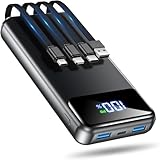
- Huge Capacity 50000mAh Power Bank:OHOVIV Portable charger ultra-high massive capacity provides 10 charges for iPhone 15, which make of new high-density polymer battery.Depending on battery size, most smartphones will get over 10 full charges. Portable power bank works and does not take on any extra room, suitable for camping, hiking, vacation, travel and other outdoors.
- Charge 6 Devices at Once: OHOVIV 50000mah Portable phone charger with 4 Built-in Cables(for iPhone, Type-C, Micro, USB-A) and 3 Charging ports (2 USB-A , 1 Type-C), you can charge up to 6 devices at once without sacrificing power for Ultimate Convenience.These portable charger power bank cables made of high quality materials,withstanding over 10,000 bends.
- 22.5W Super Fast Charging:The Cell phone portable charger boasts PD 22.5W output and QC4.0 quick charging technology, allowing it to charge your iPhone to 55% in just 30 minutes—3 times faster than a standard battery bank. USB-C two-way charging (IN&OUT) and LED digital display eliminate power anxiety, ensuring the best experience during your vacation
- Compact Design with Widely Compatibility:Easily slip it into your backpack, pocket, or bag and carry it anywhere! This lightweight external battery pack size is 5.82*2.83*1.18 inches and weighs just 1.07 lb.Compatible with nearly all electronics, power bank for iPhone 16/15/14/13/12 series, iPad series, for Samsung s24/s23/s22/s21/s20, Google Pixel and other Android, tablets,etc
- Safe and Secure Powerbank:Portable battery charger built in quality batteries and 10 multiple system protection to prevent overcharge, short circuit and and a series of potential dangers.Latest upgraded AI smart chip and NTC temperature control technology minimize real-time power loss, can reduce overheating risks by 97%, which are family picnic essentials.
Why simultaneous connections can affect battery
Samsung’s support guidance describes a Galaxy situation in which the phone maintains 3G or LTE alongside 5G for calls, texts, and data. Samsung warns: “Because your phone is connected to multiple networks simultaneously, the battery will drain faster than one would typically expect, and the phone may get warmer than when solely on 3G or LTE.” That statement applies to the device and network behavior described on Samsung’s support page; it should not be generalized to every 5G phone or carrier.
Maintaining more than one radio connection can increase signaling and monitoring work. It can also produce warmth, and heat itself is a practical warning that the phone is working harder. The effect may be most noticeable where 5G coverage is marginal and the device repeatedly manages connections.
How to use this information
If your phone drains unusually quickly only in a particular 5G area, check whether it becomes warm, loses and regains the 5G indicator, or spends long periods with poor service. Those clues suggest a coverage or network-management issue rather than a universal property of 5G.
Outdated Drivers Are Slowing You Down
One free scan finds every outdated or missing driver and matches the right update for your exact hardware.Free scan · exact hardware matchPC Slower Than It Used to Be?
A free scan shows the junk files, broken settings and background clutter dragging Windows down - then fixes them in one click.Free scan · Windows 10 & 11Myth 4: Network configuration cannot change the result
A measured difference between two 5G setups
A 2023 Signals Research Group report hosted by Nokia tested a Galaxy S22 under specific carrier-aggregation and standalone/non-standalone configurations. In that test, 5G 2CC SA was reported as 89 percent more energy-efficient than 5G 1CC NSA.
Rank #4

- 40% Smaller & Lighter Portable Charger: Powered by the industry’s first TinyCell high-density battery technology, this ultra-compact 10,000mAh portable charger power bank is 40% smaller and 36% lighter than conventional chargers. Whether you are an office user slipping a mini small portable battery into a purse for commuting, or a student looking for lightweight college essentials, you get powerful daily carry convenience without the extra bulk to keep you powered on the go.
- 45W Pro Speed Portable Phone Charger: This 45W fast charger boosts an iPhone 17 Pro Max to 76%, a Galaxy S25 Ultra to 84%, or an iPad Pro to 60% in just 30 minutes (charging from 20%). Whether you are a driver needing a quick portable charger for car, a commuter relying on a desk phone charger, or a gamer wanting a seamless Switch battery pack and Steam deck charger portable, you will spend less time tethered to a wall and more time enjoying your day.
- Detachable Cable for Multiple Devices: Unlike a standard portable charger with built in cable that becomes useless if the cord breaks, INIU's 0.4ft detachable braided USB-C cable can be swapped anytime to save your investment. It effortlessly transforms into a versatile travel charger for multiple devices, ensuring your family or group travelers always have a reliable portable charger for all cell phones to keep everyone connected without carrying messy cords.
- Airline-Safe Travel Essentials: This TSA-compliant, flight safe power bank provides nearly 2 full charges for your smartphone, making it the perfect battery pack flight safe for business trips, cruise vacations, and airplane travel essentials. Beyond flights, it empowers campers, hikers, and outdoor users with ultimate camping essentials and road trip essentials—so you can explore freely without battery anxiety, making it ideal gifts for travelers women and men.
- Trusted Emergency Backup: As the SAFE Fast Charge Pro trusted by over 38 million users, we ensure the safest charging with the highest-grade materials. When unexpected storms or hurricanes strike, it acts as a lifeline—providing a dependable power outage battery backup and emergency phone charger for emergency users.
| Configuration in the test | Reported result | Important limitation |
|---|---|---|
| 5G 2CC SA (two component carriers, standalone) | Reference configuration in the comparison | Result belongs to the tested Galaxy S22, bands, carrier aggregation, and conditions. |
| 5G 1CC NSA (one component carrier, non-standalone) | Less energy-efficient than 2CC SA in that test | It is not a universal measure of NSA or a prediction for every handset. |
The full report is available from Nokia’s hosted Signals Research Group study. “89 percent” is a comparison within that experiment, not a promise that moving to standalone 5G will extend your battery by 89 percent.
Why carrier aggregation matters
Carrier aggregation combines component carriers to increase capacity. The number of carriers, the bands involved, the modem’s implementation, and the network’s scheduling all affect how efficiently data moves. Two phones showing 5G can therefore be doing materially different radio work.
Consumers usually cannot choose 2CC SA or 1CC NSA directly. The carrier and handset negotiate the available mode. Your practical control is to use the phone’s preferred-network setting, if exposed, and to report persistent heat or abnormal drain to the carrier with the location and time of the problem.
Myth 5: There is one reliable percentage for 5G’s battery penalty
Why a single number overstates the evidence
The cited results vary by handset, modem software, radio conditions, network architecture, carrier aggregation, and workload. The 2019 benchmark used particular commercial devices and networks in several countries. The 2023 result used a Galaxy S22 in defined SA and NSA configurations. Neither establishes a current, cross-model percentage for all 5G users.
Best Value

- Huge Capacity 60000mAh Power Bank: ZZI portable charger features a new high-density polymer battery that provides 10 charges for iPhone 15, freeing you from battery anxiety. Compatible with almost all types of smart devices on market including iPhone 17/16/15/14/13/12 Series, iPad, Samsung, Google Pixel series, Switch, and other Android phones and tablets.(IMPORTANT: 60000MAH PORTABLE CHARGER ARE NOT ALLOWED ON AIRPLANE)
- Charge 5 Devices Simultaneously: Portable charger power bank comes with a 3-in-1 high-strength nylon braided cable (Type-C / iOS / Micro USB) that has passed over 10,000 folding and plug-in/unplug tests, ensuring long-term durability and wear resistance. Charge up to five devices at once—suitable for home, travel, camping, hiking, vacation and outdoor trips
- 22.5W Super Fast Charging & Battery Protection: The battery charger can charge your iPhone 15 to 60% in just 30 minutes — 3 times faster than a standard portable phone charger. Built-in smart recognition chip automatically adjusts power output for different devices, delivering efficient and safe charging that protects your battery—so you can enjoy worry-free charging every time
- Ultra Compact & Smart LED Display: With its massive 60,000mAh capacity, ZZI battery bank provides long-lasting power without feeling bulky. Measuring only 5.8×2.9×1.1in, its size is similar to an iPhone 15, about twice the thickness, striking an ideal balance between capacity and portability. The LED digital display of portable battery shows the remaining battery in real time, allowing precise control over every charge
- Reliable 5-Layer Safety Protection: The battery pack portable charger features overcharge, overcurrent, overdischarge, overvoltage, and short-circuit protection, keeping your devices safe at all times, giving you complete confidence with every charge. What You Get: 1* power bank, 1* 3-in-1 USB cable, and 1* user manual
A number taken from one laboratory or field setup can be useful for understanding that setup, but it cannot answer “How much battery will 5G use on my phone?” without the same phone, bands, software, network, signal, and task. No general current 5G-versus-4G battery percentage is established by these sources.
Do not confuse network energy with phone battery
Arcep’s comparison of 4G and 5G concerns the energy used by mobile-network deployment scenarios, not the battery inside an individual smartphone. Its 2022 study, updated January 14, 2022, is available at Arcep’s network-energy comparison. Network operators’ electricity use and a handset’s battery drain are related only indirectly; one cannot be used as evidence for the other.
Should you turn off 5G to save battery?
Leave 5G enabled when the phone behaves normally
Keep the default 5G setting when you have stable coverage, acceptable temperature, and enough battery for your routine. Faster transfers may reduce the time the radio is active, especially for large files in good conditions. There is no evidence here that every user should disable 5G as a precaution.
Recommended Free Tools
Try LTE when you have a specific symptom
Switching temporarily to LTE is reasonable when the phone becomes hot, loses battery rapidly in one location, or repeatedly moves between 5G and LTE. Use the phone’s Mobile network, Cellular, or Preferred network type control; menu names differ by manufacturer and software version. Choose LTE/4G, observe the same activity in the same place, and restore the previous setting if it makes no difference.
A controlled comparison you can perform
- Charge the phone to a known level and close or pause unusually heavy background activity.
- Use the same location and perform the same task, such as a fixed download or a defined period of hotspot use.
- Repeat at a similar time with 5G enabled and then with LTE selected, allowing the phone to reach its normal temperature.
- Record battery percentage, elapsed time, temperature or warmth, and whether the signal was stable.
- Repeat the comparison more than once before drawing a conclusion; a single session can be distorted by changing signal or background synchronization.
This is a personal troubleshooting comparison, not a laboratory ranking. If LTE consistently solves the problem, leave it selected in that location and ask the carrier whether coverage or provisioning can be improved.
How to diagnose unusually fast drain on 5G
- Check heat: Warmth during ordinary use suggests sustained radio or processor activity. Let the phone cool and see whether the symptom follows a particular location.
- Check coverage changes: Repeated switching between 5G and LTE or a weak signal can keep network management active.
- Check the workload: A large upload, hotspot session, cloud backup, or high-resolution stream can dominate battery use regardless of the network label.
- Compare LTE briefly: A controlled LTE test can reveal whether the symptom is linked to the 5G connection in that place.
- Install pending system and carrier updates: Modem behavior is controlled by device software as well as the network.
- Contact the carrier or manufacturer: Provide the model, software version, location, approximate signal behavior, temperature, and the result of your LTE comparison.
What these five myths mean for buying and phone comparisons
Battery capacity, modem generation, thermal design, software tuning, and coverage all matter. A phone advertised as 5G-capable is not automatically a shorter-lasting phone, and an older test does not identify the best current model. When comparing phones, look for measurements performed on the same network conditions and workload, and treat claims based on one device or one carrier as narrowly scoped.
The strongest conclusion supported by the cited evidence is simple: 5G battery behavior is conditional. Faster transfer can reduce energy for a completed task; simultaneous LTE and 5G can increase consumption in some deployments; and network architecture can change the result substantially. Use LTE as a targeted fix for a real symptom, not as a universal rule.
What’s actually slowing this PC down?
Pick the symptom - the matching free tool is one click away.
Quick Recap
Product prices and availability are accurate as of the date/time indicated and are subject to change. Any price and availability information displayed on Amazon at the time of purchase will apply.

