
iTechGuides is reader-supported. When you buy through links on our site, we may earn an affiliate commission. As an Amazon Associate I earn from qualifying purchases. Learn more
4D printing uses 3D-printing techniques to make structures designed to change shape, properties, or function over time when exposed to a trigger such as heat, water, or light. The “fourth dimension” is this planned, time-dependent response—not an extra spatial dimension. The field remains early-stage: the UK Government Office for Science described it as not ready for widespread commercialisation in its 2023 assessment, which summarizes a report completed in 2021.
What is 4D printing?
In 4D printing, a structure is made with additive-manufacturing techniques and designed to respond after fabrication. That response might be a change in shape or another property when the structure encounters a particular stimulus. The central idea is not simply that an object changes over time; it is that the material and design are selected so a trigger produces an intended response.
The UK Government Office for Science describes the field as less mature than 3D printing and notes its potential across sectors. Its assessment page, published 29 March 2023, is based on a report completed in March 2021 and cautions that it may not capture later developments. Read the UK Government Office for Science assessment.
How does 4D printing work?
A 4D-printed system brings together three parts: a way to fabricate the structure, a material that responds to a stimulus, and a planned trigger that activates the response. These choices have to work together. A material does not respond to every trigger, and the geometry and fabrication method affect the result.
#1 Best Overall

- Up to 16 Colors: Bring your designs to life with vibrant multi-color/multi-material printing capabilities, perfect for showcasing your creativity. Note: Connecting Bambu Lab AMS is required.
- 500mm/s and 20000 mm/s² Acceleration True High Speed: Don't wait around for your masterpieces. Lightning-fast printing speed lets you focus on creating, not waiting.
- Enclosed Design: Fully enclosed body improves print performance for advanced filaments. Automatic Bed Leveling: Say hello to high-quality, successful prints. Auto bed leveling makes 3D printing such an easy thing.
- Set Up in 15 Minutes: Spend more time printing and less time setting up. User-friendly design ensures a hassle-free assembly experience for all skill levels.
- Supported Filament: Ideal: PLA, PETG, TPU, PVA, PET ABS, ASA; Capable : PA, PC; Not Recommended: Carbon/Glass Fiber Reinforced Polymer.
- Choose a target response. Define what should change—such as a structure folding or returning to a previous shape—and under what conditions.
- Select responsive materials. Research commonly examines shape-memory polymers and hydrogels. Other systems may use shape-memory alloys; the UK assessment gives the example of a material deformed and then returned to its original shape by heating.
- Fabricate the structure. Use an additive process suited to the chosen material and intended form.
- Apply the intended stimulus. Depending on the material and design, triggers can include temperature, light, water, solvents, or sound. These are examples across different systems, not interchangeable triggers for one material.
A 2025 review in Progress in Additive Manufacturing examines shape-changing systems for tissue engineering, including material choices and fabrication approaches. It notes that some shape-memory-polymer systems need manual or machine-assisted programming after fabrication, while other work explores programming during printing. Read the review on 4D fabrication for tissue engineering.
How is 4D printing different from 3D printing?
Both rely on additive fabrication. The distinction here is what the design is intended to do after printing: the 4D approach adds a planned response to a stimulus, so its design challenge includes coordinating geometry, material behavior, and trigger.
Rank #2

- One-Click Automatic Printing: Experience hassle-free 3D printing with the Adventurer 5M Series. Enjoy automatic bed leveling for flawless first layers, ensuring consistent adhesion and saving time with no manual adjustments required.
- 12X Ultra Fast Printing: Featuring a CoreXY structure with 600mm/s travel speed and 20000mm/s² acceleration, the AD5M maximizes efficiency, reduces production cycles, and ensures high precision, making it ideal for rapid prototyping and mass production.
- Smart and Efficient Design: Quick 3-second nozzle changes, a high-flow 32mm³/s nozzle, and fast 35-second warm-up to 200°C deliver stable high-speed printing. Its dual-sided PEI platform and versatile options provide easy removal and adaptability for various creative projects.
- Superior Print Quality & Adaptability: Combines a 280°C direct drive extruder with dual-fan cooling and vibration compensation. Includes a standard 0.4mm nozzle and accepts optional sizes from 0.25mm to 0.8mm to fit various printing needs.
- Real-Time App Monitoring: Monitor print progress, adjust settings, and receive instant status alerts remotely with the Flash Studio. Smart mobile control ensures a seamless, effortless printing experience anytime, anywhere.
| Aspect | 3D printing in this comparison | 4D printing |
|---|---|---|
| Fabrication | Builds a structure using additive techniques. | Also uses 3D-printing techniques to build the structure. |
| Intended behavior after fabrication | The comparison is a completed structure without a programmed stimulus response. | The structure is designed to change shape, properties, or function when triggered. |
| Design challenge | Achieve the intended printed form. | Coordinate geometry, material response, and trigger to make the behavior predictable. |
| Maturity | The UK assessment describes 4D printing as less mature than 3D printing. | The UK assessment describes it as early-stage and not ready for widespread commercialisation. |
This contrast concerns the designed behavior, not a claim that ordinary printed objects never change with time or their environment.
Outdated Drivers Are Slowing You Down
One free scan finds every outdated or missing driver and matches the right update for your exact hardware.Free scan · exact hardware matchWindows Errors? Fix Them Before They Spread
Repair common Windows errors and clear accumulated junk for a smoother, more stable PC - no reinstall needed.Free scan · no reinstallWhat materials and triggers are used?
There is no single 4D-printing material or universal activation method. The material families and triggers under study depend on the application and the response being designed. The Springer review discusses shape-memory polymers and hydrogels; the government assessment also describes shape-memory alloys as an illustrative example.
Rank #3
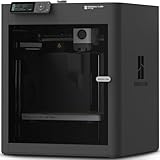
- Up to 16 Colors: Bring your designs to life with vibrant multi-color/multi-material printing capabilities, perfect for showcasing your creativity. Note: Connecting Bambu Lab AMS is required.
- 500mm/s and 20000 mm/s² Acceleration True High Speed: Don't wait around for your masterpieces. Lightning-fast printing speed lets you focus on creating, not waiting.
- Enclosed Design: Fully enclosed body improves print performance for advanced filaments. Automatic Bed Leveling: Say hello to high-quality, successful prints. Auto bed leveling makes 3D printing such an easy thing.
- Set Up in 15 Minutes: Spend more time printing and less time setting up. User-friendly design ensures a hassle-free assembly experience for all skill levels.
- Supported Filament: Ideal: PLA, PETG, TPU, PVA, PET ABS, ASA; Capable : PA, PC; Not Recommended: Carbon/Glass Fiber Reinforced Polymer.
- Temperature or heat: can activate a planned response in some shape-memory systems.
- Water: is one of the stimuli identified in the government assessment and can be relevant to responsive material systems.
- Light: is another possible trigger in some designs.
- Solvents and sound: are also described as possible stimuli across the field.
These examples do not mean a given structure can be activated by all of them. Compatibility depends on the material, design, and fabrication process.
Where is 4D printing being explored?
Applications span proposed uses and research projects, but examples should not be mistaken for widespread commercial products or routine clinical offerings.
Rank #4

- High-Speed Precision: The Bambu Lab P2S 3D printer prints up to 600 mm/s while maintaining exceptional accuracy. With the PMSM Servo Extruder and Active Flowrate Compensation, every layer of your printed object stays sharp and smooth, delivering flawless corners and consistent results.
- Ready to Print in 15 Minutes: Set up your P2S FDM 3D printer and start printing in just 15 minutes. With AI failure detection, quick-swap nozzles, and automatic calibration, this 3D printer makes professional-grade 3D printing effortless, even for beginners.
- Effortless Multi-Color Printing: The AMS 2 Pro enables seamless multi-color/multi-material 3D printing. It features built-in filament drying at up to 65 °C, keeping every spool ready for flawless prints. (Note: The P2S 3D printer does not support multi-color printing; Combo version required.)
- Smart Airflow for Any Filament: The Adaptive Airflow System automatically balances cooling and heat retention—keeping overhangs crisp with cool air, or maintaining a 50 °C chamber for engineering-grade materials. A carbon filter ensures clean, safe air while you print.
- Limitless Creativity, Seamless Workflow: Explore over one million 3D models on MakerWorld and bring them to life with a smooth, unified workflow using Bambu Studio, Bambu Handy, and your FDM 3D printer, from design to finished print.
Medicine and tissue engineering
Biomedical research is a prominent area. The 2025 Springer review focuses on tissue-engineering constructs and shape-changing soft materials, and discusses possible directions in drug delivery, medical devices, implants, and diagnostics. It also identifies preclinical investigation and translation as important work; these are research directions, not evidence that such uses are routine in clinical care.
Infrastructure, aerospace, energy, and textiles
The UK assessment lists prototypes in development or potential applications, including solar panels designed to follow the sun, responsive aerospace components, underground pipes intended to expand, contract, or self-repair, and clothing that could change color or breathability. It also identifies potential activity across electronics, manufacturing, energy, and other sectors. These examples indicate areas of exploration, not established deployment at scale.
Best Value

- 600mm/s Speed & CoreXY Structure — Powered by an all-metal CoreXY frame and 20,000mm/s² acceleration, Adventurer 5M Pro reaches speeds up to 600mm/s. Integrated vibration compensation algorithms eliminate ghosting and ringing for smooth, high-precision surface finishes.
- 3-Second Quick-Swap Nozzle & Auto Leveling — Features a tool-free, quick-release nozzle mechanism for effortless 3-second replacements across multiple sizes (0.25/0.4/0.6/0.8mm). One-click full auto-leveling ensures precise bed calibration and a perfect first layer every time.
- Dual Filtration System & Quiet Enclosure — Built with an integrated dual filtration system and a fully enclosed chamber to ensure a clean printing environment and thermal stability. Powered by low-noise motion control, it operates quietly under 50dB for seamless home, office, or classroom use.
- 280°C High-Temp Extruder & Broad Material Compatibility — With a 280°C max nozzle temperature and a 110°C heated bed, it reliably prints engineering materials like ABS, ASA, and PETG-CF, as well as standard PLA and PETG.
- Smart Camera & Mobile Control — Features a built-in camera for real-time monitoring and time-lapse video creation. Monitor progress, adjust settings, and receive instant status alerts via Flash Studio. Integrated with filament detection, power loss recovery, and a 4.3-inch touchscreen for effortless operation.
What is established—and what is not?
Two published figures help indicate research activity, but they measure different things and should not be treated as measures of product availability.
- The UK Government Office for Science assessment says 4D-printing patent applications were around 1% of 3D-printing applications. The figure is attributed to the Intellectual Property Office and appears in a page published in 2023 that summarizes a report completed in March 2021; it is not a market-size estimate.
- A 2025 Springer Nature review reports more than 500 annual publications in 2023, compared with 0 in 2010, based on a Scopus snapshot dated 17 July 2024. This is a publication-count trend for 4D fabrication, not a count of products or clinical deployments.
Together, the evidence points to a field with growing research activity and a range of proposed applications, while commercial readiness remains limited in the UK assessment. That assessment also flags low industry confidence, unclear demand, limited UK supply-chain capability, multidisciplinary research needs, and a lack of standards and regulations for “animate materials.” Because its underlying report dates to 2021, those observations should be read as findings of that assessment, not as a verified description of every market or regulatory change in 2026.
What comes next?
Progress depends on making responses more reliable and on translating laboratory research into practical systems. In tissue engineering, the Springer review highlights the need for suitable biocompatible and biodegradable materials and further preclinical investigation. It also describes work to improve how shape-memory behavior is programmed, including approaches that do the programming during printing rather than relying on a separate post-printing step.
Do these 3 things before closing this tab:
1Repair Windows errors before they cause bigger problems2Scan for outdated or missing drivers - takes under a minute3Clear out junk files and repair common Windows errorsFor readers considering a consumer setup, the available evidence does not establish a general-purpose 4D printer or a recommended consumer product. A 3D printer alone does not establish that a particular responsive material is compatible or that the resulting system will perform a useful 4D function; those depend on the specific process, material, and intended response.
The UK Government Office for Science summarized the opportunity this way: “The technology is less mature than 3D printing but offers a range of potential benefits with applications in different sectors from infrastructure to textiles.” Its statement reflects the assessment published in 2023 and its underlying 2021 report.
Quick Recap
Product prices and availability are accurate as of the date/time indicated and are subject to change. Any price and availability information displayed on Amazon at the time of purchase will apply.

