
iTechGuides is reader-supported. When you buy through links on our site, we may earn an affiliate commission. As an Amazon Associate I earn from qualifying purchases. Learn more
48 V phantom power, or P48, sends DC power through a balanced microphone cable, most often to run a condenser microphone’s electronics. A correctly wired balanced dynamic mic is generally compatible, but passive ribbon mics and unbalanced or faulty connections call for extra care. Check the microphone manual, connect it before enabling phantom power, and turn power off before unplugging.
What 48V phantom power does
P48 is a standard way to deliver power through the same balanced connection that carries microphone audio. On a typical balanced XLR connection, the DC voltage is applied equally to pins 2 and 3 relative to pin 1 (ground). Because the voltage is equal on the two signal conductors, it does not create a voltage difference across a correctly wired balanced microphone output. That shared path is why it is called phantom power: a separate power cable is not needed.
P48 is one phantom-power arrangement covered by IEC 61938; P12 is another. Schoeps describes P48 as the most widely used arrangement today. The label alone does not guarantee that every source supplies the same voltage or current under load: portable and wireless equipment may not meet full standard requirements in every circumstance. Check the microphone’s power specification against the interface, mixer, preamp, or supply specification. Shure explains the balanced XLR arrangement, and Schoeps describes P48 and P12.
Recommended Free Tools
Which microphones need or tolerate P48?
Condenser microphones
Many condenser microphones need phantom power to run their internal electronics; some designs also use it to polarize the capsule. Requirements vary, so do not assume every condenser needs exactly 48 V. Check the model’s manual for its required voltage and current, then confirm that the power source can provide them. PreSonus outlines common condenser power needs. As a model-specific example, HARMAN states that the C314 operates on standard 48 V ±4 V phantom power in accordance with IEC 61938; that specification applies to the C314, not to all condenser microphones. HARMAN’s C314 specification.
#1 Best Overall

- Delivers reliable 48V phantom power for condenser microphones and transfer sound signal to sound card in a compact, durable, plastic housing.
- Universal XLR input and output, compatible with all kinds of microphone music recording equipment.Comes with one XLR audio cable with high quality XLR male and female connectors.
- Features a single channel unit with balanced mic inputs and outputs to connect in-line with your mic and mixer.
- On/off power switch and LED indicator for ease of operation. One Adapter is included. Simple to use and ideal for stage and studio use.
- Note: Microphone, Pop Filter, Mic Stand and 1/4" Male to XLR Female Microphone Cable in the picture Not Included!
Balanced moving-coil dynamic microphones
A correctly wired, intact balanced dynamic microphone usually does not need phantom power, but is generally compatible with it: equal DC on both signal conductors means no voltage difference across the output. This assurance depends on the balanced wiring being correct. beyerdynamic’s guidance also conditions compatibility on intact, symmetrical wiring.
Passive ribbon microphones
Passive ribbons ordinarily do not need phantom power. Keep P48 off unless the microphone manufacturer explicitly permits it, and avoid connecting or disconnecting the mic while power is on. Guidance emphasizes extra caution around vintage microphones, hot-plugging, and wiring faults. Neumann notes that correctly wired P48 should not harm ribbon microphones, while still recommending disabling it as a precaution; Focusrite warns that vintage, non-active ribbons can be damaged. Neumann’s connection guidance and Focusrite’s P48 explanation provide model-specific context.
Rank #2
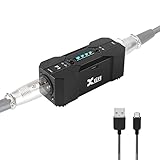
- Rechargeable Phantom Power: Xvive P1 gives you the freedom to use condenser mics and other audio recording equipment without being connected to power. It runs on an internal rechargeable battery and has enough power to run high-current condenser microphones for up to 40 hours
- Portable Versatile: Take it with you anywhere! At 1.7” x 1.3” x 4.1”, this power supply unit is small and lightweight; 12V / 48V operation makes it compatible with most microphones and audio devices that require phantom power. Charge time: 2.5-3hrs;battery life: 30-40 hrs, ensuring long and reliable performance time. Perfect for home podcasts, streaming and radio broadcasting, live concerts and music studio applications
- Low Noise High Audio Quality: The P1 allows you to use microphones and devices that require external power in any setup. Professional chip design effectively filters interference and high-sensitivity response minimizes noise while recording. Perfect for powering microphones to send a signal to mixing consoles, or any type of processor or recording unit that does not supply phantom power
- Top Workmanship: The all-metal chassis is rugged and durable
- Balanced xlr Input/Output: Universal balanced XLR input and output for connecting in-line with your mic and mixer
Active ribbon microphones
Some active ribbon microphones contain powered electronics and may require P48. Do not apply the passive-ribbon rule to them; follow the specific microphone manual.
The Tool Desk
Outbyte PC Repair FREERepair Windows errors before they cause bigger problemsFix Now →Outbyte Driver Updater FREEScan for outdated or missing drivers - takes under a minuteDriver Scan →Unbalanced connections and faulty cables
Phantom power is not universally harmless across every cable and wiring arrangement. An unbalanced connection can upset the equal-voltage condition, and QSC warns that a dynamic microphone connected unbalanced to a phantom-powered input may be destroyed. If you are unsure whether a cable or adapter preserves balanced wiring, resolve that before switching on P48. QSC explains the risk of unbalanced connections.
Rank #3

- Delivers reliable 48V phantom power for condenser microphones and transfer sound signal to sound card in a compact, durable, plastic housing.
- Universal XLR interface input and output, compatible with all kinds of microphone music recording equipment. Comes with one XLR audio cable with high quality XLR male and female connectors.
- Newer Phantom Power On/off power switch and LED indicator for ease of operation. One Adapter is included. Simple to use and ideal for stage and studio use.
- 48V Phantom Power Adapter features a single channel unit with balanced mic inputs and outputs to connect in-line with your mic and mixer.
- Note: Phantom power provides a 48V voltage to the condenser microphone, but phantom power does not enhance the microphone sound quality and improve the normal volume. Input Voltage: 110V. Microphone, Pop Filter, Mic Stand and 3.5mm to XLR Female Microphone Cable in the picture Not Included.
How to switch phantom power safely
- Check the manuals. Confirm whether the microphone requires, permits, or should not receive phantom power, and verify the source’s voltage and current capability.
- Connect the microphone while P48 is off. Make sure the XLR connection and cable are in good condition.
- Check the switch scope. An interface or mixer may apply phantom power per input, to a bank of inputs, or globally. Check which other connected microphones will receive power when you enable it.
- Enable P48 only after connections are made. Use the interface, mixer, preamp, or supply’s phantom-power control as directed by its manual.
- Turn P48 off before disconnecting. Wait for the equipment to settle before unplugging, especially when using a ribbon microphone.
These connection precautions are consistent with Neumann’s interface guidance and Focusrite’s P48 guidance. When recording with both condenser and dynamic microphones, verify whether a shared switch will power both inputs; Focusrite discusses using those mic types together.
Independent reader supportYour contribution helps us test, update, and keep practical guides available for everyone.When to use a standalone phantom-power supply
A standalone supply is useful if your existing microphone input lacks compatible phantom power. Before choosing one, check that its output matches the microphone’s requirement, that it can provide sufficient current, and that it has enough channels for your setup. It does not replace compatibility checks for ribbons or unbalanced connections, and it is unnecessary if your interface or mixer already supplies the required power.
Rank #4

- [Sturdy Material and Easy To Carry] The 48V phantom power is made of metal material, compact and sturdy construction, can accompany you to attend both indoor recording and outdoor performances.
- [Wide Compatibility] With its universal XLR Input/Output and standard 48V voltage, phantom power is compatible with most condenser microphone, mixers, music recording equipment. Phantom power supply is suitable for Fifine condenser microphone K669C.
- [Well TYPE-C Design] Phantom power provides a 3.5 ft USB-C data cable, which can connect the power,computers and other devices through the type-c data cable, providing stable power at any time without worrying about finding a power outlet.
- [Reliable and Clean Power Delivery] Phantom power provides a stable and clean power supply to the microphone, minimizing interference and maintaining the integrity of the audio signal throughout the recording process.
- [EASY TO USE] The 48 volt phantom power has On/Off power switch and indicator light, making operation easier.
The Palmer PAN48 manual is an example of a two-channel P48 supply. Treat that as an example of the category, not a universal requirement or a substitute for checking your microphone’s specifications.
PC Slower Than It Used to Be?
A free scan shows the junk files, broken settings and background clutter dragging Windows down - then fixes them in one click.Free scan · Windows 10 & 11Outdated Drivers Are Slowing You Down
One free scan finds every outdated or missing driver and matches the right update for your exact hardware.Free scan · exact hardware matchQuick Recap
Best Value
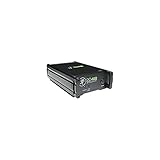
- XLR input and output
- Transparent, noise-free operation
- Powered by the included AC adapter or 9V battery
- Power and low battery indication
- Built-like-a-tank construction
Product prices and availability are accurate as of the date/time indicated and are subject to change. Any price and availability information displayed on Amazon at the time of purchase will apply.

