
Quick wins for a faster PC:
Clear out junk files and repair common Windows errorsFree Scan →Fix the driver behind crashes, sound loss and screen glitchesFind Drivers →iTechGuides is reader-supported. When you buy through links on our site, we may earn an affiliate commission. As an Amazon Associate I earn from qualifying purchases. Learn more
OpenFGA and SpiceDB are strong starting points for teams modeling permissions as relationships; Cerbos, Cedar, and OPA suit policy-centric approaches; and managed services add a hosted operating layer. There is no universal winner: the right choice depends on how your application represents access, where its policy and relationship data live, and how much infrastructure your team wants to run.
This ranked shortlist covers ten candidates, but they are not all the same kind of product. It includes authorization languages and engines, hosted services, developer platforms, and a data-governance offering. The scores below are editorial fit judgments based on documented capabilities—not independent tests, benchmarks, or proof that one product is objectively better.
How the ranking works—and what it can tell you
The scores are out of 100, with equal editorial weight given to five considerations: fit for relationship-, attribute-, role-, or policy-based access; deployment choices; policy authoring and developer workflow; testing, validation, audit, and resource-query support; and operational clarity, including service dependencies and pricing transparency. The evidence establishes different things for different candidates, so a score is a screening aid, not a claim of measured performance or a complete feature comparison.
Most product information available for this comparison comes from vendor or project documentation. No independent cross-vendor performance statistic, adoption statistic, or complete price comparison is established here. Documentation was accessed on October 7, 2026; verify current versions, availability, regions, and terms before selecting a product.
#1 Best Overall

- Access control keypad is sturdy rugged keypad; with zinc alloy electroplated technology;The circuit board is completely encapsulated in epoxy to be weatherproof; keyboard is waterproof so you can use it outdoor or indoor
- Key backlight function; the keys light will stay on in dark places or at night; indicator light; Red light stands for enter into programming mode; Yellow light for in the programming mode;Green light for operation successful mode
- Wiegand access control keypad can be as a standalone reader or keypad;0-99s adjustable door relay time; It is a relay output to open the door; so that you could connect this to a powered device without the use of some computing intermediate
- Easy to use;full programming from the keypad;support 3 access ways for card;PIN or card with PIN;you can set the public password or private password and the password can be changed which is more secure and personalized
- You can use the access control keypad to add and delete 2000 user information; set the door open delay time; it is suitable for garages; shops; homes; warehouses; laboratories; it has short circuit protection
| Rank | Tool | Score | Best starting point when… |
|---|---|---|---|
| 1 | OpenFGA | 92/100 | You want an open-source relationship model and can operate the service. |
| 2 | Auth0 Fine-Grained Authorization (FGA) | 90/100 | You want managed relationship-based authorization and associated developer tooling. |
| 3 | SpiceDB / AuthZed | 89/100 | You want a Zanzibar-style authorization database, with open-source and managed options to evaluate. |
| 4 | Cerbos | 86/100 | You want policy files and a self-hostable decision point, with optional lifecycle components. |
| 5 | Amazon Verified Permissions | 84/100 | You want a managed Cedar-based service and are prepared to assess AWS-specific dependencies. |
| 6 | Permit.io | 82/100 | You want a developer authorization platform with policy-management and distribution components. |
| 7 | Open Policy Agent (OPA) | 80/100 | You need a general-purpose policy engine and will build or select the surrounding authorization workflow. |
| 8 | Cedar | 78/100 | You want to evaluate an authorization policy language and engine separately from any hosted service. |
| 9 | Immuta | 74/100 | Your access-control problem is centered on governed data and analytics. |
| 10 | Oso | 65/100 | You are willing to investigate current product details directly before comparing it with the better-documented options here. |
Which authorization model fits your permissions?
Fine-grained authorization decides whether a principal—such as a person or service—may take a particular action on a particular resource in a given context. The model matters because an engine that evaluates rules against attributes is not interchangeable with a system that reasons over relationships, even if both can return “allow” or “deny.”
- Relationship-based authorization (ReBAC): Permissions are derived from connections among users, groups, and resources. Start by evaluating OpenFGA or SpiceDB; Auth0 FGA is a managed relationship-based option based on OpenFGA.
- Attribute- or policy-centric authorization: Decisions depend on rules applied to facts about the principal, resource, action, or context. Cedar, Cerbos, and OPA are relevant candidates, but their deployment and surrounding product capabilities differ.
- Data authorization: If the main challenge is governing access to analytics or other data platforms, consider a data-oriented offering such as Immuta. It is not automatically a substitute for a general application authorization decision point.
- Managed service versus engine or language: A hosted service may reduce some infrastructure work but creates service, region, and operational dependencies. An engine or policy language may leave distribution, enforcement, and runtime operations to your team.
1. OpenFGA — 92/100
OpenFGA is an open-source authorization solution with a modeling language and APIs. Its project documentation describes a relationship-based approach inspired by Google’s Zanzibar paper, with support for role- and attribute-based use cases as well. The project’s quick start describes running it locally with Docker.
Best fit: An engineering team that wants to model permissions as relationships and is prepared to operate the service and its storage. Review the production topology, database operations, and current release documentation before deciding how to deploy it. The available information establishes a local quick-start path, not a complete production-operations assessment.
Crashes, No Sound, or Screen Glitches?
Random freezes, missing sound and display glitches usually trace back to one bad driver. Find and replace yours safely.Free scan · under a minuteWindows Errors? Fix Them Before They Spread
Repair common Windows errors and clear accumulated junk for a smoother, more stable PC - no reinstall needed.Free scan · no reinstall2. Auth0 Fine-Grained Authorization (FGA) — 90/100
Auth0 FGA is a managed relationship-based authorization service based on OpenFGA. Its documentation covers stores, authorization models, tuples, contextual and conditional tuples, APIs, SDKs, IDE and CLI workflows, and model testing. It also describes a free evaluation tier; production use requires a subscription.
Rank #2
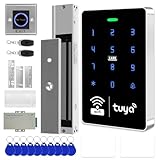
- All-in-one kit: Your full access control kit is a complete access control system that provides everything you need in one kit (including WiFi access control host, power supply, 280kg magnetic lock + ZL bracket, sensor switch, doorbell, remote control, IC keychain)
- The wiring is super simple and the installation is more convenient: just connect the 6 terminals to the corresponding numbers to complete the wiring, which is a step faster and solves the wiring pain points. It is really great.
- WiFi access control keypad: supports 1000 users, IP68 outdoor waterproof, supports five ways to open the door: WiFi Tuya APP/temporary password/RFID card/password/RFID card + password, remote door opening , touch blue backlit keyboard, supports always-on mode, can set to add and delete cards
- Sturdy 280kg Magnetic Lock - This magnetic lock has a powerful 600-pound holding force, ensuring your door stays securely locked. It features a fail-safe feature and comes with both Z- and L-shaped brackets to fit a wider range of door types. Easy installation. [Note: For single-door wooden doors, iron doors, and UPVC doors (inward opening), you can purchase the ZL bracket set.]
- The power supply has been upgraded for super-easy installation: 1. The power input cable is pre-connected; simply plug it into an outlet (eliminating the hassle of wiring and increasing safety). The cable is available in 2-meter lengths to accommodate various installation scenarios. 2. The power output cable is pre-connected (the cable closest to the power supply is tightened before shipment; please do not loosen it). Simply plug the corresponding digital terminals into the connectors to easily complete the wiring.
Best fit: A team seeking a hosted service and management tooling rather than solely an engine it operates itself. Auth0 documentation describes active-active availability across two AWS regions for each listed locality, as well as a private-cloud option. Check the current plan terms, supported regions, and the operational requirements for your intended deployment; those details can affect whether a managed service is a practical fit.
3. SpiceDB / AuthZed — 89/100
AuthZed documentation describes SpiceDB as an open-source, Zanzibar-style authorization database: define a schema, write relationships, and call permission checks from application code. The documentation separately describes managed SpiceDB offerings.
Best fit: Teams evaluating a relationship-oriented authorization database that want to consider open-source and managed operating models. The documentation index listed releases through September 2026 and recent documentation updates in October 2026. Compare schema semantics, consistency behavior, availability, operational needs, and managed-service terms with your own requirements. The available information does not establish a performance advantage over OpenFGA.
4. Cerbos — 86/100
Cerbos describes an application-focused policy decision point (PDP). Its standalone open-source PDP can run with hand-authored YAML or JSON policies using CEL, without a control plane on the decision path, according to its comparison documentation. Cerbos Hub and Cerbos Synapse add commercial policy-lifecycle and decision-time-enrichment capabilities.
Rank #3

- ✅ 【Wireless Access Control System】Integrated wireless access control keypad allows you to control the keypad share, modify and delete passwords/ID cards, remote Unlock doors/gates, view access logs, manage users, and assign temporary or permanent access from your phone, anytime and anywhere
- ✅ 【Multiple Access Options】Come with 5PCS ID key fobs, support 2000 users capacity. Swipe card or password or TUYA APP multiple unlocking methods to open the door. Equipped with doorbell button, compatible with all electric locks.
- ✅ 【Reliable and Practical】The access control keypad with strong zinc alloy electroplated technology, epoxy to completely encapsulated, anti-prying hexagonal star screw, anti-vandal and weatherproof. Suitable for mounting either indoor or outdoor. Backlight design(non-turn-off), in dark locations or night you can read numbers.
- ✅ 【Widely Used】Wiegand access control keypad system can prevent unauthorized personnel from entering. Built in buzzer and light dependent resistor (LDR) for anti tamper. Can be as a standalone reader or keypad. Very suitable for garage, hotel, shops, warehouses, laboratories, other private spaces. Note: Models whose connection protocol is Wi-Fi, learn buttons, safety sensors, rolling code are not currently supported! Keypad uses 2-wire connection directly to the opener's push button switch terminals.
- ✅ 【Simple Setup for Use】Connect the access controller to the power supply and the electric lock, Keypad enter "*master code#73#" code, turn on wireless pairing, add the keypad to the TUYA APP, you can remotely manage the access control system. Attention: The password keypad working on 2.4 GHz network, when adding keypad, make sure the keypad must be connected to the same Wi-Fi network as your smartphone. Powered by 12V DC power supply (not included)
Best fit: Teams that prefer policy files and want to self-host the decision point, with optional components for lifecycle management or enrichment. Cerbos identifies its PDP API with the AuthZEN Authorization API; its comparison page describes the implementation as partial. Confirm current protocol and deployment details in the product documentation. The comparison page is vendor-authored, so treat its descriptions of other products as claims to verify rather than neutral assessments.
5. Amazon Verified Permissions — 84/100
Amazon Verified Permissions is AWS’s managed fine-grained authorization service for custom applications. Policies use Cedar. The service evaluates a principal, action, resource, and context against policy stores and schemas; application code calls the authorization API and enforces the returned decision. AWS documentation accessed in 2026 states that Verified Permissions currently uses Cedar version 4.7.
Best fit: Teams already building on AWS that want a managed authorization service. AWS notes that its service implementation and native Cedar differ in some details, so do not assume every native Cedar capability or behavior transfers unchanged. Assess service dependency, region availability, pricing, integration, and policy lifecycle for your application before committing.
Recommended Free Tools
6. Permit.io — 82/100
Permit.io is described in Cerbos’s product comparison as a developer authorization platform pairing a managed control plane with an open-source PDP in its standard hosted model. That comparison also describes a low-code editor, embeddable access-workflow components, OPAL-based policy and data distribution, and multiple authoring workflows.
Rank #4

- 【Multiple users, Multiple Access Ways】Come with 5PCS ID key fobs, Support 2000 user capacity, support open the door for ID key cards, password, ID key card+password options.
- 【Heavy-Duty Zinc Alloy Case】The access control keypad with strong zinc alloy wlectroplated anti-vandal and weatherproof. Epoxy to completely encapsulated, suitable for mounting either indoor or outdoor.
- 【Simple Set-ups and Easy Installation】The access control is multifunction standalone access controller, full programming from the keypad, don't need to connect to computer. Working with DC12V power supply.
- 【Bright Backlight Keypad】Access control keypad with blue backlight features keys, you cansee the keypad numbers at night or in the dark outside the office. In addition, provided with a WG26 interface and door bell button.
- 【High Security and Widely Used】Access control system able to deterring unauthorized personnel, built in buzzer and light dependent resistor (LDR) for anti tamper. Suitable for apartment, office, access control, garage door/sliding door openers, off-limit area, hotel locks, school campus access, identification, parking lot entry, etc.
Best fit: Teams considering a platform that combines authorization management with a decision point and distribution workflow. Because the cited feature description comes from a competitor’s comparison, verify the current product model, deployment choices, and capabilities in Permit.io’s own documentation before relying on it. The available information does not establish current pricing or a neutral comparison with the other candidates.
7. Open Policy Agent (OPA) — 80/100
OPA is a general-purpose policy engine that uses Rego. It is relevant to teams seeking policy-as-code across multiple domains, but it is not, by itself, the same offering as a turnkey managed application-authorization platform. A Cerbos comparison characterizes OPA deployment as a self-hosted service or sidecar and notes an open-source control-plane option; verify those operating-model details against current OPA documentation.
Best fit: Teams that want a policy engine and are ready to design how it integrates with enforcement points, distributes policy and data, tests changes, and runs in production. Evaluate those surrounding responsibilities as part of the decision, rather than scoring OPA as though it were one vendor-hosted service.
8. Cedar — 78/100
Cedar is an open-source authorization policy language and engine ecosystem. AWS Verified Permissions uses Cedar, but the language and engine ecosystem are distinct from that managed AWS service. Cedar is relevant when typed policies, schema validation, and policy analysis matter to the design.
Best Value

- Multiple Access Options - This access control system offers a variety of ways to enter and exit a secure area including password input, card swiping and remote control.
- Enhanced Security - The 600LBS electromagnetic lock ensures that the door is tightly secured, enhancing the safety and security of the premises.
- Visitor Management - Visitors can easily press the doorbell on the access keypad, letting those indoors know when someone has arrived. The indoor unit comes with a remote control that allows easy entry for visitors without the need to go outside.
- Easy Installation - The system is user-friendly and can be installed with ease, requiring minimal time and effort.
Best fit: Teams that want to evaluate a policy language and engine independently of a particular hosted service. Compare native Cedar implementations separately from managed hosting and policy administration, and check the current primary documentation for the exact capabilities and implementation you plan to use.
9. Immuta — 74/100
Immuta’s official product materials frame its offering around data access authorization and governance. That focus can make it relevant when access decisions concern analytics or governed data, but the product should not be treated as a direct stand-in for a general application PDP without checking the scope of the use case.
Best fit: Organizations whose authorization problem is tied to data governance. Confirm current connectors, supported data platforms, deployment model, governance capabilities, and pricing in current product documentation; the available information does not establish a detailed, cross-platform capability comparison.
10. Oso — 65/100
Oso is an authorization vendor, but the available official documentation did not provide enough substantive detail to support a reliable profile of its current product lineup, policy model, deployment choices, or availability. The lower score reflects that evidence gap in this comparison, not a finding that the product performs poorly.
Best fit: A team prepared to review Oso’s current official documentation directly and validate those product details before placing it on a shortlist. Do not infer a feature set or deployment model from the vendor name alone.
What to verify before choosing
A permission check is only one part of an authorization system. Before adoption, trace how policy and relationship data are authored, stored, distributed, updated, and enforced across the paths your application actually uses.
- Source of truth and freshness: Identify where relationships, attributes, and policies live, how changes reach decision points, and what consistency or staleness your application can tolerate.
- Failure behavior: Determine what happens when the control plane, a hosted service, storage, or a network connection is unavailable. Decide whether each affected action should fail open, fail closed, or use a documented fallback.
- Model validation and testing: Check how the tool catches invalid models or policies and lets developers test expected decisions before deployment. Auth0 FGA documentation, for example, describes model testing; do not assume equivalent workflows across products.
- Auditing and explanation: Establish what decision records or explanations are available, who can access them, and whether they provide enough context for incident response and compliance needs.
- Resource listing and filtering: Test the real query shapes your product needs, including listing resources a user may access—not just checking permission on one known object.
- Integration and operations: Confirm language and SDK support, deployment topology, storage responsibilities, monitoring, and the staffing burden of running the chosen components.
- Total cost and support: Compare current pricing and support terms for the expected workload. The documented free evaluation tier for Auth0 FGA is not evidence of free production use; its documentation says production usage requires a subscription.
How to compare finalists fairly
- Write representative permissions. Include the real relationships, attributes, actions, resources, contextual conditions, and exceptions your application must handle.
- Test the full workflow. Evaluate model authoring, schema or policy validation, single-object decisions, resource listing, update propagation, and audit or explanation needs.
- Exercise operational failures. Simulate stale data, unavailable dependencies, and deployment or policy-update problems. Record the behavior your application must handle.
- Compare like with like. Separate native engines and policy languages from managed services and data-governance platforms. Add the cost and operational burden of components that sit outside each product’s core.
- Recheck current terms. Verify versions, product boundaries, supported regions, deployment options, pricing, and support directly with the relevant current documentation before making a production decision.
No cross-vendor benchmark or independently established universal ranking is available here. A representative-policy evaluation in your own application is the useful way to determine whether a candidate’s model and operating requirements fit.
Free tools Windows power users keep installed
One-click scans. No signup required.
Quick Recap
Product prices and availability are accurate as of the date/time indicated and are subject to change. Any price and availability information displayed on Amazon at the time of purchase will apply.

