
The best choice depends on what you mean by “IP scanner.” Fing and Angry IP Scanner discover devices on a local network. Nmap goes further with port, service, operating-system, and script-based scanning. Advanced IP Scanner is a simple Windows utility with useful remote-access shortcuts. NetSpot belongs in a different category: it analyzes nearby Wi‑Fi networks rather than inventorying LAN clients by IP address.
Here are five practical options for Windows, Mac, iPhone, and Android, including the platform restrictions and discovery limits that are easy to miss.
Quick comparison
| Tool | Windows | macOS | iOS | Android | Best for |
|---|---|---|---|---|---|
| Fing | Yes | Yes | Yes | Yes | Easy device discovery across platforms |
| Angry IP Scanner | Yes | Yes | No | No | Fast, portable desktop scans |
| Nmap | Yes | Yes | No official app | No official app | Detailed network and port analysis |
| Advanced IP Scanner | Yes | No | No | No | Simple Windows scans and remote actions |
| NetSpot | Yes | Yes | Yes | Yes | Wi‑Fi channel, coverage, and access-point analysis |
For a normal household or small office, start with Fing. Choose Angry IP Scanner when you want a lightweight desktop utility, or Nmap when you need to understand what services are exposed. Use NetSpot for wireless coverage and channel problems, not as a replacement for an IP-device inventory.
1. Fing — best all-round IP scanner for mixed devices
Fing is the easiest recommendation when you need one tool that works on Windows, macOS, iOS, and Android. Its mobile apps scan the network to which the phone is connected, while Fing Desktop and a Fing Agent can provide more accurate discovery and fuller MAC-address detection.
#1 Best Overall

- VERSATILE CABLE TESTING: Cable tester for data (RJ45) terminated cables and patch cords, ensuring comprehensive testing capabilities
- LARGE BACKLIT LCD: Backlit LCD display enables easy reading of pin-to-pin wiremap results, even in low-lit areas
- COMPREHENSIVE FAULT DETECTION: Test for Open, Short, Miswire, Split-Pair faults, Cross-over, and Shield, providing thorough fault detection
- INTUITIVE USER INTERFACE: User-friendly interface with three buttons and simple, easy-to-identify test responses, ensuring a smooth testing experience
- MULTIPLE TONE GENERATOR STYLES: Tone on a single wire, wire pair, or all 8 conductor wires using the multiple style tone generator (solid/warble); requires probe Cat. No. VDV500-123 (sold separately)
On the desktop app, open the Home screen to access device discovery. The result is a device list that can include IP addresses, names, manufacturers, and other identifying information. Fing can synchronize data between Desktop, Mobile, Web, and Fing Agent through one Fing account.
How to scan with Fing
- Install Fing on Windows, macOS, iOS, or Android.
- Connect the device to the network you want to inspect.
- On Desktop, open Home. On Mobile, open the network view and start a scan.
- Review the discovered devices and open an individual device for additional details.
Fing also has a Tools area. On Desktop, select Tools in the left navigation pane. On Mobile, tap Tools in the bottom toolbar. Available tools include network and internet troubleshooting features.
There is an important platform distinction: the Wi‑Fi Scanner is available in Fing Desktop for Windows and Fing Mobile for Android, but not in the macOS desktop app or the iOS app. On supported editions, use Tools → Wi‑Fi Scanner to inspect nearby access points and channels. Free channels show a green icon, while channels used by neighboring access points show an orange icon.
The Free plan currently allows up to three scans per day. Continuous monitoring requires a paid plan or an always-on Fing Agent.
The Tool Desk
Outbyte PC Repair FREEClear out junk files and repair common Windows errorsFree Scan →Outbyte Driver Updater FREEFix the driver behind crashes, sound loss and screen glitchesFind Drivers →What Fing does well
- Broad platform coverage, including phones and tablets.
- A less intimidating interface than command-line scanners.
- Device inventory and network-monitoring features.
- Useful manufacturer and device-identification information.
Limitations
- A phone scan is not always as complete as a Desktop or Fing Agent scan.
- iOS and macOS users do not get Fing’s Wi‑Fi Scanner.
- The free plan limits scans to three per day.
- Devices on another VLAN or behind wireless client isolation may not appear.
Best for: home users, small offices, and anyone who wants a cross-platform device list without learning scan commands.
2. Angry IP Scanner — best portable desktop scanner
Angry IP Scanner is a free, open-source, portable scanner for Windows, macOS, and Linux. It is not an iPhone or Android app. The current release is 3.9.3, and the Windows and Mac packages bundle Java 21, so those packages do not require a separate Java installation.
It accepts IP ranges, random addresses, and address lists loaded from files. A typical scan starts by pinging each address to determine whether the host is alive. It can then resolve hostnames, obtain MAC addresses, scan ports, and run additional fetchers or plugins. Results can be exported to CSV, TXT, XML, or IP-port-list files.
Rank #2
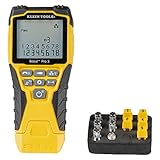
- VERSATILE CABLE TESTING: Cable tester tests voice (RJ11/12), data (RJ45), and video (coax F-connector) terminated cables, providing clear results for comprehensive testing on unenergized Ethernet cables (not designed to test PoE)
- EXTENDED CABLE LENGTH MEASUREMENT: Measure cable length up to 2000 feet (610 m), allowing for precise cable length determination
- COMPREHENSIVE FAULT DETECTION: Test for Open, Short, Miswire, or Split-Pair faults, ensuring thorough fault detection and identification
- BACKLIT LCD DISPLAY: Backlit LCD screen displays cable length, wiremap, cable ID, and test results, ensuring easy readability in various lighting conditions
- EFFICIENT CABLE TRACING: Trace cables, wire pairs, and individual conductor wires using the multiple style tone generator (requires analog probe Cat. No. VDV500-123, sold separately), simplifying cable tracing tasks
Basic Angry IP Scanner workflow
- Open Angry IP Scanner.
- Enter the starting and ending IP addresses, or load an address list.
- Select Start to scan the range.
- Review live hosts, hostnames, MAC addresses, and any selected port or fetcher results.
- Export the results in the required format.
For a typical home network, a range such as 192.168.1.1 to 192.168.1.254 is usually appropriate. Use the address range that matches your router’s actual subnet rather than assuming every network uses 192.168.1.0/24.
Recommended Free Tools
When Angry IP Scanner misses devices
Its initial alive-host decision matters. Open Preferences → Scanning to change the pinging method and the option that determines how nonresponsive hosts are treated. A device that blocks or ignores the selected probe can be marked dead and skipped even though it is powered on.
On Windows, port results can also be affected by timeout adaptation and TCP connection rates. Port timeout and thread settings are under Preferences → Ports. The documented default port wait is three seconds, with automatic reduction when timeout adaptation is enabled. If ports appear falsely filtered, try a less aggressive configuration rather than assuming the firewall is definitely blocking them.
Older articles often repeat a “10 simultaneous connections” Windows limitation. That warning applies to Windows XP SP2 through Vista SP1. It was removed in Vista SP2 and later releases, including Windows 7 and newer.
Best for: desktop users who want a quick, portable scanner with export options and more control than a basic network-discovery app.
3. Nmap — best for advanced scanning and security checks
Nmap is the most capable tool on this list, but it is also the least beginner-oriented. It runs on Windows and macOS through official installers, with source code available for other systems. The Windows self-installer includes Nmap’s dependencies and the Zenmap graphical interface. The official download page currently lists Nmap 7.991.
Nmap can discover hosts, scan ports, identify service versions, estimate operating systems, run scripts, and trace network paths. That makes it useful for troubleshooting and authorized security testing, but it also means you should understand what a command will probe before running it.
Rank #3

- Multifunctional NOYAFA NF-8508 Network Cable Tester: There are nine features to meet your needs. Continuity Testing, Cable Scan, Port Flash, Length Measurement, POE Power Supply Test, QC testing, Optical Power Meter, VFL and NVC function.It is perfectly suited for various engineering cabling projects, network troubleshooting, network equipment maintenance and testing scenarios. Its precise cable scanning and fault localization capabilities help you effortlessly pinpoint the root cause of issues.
- 7 WAVELENGTHS OPTICAL POWER METER: NF-8508 network cable tester can measure 7 standard wavelengths, 850/1300/1310/1490/1550/1625/1650, power detecting range(dBm): -70 ~ +10. Its power detection range spans from -70 dBm to +10 dBm, supporting FC/SC/ST connectors. It enables precise fiber optic power measurement, helping users efficiently assess fiber signal strength and ensure healthy fiber link operation. It effortlessly detects attenuation issues within fibers, thereby safeguarding fiber network stability.
- High Efficiency Visual Fault Locator: Easy identification of fiber breakpoints, poor connections, bending or cracking. Excellent for finding the right fiber to splice or quickly finding a break. Emmiting Energy: standard wavelenth: 650nm. Fast flashing, slow flashing, high precison.The built-in self-calibration ensures stable long-term performance, and Class IIIa laser (output<5mW) ensures safe daily operation.
- PORT FLASHING:The indicator light on the connection port in the NF-8508 device flashes to help accurately locate the cable. Displays port information, including operating speed, duplex mode, and negotiation settings. Port lights flash on the same screen to show the port's operating speed, making it easy to pinpoint lines and ports.
- PoE Testing and Cable Length Test: PoE testing can check cable mapping polarity and voltage of PoE network switches, withstand 60VDC. Automatically detects and switches between 10M/100M/1000M modes, Includes cable tracking, short circuit test, interruption of circuit test and etc The RJ45 cable tester can quickly measure the length of the cable with a range of 200m. Not only network cables, but also phone lines and BNC cables.
Find live devices on a local network
nmap -sn 192.168.1.0/24The -sn option performs host discovery without a subsequent port scan. On a local Ethernet network, Nmap normally uses ARP discovery for IPv4. Depending on privileges and the network, it can also use ICMP and TCP probes. It is therefore not simply an ICMP “ping sweep.”
If you use only an ICMP echo test, devices that block ICMP may be missed. Nmap’s default discovery can use ICMP echo, TCP SYN to port 443, TCP ACK to port 80, and ICMP timestamp probes, among other methods.
Quick wins for a faster PC:
Repair Windows errors before they cause bigger problemsFix Now →Scan for outdated or missing drivers - takes under a minuteDriver Scan →Clear out junk files and repair common Windows errorsFree Scan →Scan every specified address
nmap -Pn 192.168.1.0/24-Pn skips host discovery and treats every target as online before performing the requested scan. This is useful when discovery probes are blocked, but it is much slower on large ranges. A /16, for example, contains 65,536 addresses, so using -Pn across the whole range can create a substantial scan.
Run a comprehensive scan
nmap -A -T4 scanme.nmap.org-A enables operating-system detection, version detection, script scanning, and traceroute. -T4 selects faster timing. Only scan systems you own or have permission to test.
Nmap describes port states such as open, filtered, closed, and unfiltered. It may also report open|filtered or closed|filtered when the available responses do not distinguish between those possibilities.
On Unix-like systems, SYN scans and operating-system detection generally require elevated privileges. If a command produces incomplete results, rerun it with the appropriate administrative permissions. In networks using proxy ARP, every address can appear alive; --disable-arp-ping can disable implicit ARP or Neighbor Discovery when that behavior is causing misleading results.
Windows Errors? Fix Them Before They Spread
Repair common Windows errors and clear accumulated junk for a smoother, more stable PC - no reinstall needed.Free scan · no reinstallOutdated Drivers Are Slowing You Down
One free scan finds every outdated or missing driver and matches the right update for your exact hardware.Free scan · exact hardware matchBest for: administrators, advanced home-lab users, and security professionals who need detailed host, port, and service information.
Rank #4

- Automatically runs all tests and checks for continuity, open, shorted and crossed wire pairs. Visible LED status display.
- Cable state testing (2-wire): Line DC detecting, anode and cathode determination,Ringing signal detecting open, short and cross circuit testing
- Cable Type: RJ11 Telephone cable and RJ45 LAN cable
- Connectors: Ethernet Cat 5, Ethernet Cat 5e, Ethernet Cat 6, Ethernet Cat 7, RJ11 6P and RJ45 8P
- Power Source: DC9V Battery Required (not included)
4. Advanced IP Scanner — best simple Windows-only option
Advanced IP Scanner is a straightforward Windows utility compatible with Windows 11, 10, 8, and 7. It is available as a portable edition, so you can run it without a conventional installation. There is no official macOS, Linux, iOS, or Android edition listed by the developer.
Scan a range
- Open Advanced IP Scanner.
- Enter an IP range in the range field.
- Click the IP toolbar button to set the local network range automatically, or enter the range manually.
- Click Scan.
The results can show network devices and MAC addresses, and the program can expose network shares. It also provides shortcuts for RDP and Radmin connections and supports remote power actions on compatible computers.
Save or reuse results
- To export selected results, open the shortcut or context menu and choose Save selected.
- To save a list from the main menu, choose File → Save as….
- The supported saved-list formats include XML, HTML, and CSV.
- To reopen saved favorites, choose File → Load Favorites.
- To create favorites, select computers after a scan, open the shortcut menu, and choose Add to “Favorites”.
Advanced IP Scanner is particularly convenient on a Windows support technician’s USB drive. Its weakness is scope: a result list is not a guaranteed inventory of every device. Client isolation, another VLAN or subnet, and devices that do not answer its discovery methods can all produce an incomplete list.
Best for: Windows users who want a simple graphical scan with network-share, RDP, favorites, and remote power features.
Independent reader supportYour contribution helps us test, update, and keep practical guides available for everyone.5. NetSpot — best Wi‑Fi scanner, not a general IP scanner
NetSpot is available for macOS, Windows, iOS, and Android, but it should not be treated as a conventional LAN IP scanner. Its main purpose is Wi‑Fi analysis: detecting nearby access points, comparing channels and signal levels, planning wireless networks, troubleshooting coverage, and creating site-survey heat maps.
That distinction matters. NetSpot may detect several wireless radios from one router, such as separate 2.4 GHz and 5 GHz access points. An access point or BSSID is not the same as an active client device. NetSpot is therefore the right tool when the question is “Which Wi‑Fi networks and channels are around me?” It is not the right tool when the question is “Which IP addresses, hostnames, and MAC addresses are using my LAN?”
Use NetSpot when you need to:
- Find congested or overlapping Wi‑Fi channels.
- Compare signal strength in different rooms.
- Plan access-point placement.
- Build a wireless coverage map.
- Diagnose weak or inconsistent wireless coverage.
Pair NetSpot with Fing, Angry IP Scanner, or Nmap if you need both wireless analysis and client-device discovery.
Best Value

- Multi-Function Network Cable Tester: Supports RJ45 (CAT5, CAT5e, CAT6, CAT6A, CAT7) and RJ11 telephone cables. Quickly detects continuity, short circuits, open wires, miswiring, and cable shielding status, ensuring your LAN or phone lines are correctly wired and ready to use.
- Fast/Slow Mode with LED Indicators: Switch between fast and slow scan speeds to identify wiring issues more precisely. LED lights on both master and remote units show wire order, making it easy to spot errors like open pairs or misaligned pins at a glance.
- Split-Type Design for Long-Distance Testing: Master and remote units can be detached and used separately, allowing you to test both ends of a long cable run, ideal for wall-mounted ports, long runs, or structured cabling. Perfect for home, office, or professional IT setups.
- Compact, Lightweight & Durable: Ergonomically designed with sturdy ABS housing, this pocket-sized tester is ideal for on-the-go network engineers, DIYers, and electricians. It’s your go-to toolkit for cable maintenance, upgrades, or new installations.
- Safe & Easy to Use: Simple one-button operation makes testing quick and hassle-free. LED indicators clearly show wiring status, while the G light instantly identifies shielded (FTP/STP) or unshielded (UTP) cables. Supports safe testing of telephone lines with typical voltages under 48-72V, ideal for both home and professional use.
Best for: Wi‑Fi planning and troubleshooting across desktop and mobile platforms, rather than IP inventory.
Which IP scanner should you choose?
| Your situation | Recommended tool |
|---|---|
| You need one approachable app on a phone, Mac, and Windows PC. | Fing |
| You want a free portable desktop scanner with exports. | Angry IP Scanner |
| You need ports, service versions, OS detection, or scripts. | Nmap |
| You support Windows PCs and want RDP, shares, or power controls. | Advanced IP Scanner |
| You are diagnosing channels, signal strength, or coverage. | NetSpot |
Why a scanner may not show every device
No scanner can guarantee a complete list from every vantage point. Before treating a missing result as proof that a device is offline, check these conditions:
- You are scanning the correct subnet. A network might use 10.0.0.0/24 or 192.168.50.0/24 rather than 192.168.1.0/24.
- The device is on another VLAN. A guest network and the main LAN may not be able to discover one another.
- Wireless client isolation is enabled. Some access points prevent wireless clients from communicating directly.
- The discovery probe is blocked. Angry IP Scanner may classify a host as dead if it ignores the selected ping method. Nmap’s
-Pncan help when discovery is blocked. - Proxy ARP is present. It can make Nmap treat many addresses as alive, producing the opposite problem.
- You are confusing Wi‑Fi radios with clients. NetSpot detects access points and BSSIDs, not necessarily the phones, laptops, and smart devices connected to them.
For the most reliable home-network inventory, run Fing Desktop or an always-on Fing Agent from the network, then use Nmap or Angry IP Scanner when you need to verify ports or investigate a particular host.
FAQ
What is the best IP scanner for Windows and Mac?
Fing is the easiest cross-platform choice. Angry IP Scanner is a good free, portable alternative, while Nmap is better when you need detailed port and service information.
Free tools Windows power users keep installed
One-click scans. No signup required.
Can I scan my Wi‑Fi network from an iPhone or Android phone?
Yes. Fing Mobile can scan the network to which the phone is connected on both iOS and Android. Fing’s Wi‑Fi Scanner, which analyzes nearby access points and channels, is available on Android but not iOS. NetSpot is also available on both platforms for Wi‑Fi analysis, not general IP-device inventory.
Is Angry IP Scanner still dependent on Java?
Not when using the current bundled Windows or Mac packages. Angry IP Scanner 3.9.3 bundles Java 21 for those platforms. A separate Java installation may still be relevant when using a package such as the cross-platform JAR that does not include a runtime.
What command scans all live devices on a local network with Nmap?
Use a host-discovery scan such as nmap -sn 192.168.1.0/24, replacing the range with your actual subnet. On a local Ethernet network, Nmap normally uses ARP as part of discovery.
Is NetSpot an IP scanner?
No. NetSpot is primarily a Wi‑Fi planning and analysis tool. It detects nearby access points, channels, signal levels, and coverage conditions; it is not a conventional scanner for cataloging LAN IP addresses, hostnames, MAC addresses, and open ports.
Do these 3 things before closing this tab:
1Fix the driver behind crashes, sound loss and screen glitches2Clear out junk files and repair common Windows errors3Scan for outdated or missing drivers - takes under a minuteWhy does an IP scanner miss a device that is online?
The device may block the scanner’s discovery probe, be on another VLAN or subnet, or be separated by wireless client isolation. With Angry IP Scanner, try changing the pinging method under Preferences → Scanning. With Nmap, -Pn skips host discovery and treats specified targets as up, although it can make large scans much slower.
The Bottom Line
Fing is the best general-purpose choice for most homes and small offices because it works across Windows, macOS, iOS, and Android. Pick Angry IP Scanner for a portable desktop tool, Nmap for serious network inspection, and Advanced IP Scanner for Windows-specific remote-management conveniences. Choose NetSpot only when your real problem is Wi‑Fi coverage or channel interference rather than identifying IP devices.

