
Quick wins for a faster PC:
Clear out junk files and repair common Windows errorsFree Scan →Scan for outdated or missing drivers - takes under a minuteDriver Scan →For most people, Thunderbird is the best free and open source graphical email client because it is mature, cross-platform, extensible, and supports local mail management. Linux users may prefer Evolution for calendars and Exchange, KMail for KDE, Geary for simplicity, or Claws Mail and Sylpheed for low-resource systems.
There is no objective 1-to-12 winner. The right choice depends on your operating system, mail provider, authentication method, need for calendars or contacts, tolerance for manual configuration, and the project’s current maintenance status. This list focuses primarily on Linux desktop software and distinguishes fully open-source applications from freeware and open-core products.
Key takeaways
- Thunderbird is the safest general recommendation for Windows, macOS, Linux, and Android users who want a mature, extensible desktop client.
- Evolution is the strongest Linux choice for users who need mail, calendars, contacts, tasks, and possible Exchange integration in one application.
- KMail is most compelling inside KDE’s Kontact suite, while Geary is better for a simple GNOME-style mail workflow.
- Claws Mail and Sylpheed reduce resource use, but lightweight clients often require more manual setup and provide fewer modern integrations.
- “Free” does not automatically mean “open source”; Mailspring requires particular care because its public code, free tier, and paid services are separate questions.
- IMAP or SMTP support alone does not guarantee Gmail or Microsoft 365 compatibility because OAuth, administrator policies, bridges, and provider-specific behavior can change the result.
What is the best free and open source graphical email client?
Thunderbird is the best default for most users. Thunderbird is free, open source, cross-platform, extensible, and designed for local desktop mail management. The official Thunderbird FAQ lists Windows, macOS, Linux, and Android availability, with iOS development described as in progress.
Thunderbird is not automatically the best fit for every workflow. Evolution is better for a GNOME personal-information-manager experience, KMail is better integrated with KDE Plasma, Geary is easier for users who want only essential mail features, and Claws Mail or Sylpheed are more suitable when low resource use matters more than visual polish.
#1 Best Overall

- FULL HD IPS DISPLAY - Enjoy vibrant, crystal-clear images with 178-degree wide-viewing angles
- AMD RYZEN 3 30 PROCESSOR - Everyday performance you can count on; Multitask, stream, game casually, and edit photos smoothly with responsive power and vibrant HDR visuals
- ENJOY UP TO 14 HOURS AND 15 MINUTES OF BATTERY LIFE - HP Fast Charge restores battery from 0 to 50% in approximately 45 minutes
- AMD RADEON 610M GRAPHICS - Experience smooth entertainment; Built for streaming and multitasking, enjoy realistic visuals and efficient performance for work and play
- STORAGE AND MEMORY - 512 GB PCIe NVMe M.2 SSD offers fast speed and efficient storage; and 8 GB LPDDR5 RAM memory boosts performance with higher bandwidth
Quick comparison of the 12 clients
The table is a practical shortlist rather than a laboratory ranking. “Partial” means that support may depend on plugins, a particular provider, an external bridge, distribution packaging, or the exact account type.
| Client | Best for | Linux | Windows | macOS | Calendar and contacts | Open-source qualification | Setup |
|---|---|---|---|---|---|---|---|
| Thunderbird | Most users and multiple accounts | Yes | Yes | Yes | Integrated | Fully FOSS | Easy to moderate |
| Betterbird | Thunderbird users wanting a fork | Yes | Yes | Limited or verify | Thunderbird-based | FOSS fork | Moderate |
| Evolution | GNOME and enterprise-style PIM | Yes | Limited or verify | Limited or verify | Strong | Fully FOSS | Moderate |
| KMail | KDE Plasma and Kontact users | Yes | Limited or verify | Limited or verify | Strong through Kontact | Fully FOSS | Moderate to difficult |
| Geary | Simple GNOME mail | Yes | Limited or verify | Limited or verify | Limited | Fully FOSS | Easy |
| Claws Mail | Speed, filters, and control | Yes | Yes or verify | Limited or verify | Limited or plugin-based | Fully FOSS | Moderate |
| Sylpheed | Traditional lightweight mail | Yes | Yes | Limited or verify | Limited | Fully FOSS | Easy to moderate |
| Balsa | Lightweight GNOME workflows | Yes | Limited or verify | Limited or verify | Limited | Fully FOSS | Moderate |
| SeaMonkey | An all-in-one Internet suite | Yes | Yes | Yes or verify | Mail/news focused | Fully FOSS | Moderate |
| Mailspring | Modern commercial-style interface | Yes | Yes | Yes | Some features may be paid | Verify client and service licensing | Easy |
| Pantheon Mail | elementary OS integration | Yes | Limited or verify | Limited or verify | Limited | Verify current project status | Easy |
| Astroid | Advanced notmuch-style workflows | Yes or verify | Limited or verify | Limited or verify | Limited | FOSS project; niche | Difficult |
The underlying 12-client Linux shortlist is also reflected in the LinuxLinks graphical email-client roundup. The shortlist mixes mature daily-driver applications with specialist projects, so project size and general popularity should not be mistaken for identical compatibility or maintenance.
1. Thunderbird: best overall
Choose Thunderbird if you want the lowest-risk general-purpose recommendation. Thunderbird supports multiple accounts, local profiles, IMAP, POP3, SMTP, add-ons, filtering, search, encryption workflows, and integrated calendar and contact features. The official Thunderbird website provides current downloads, while the project’s source repository documents its open development.
Thunderbird is particularly useful for people moving away from webmail or proprietary Outlook-style applications. Thunderbird stores messages, passwords, and account information in a local profile; the official documentation recommends backing up that profile. Local storage improves offline access and control, but it also creates a responsibility to protect and restore the profile.
Thunderbird’s weaknesses are complexity and maintenance overhead. A large interface, many settings, and add-on compatibility changes can overwhelm a user who only wants a clean inbox. Microsoft Exchange support also needs account-specific testing: basic mail access is not the same as complete Outlook-equivalent support for calendars, shared mailboxes, delegation, and organization policies.
Best for: most home users, freelancers, families, and cross-platform users. Avoid it when: you want an extremely minimal interface or your organization requires advanced Exchange features that have not been tested with your account.
2. Betterbird: best Thunderbird fork
Choose Betterbird when you want a Thunderbird-based workflow with project-specific fixes, features, and interface options. Betterbird describes itself as a fine-tuned Thunderbird version with exclusive features and bug fixes on its official project site.
Betterbird is not simply a different theme. It is a separate project with its own release branches, support caveats, and compatibility considerations. Betterbird reported a 140.13.0esr-bb25 release on July 21, 2026, while its site reported a Windows-only 153.0esr series on July 20, 2026 and advised against using that series in production at that time. Check the official release notes before installing a branch.
What’s actually slowing this PC down?
Pick the symptom - the matching free tool is one click away.
Copy the Thunderbird profile before switching, test the fork with a duplicate or recoverable profile, and do not assume that every Thunderbird add-on or support instruction behaves identically. Betterbird’s claims about Thunderbird regressions or historical data-loss problems are project criticisms; treat them as attributed claims rather than independently established conclusions.
Best for: experienced Thunderbird users who value the fork’s specific changes. Avoid it when: you need the largest possible support community, the most predictable mainstream packaging, or a single official release path.
3. Evolution: best GNOME personal-information manager
Choose Evolution when email is only one part of your desktop productivity system. Evolution combines mail with calendars, contacts, tasks, memos, filtering, and other personal-information-manager functions. The GNOME Evolution project page describes its application scope, and the project maintains a separate Exchange Web Services component.
Evolution is one of the strongest Linux options for users who need a unified calendar-and-contact workflow or who work in Microsoft environments. Exchange compatibility still depends on the installed backend, server configuration, authentication policy, and whether the organization permits the required protocols. Microsoft 365 business accounts, Outlook.com accounts, and on-premises Exchange servers should not be treated as interchangeable.
Do these 3 things before closing this tab:
1Scan for outdated or missing drivers - takes under a minute2Clear out junk files and repair common Windows errors3Fix the driver behind crashes, sound loss and screen glitchesEvolution is heavier and more complex than Geary. Distribution packages may split features into separate components, and a stable distribution may ship an older version than upstream. GNOME integration is an advantage on GNOME desktops but is less decisive on KDE or other environments.
Best for: GNOME users, calendar-heavy workflows, and Linux users who need more than mail. Avoid it when: you want a mail-only application with minimal configuration.
4. KMail: best for KDE Plasma
Choose KMail when you already use KDE Plasma and want deep Kontact integration. KDE presents KMail as a component of the Kontact suite, alongside calendar, contact, task, notes, and related personal-information tools.
Rank #2

- Intel Celeron N4120: 4 Cores & Threads, 1.1GHz Base Clock, Up to 2.6GHz Boost Clock, 4MB Cache, Intel UHD Graphics 600. The perfect combination of performance, power consumption, and value helps your device handle multitasking smoothly and reliably with four processing cores to divide up the work.
KMail offers powerful filters, folders, search, encryption, account management, and integration with KDE PIM components. Its architecture is capable and flexible, but the collection of backends and services can make initial setup harder than Thunderbird or Geary. KMail makes the most sense when the user wants the broader KDE PIM stack rather than a standalone mail window.
Check distribution documentation before troubleshooting. Package versions, Akonadi-related components, encryption tools, and provider plugins can differ between Linux distributions. KMail’s support for a basic IMAP account does not automatically establish complete Google Workspace or Microsoft 365 calendar and contacts compatibility.
Best for: KDE Plasma users and advanced mail organization. Avoid it when: you want the simplest possible account setup or do not want a full PIM backend.
5. Geary: best simple GNOME client
Choose Geary when you want a clean, conversation-oriented interface for ordinary mail accounts. Geary emphasizes a simple GNOME-style experience and presents messages as conversations. Its current project home is the GNOME Apps page, with source maintained in the Geary repository.
Geary reduces the cognitive load found in Thunderbird, Evolution, and KMail. That simplicity is also its boundary: users who need elaborate filters, a calendar, task management, extensive add-ons, or unusual provider workflows should evaluate Thunderbird, Evolution, or KMail first.
Free tools Windows power users keep installed
One-click scans. No signup required.
Verify the version supplied by your distribution and test the exact provider login. Older packages can behave differently from current upstream software, particularly when OAuth, certificates, or provider policies change.
Best for: ordinary IMAP users who value a focused interface. Avoid it when: advanced search, automation, calendars, contacts, or broad customization are essential.
6. Claws Mail: best lightweight configurable client
Choose Claws Mail when you want speed, keyboard control, traditional folders, strong filtering, and granular configuration. Claws Mail is a lightweight GTK client with a plugin system and a conventional mail workflow; the official project site is the starting point for downloads and documentation.
Claws Mail is a good candidate for older hardware, text-heavy mailboxes, and users who want to control how mail is displayed and processed. Lightweight does not mean beginner-friendly: modern authentication, HTML mail, encryption, calendar integration, and provider-specific behavior may require plugins or manual configuration.
Plugin compatibility deserves separate attention because a plugin can have a different release schedule from the main application. Confirm OAuth support and the age of your distribution package before committing a primary account.
Best for: experienced users who prioritize efficiency and rules. Avoid it when: you expect polished autodetection and integrated calendar features out of the box.
7. Sylpheed: best traditional low-overhead client
Choose Sylpheed when basic mail management and low overhead matter more than modern productivity features. Sylpheed’s official site describes it as lightweight and user-friendly, with a traditional three-pane interface and conventional POP3, IMAP, and SMTP workflows.
Sylpheed can suit older systems and users who prefer folders, message lists, and a small feature set. The trade-off is limited calendar, contacts, collaboration, and integration functionality. Gmail and Microsoft accounts should be tested specifically for current OAuth behavior rather than assumed to work because the client supports IMAP.
Windows Errors? Fix Them Before They Spread
Repair common Windows errors and clear accumulated junk for a smoother, more stable PC - no reinstall needed.Free scan · no reinstallOutdated Drivers Are Slowing You Down
One free scan finds every outdated or missing driver and matches the right update for your exact hardware.Free scan · exact hardware matchSylpheed is related historically and conceptually to Claws Mail, but the applications should be evaluated separately. Claws Mail generally offers more configuration and plugin-oriented control; Sylpheed aims for a simpler traditional experience.
Best for: basic mail and older hardware. Avoid it when: you require current cloud-suite integration or sophisticated productivity features.
Rank #3

- Stunning 15.6" FHD IPS Display: Experience crisp 1920x1080 resolution on this 15.6 inch laptop with an IPS panel that delivers wide viewing angles and vivid colors. The narrow-bezel design maximizes screen real estate for comfortable viewing on this Win 11 laptop, whether you're studying or working.
- Celeron J4105 Processor & 256GB SSD: Powered by a reliable Celeron J4105 processor paired with 12GB DDR4 memory and a fast 256GB M.2 SSD. This laptop computer supports SSD expansion up to 2TB and TF card expansion up to 1TB, so your storage grows with your needs. Delivers smooth multitasking for daily productivity.
- AI-Powered Win 11 Laptop: Built-in AI features enhance your productivity with smart assistance for writing, summarizing, and task management. Pre-installed with Win 11 and includes Office 365 subscription. This student laptop is backed by 1-year warranty and 24/7 customer support.
- All-Day 7000mAh Battery & 180° Hinge: The high-capacity 7000mAh battery keeps this laptop powered through long classes or meetings. The 180-degree lay-flat hinge lets you share your screen effortlessly during presentations. This durable laptop computer adapts to your dynamic workflow.
- Versatile Connectivity Hub: Equipped with USB 3.2, Type-C, Mini HDMI, and 3.5mm audio jack to connect all your peripherals. Stay online anywhere with high-speed 5G WiFi and Bluetooth 4.2. This college laptop keeps you connected at home, in the library, or on the go.
8. Balsa: best lightweight GNOME-oriented alternative
Choose Balsa when you want a conventional graphical mail client with a GNOME orientation and relatively modest scope. The project describes Balsa as an email client for GNOME and documents its configuration and features on the project site.
Balsa supports common desktop mail workflows and standard protocols, but its smaller ecosystem means less general documentation and fewer widely tested provider recipes than Thunderbird. Distribution package age is especially important: an application can remain available under a free license while its bundled authentication or provider compatibility falls behind.
Recommended Free Tools
Best for: Linux users who prefer a traditional, lighter GNOME application. Avoid it when: you need a large extension ecosystem, broad cross-platform support, or a highly documented migration path.
9. SeaMonkey: best complete Internet suite
Choose SeaMonkey when you want email and newsgroups bundled with a traditional browser-oriented Internet suite. The SeaMonkey project describes itself as an Internet suite, not merely a dedicated mail client.
SeaMonkey’s mail/news component is useful for legacy workflows and users who prefer an all-in-one application. The same scope is its main drawback: SeaMonkey is not focused exclusively on modern desktop email, and its interface and web architecture may feel older than Thunderbird. Test current web compatibility and OAuth behavior with the intended provider before making it a primary client.
Best for: users who specifically want an integrated suite or newsgroup support. Avoid it when: you want a modern, mail-first application with the broadest current provider testing.
10. Mailspring: best modern-looking interface, with licensing caveats
Choose Mailspring only after separating its free client, public code, and optional paid services. Mailspring provides a polished, commercial-style interface and is available from its official product site, while its client code is published on GitHub.
Mailspring should not be labeled simply “fully open source” without checking the current license and feature boundaries. Review which code is public, which functions are available in the free tier, which productivity features require Mailspring Pro, and whether optional synchronization, analytics, or hosted functionality changes the privacy model.
Mailspring is attractive for users who value interface polish and easier onboarding. It is less appropriate for readers whose primary requirements are fully FOSS licensing, maximum local control, or independence from account-dependent enhancement services.
Best for: users willing to accept a mixed commercial model for a modern interface. Avoid it when: fully free-software licensing is non-negotiable.
The Tool Desk
Outbyte PC Repair FREEClear out junk files and repair common Windows errorsFree Scan →Outbyte Driver Updater FREEFix the driver behind crashes, sound loss and screen glitchesFind Drivers →11. Pantheon Mail: best for elementary OS
Choose Pantheon Mail when elementary OS and the Pantheon desktop’s visual integration are more important than broad platform coverage. Pantheon Mail is the elementary project’s Mail application; its current code is published in the elementary/mail repository.
Pantheon Mail aims for a simple, uncluttered IMAP experience. Its narrower project scope can mean fewer advanced rules, encryption workflows, calendar features, and enterprise integrations than Thunderbird, Evolution, or KMail. Check the current repository, release activity, supported provider authentication, and distribution package before relying on it for a critical account.
Best for: elementary OS users with straightforward mail needs. Avoid it when: you need a mature cross-platform ecosystem or advanced account administration.
12. Astroid: best niche notmuch-style workflow
Choose Astroid only if you already understand indexed, notmuch-style mail management and want a graphical front end for that workflow. Astroid is a specialist choice rather than a general-purpose replacement for Thunderbird or Evolution.
Do these 3 things before closing this tab:
1Repair Windows errors before they cause bigger problems2Fix the driver behind crashes, sound loss and screen glitches3Clear out junk files and repair common Windows errorsThe advantage of a notmuch-style workflow is powerful local indexing and unconventional organization for users comfortable with a backend-oriented approach. The cost is setup complexity, a smaller user community, and less predictable compatibility with mainstream-provider features such as automatic account configuration, OAuth, calendars, contacts, and shared mailboxes.
Rank #4
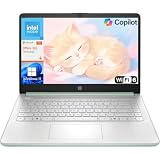
- Efficient Performance for Everyday Computing: Powered by Intel N150 processor with up to 3.6 GHz Intel Turbo Boost Technology, 6 MB L3 cache, 4 cores, and 4 threads, this HP laptop delivers responsive performance for web browsing, streaming, document editing, and multitasking. Paired with 4GB LPDDR5 RAM and 128GB UFS storage, it handles daily tasks smoothly. Includes 1-year Microsoft 365 Personal subscription for Word, Excel, PowerPoint, and cloud storage to maximize your productivity.
- 14-Inch HD Micro-Edge Display:Enjoy clear visuals on the 14-inch HD (1366 x 768) anti-glare screen with 250-nit brightness and 62.5% sRGB coverage. The micro-edge bezel delivers a 79% screen-to-body ratio in a compact design. An HP True Vision 720p HD camera with noise reduction and dual-array microphones supports clear video calls, remote work, and online learning.
- Modern Connectivity and Wireless Technology: Stay connected with Wi-Fi 6 (2x2) for faster wireless speeds and Bluetooth 5.4 for seamless pairing with accessories. Versatile port selection includes 1 USB Type-C 10Gbps with DisplayPort 1.2 for external displays, 2 USB Type-A 5Gbps ports for peripherals, 1 HDMI 1.4b port, 1 headphone/microphone combo jack, and 1 multi-format SD media card reader. Connect monitors, transfer files quickly, and expand your workspace with ease.
- All-Day Battery Life and Portable Design: Enjoy up to 11 hours of video playback, 7.5 hours of mixed usage, or 7.5 hours of wireless streaming on a single charge, perfect for students and professionals on the go. Weighing just 3.24 lb and measuring 12.76" x 8.86" x 0.71", this lightweight laptop fits easily in backpacks and bags. The stylish willow green top cover with matte finish and natural silver keyboard deck with vertical brushing pattern offer a modern, professional look.
- AI-Enhanced Productivity: Access Microsoft Copilot instantly with the dedicated Copilot key for faster assistance. AI Noise Reduction filters background sounds and improves voice clarity during calls. Dual speakers provide clear audio, while the full-size natural silver keyboard and HP Imagepad support comfortable typing and navigation.
The original Linux-focused shortlist also names Dodo and Aerion as niche graphical clients. Dodo is aimed at users already committed to notmuch, while Aerion requires a current check of development activity, packaging, protocols, and authentication before a strong recommendation. The source roundup lists all three specialist projects.
Best for: technically confident Linux users with a deliberate local-indexing workflow. Avoid it when: you want automatic setup, mainstream support documentation, or a conventional Outlook-like experience.
How should you choose between free and open source email clients?
Start with account compatibility and maintenance, then choose the interface and feature set. A client with an attractive interface is a poor choice if your provider requires an authentication method the client cannot complete.
| Your priority | Best starting choices | Main compromise |
|---|---|---|
| One safe recommendation for most users | Thunderbird | More interface and settings than a minimalist client |
| Thunderbird-style workflow with a fork’s changes | Betterbird | Smaller ecosystem and branch-specific caveats |
| GNOME mail, calendar, contacts, and tasks | Evolution | Heavier and more complex |
| KDE Plasma and Kontact integration | KMail | Backend setup can be difficult |
| Simple conversation-based mail | Geary | Fewer advanced controls and productivity tools |
| Low resource use with advanced filters | Claws Mail | More manual configuration |
| Very traditional lightweight mail | Sylpheed or Balsa | Fewer current integrations; verify authentication |
| All-in-one browser and mail suite | SeaMonkey | Older-feeling architecture and interface |
| Polished commercial-style interface | Mailspring | Open-source status and paid features require scrutiny |
| Specialist local indexing | Astroid, Dodo, or Aerion | Niche setup and uncertain mainstream compatibility |
What does “free and open source” mean for email clients?
Free software and open-source software describe licensing and availability of source code, not necessarily privacy, maintenance, or feature completeness. A fully FOSS client makes its core source available under a recognized free-software or open-source license. A source-available or open-core application may publish some code while keeping services, integrations, or premium functionality proprietary. Freeware costs nothing but may publish no source code at all.
| Label | What it means | What to check |
|---|---|---|
| Fully FOSS | Core client source and functionality are available under a recognized license | License, dependencies, and project activity |
| FOSS with proprietary services | Open client combined with hosted sync, analytics, integrations, or paid features | Data flows, subscription boundaries, and offline behavior |
| Freeware or source-available | Free to download or partly public, but not necessarily fully open source | Actual license and restricted components |
| Unverified | Current licensing or project status is unclear | Upstream repository and official terms before recommending it |
Mailspring belongs in the “verify carefully” category rather than receiving an unconditional fully-FOSS label. Open source also does not guarantee that an application has no telemetry or third-party integrations.
Which email protocols and authentication methods matter?
IMAP downloads and synchronizes mailbox data, SMTP sends messages, and OAuth 2.0 provides a modern authorization method that may be required by large providers. The IMAP specification, SMTP specification, and OAuth 2.0 specification define the underlying standards, but provider policies determine which combinations are actually accepted.
POP3 is useful for download-oriented workflows but generally provides less mailbox synchronization than IMAP. CalDAV and CardDAV handle calendars and contacts, while LDAP may provide directory access. JMAP is another modern mail protocol, but support must be checked client by client rather than assumed from IMAP compatibility.
Recommended Free Tools
Exchange compatibility is a separate category. Basic IMAP mail access does not equal full Exchange functionality. Depending on the account, a client may need EWS, Microsoft Graph, a plugin, or a provider bridge for calendars, contacts, shared mailboxes, delegation, or modern authentication.
Independent reader supportYour contribution helps us test, update, and keep practical guides available for everyone.Does Gmail work with open-source desktop email clients?
Gmail can work with several open-source desktop clients, but successful IMAP access does not guarantee perfect Gmail behavior. OAuth sign-in, multiple accounts, labels, All Mail, Sent, Spam, Trash, archive behavior, and Google Workspace administrator policies all affect the result.
Gmail labels are not identical to conventional folders. A client may display the same message through multiple labels, show All Mail separately, or produce behavior that differs from Gmail’s web interface. App passwords are not a universal fallback; use them only when the provider permits them and the account’s security configuration supports them.
Does Microsoft 365 or Exchange work with these clients?
Microsoft 365 and Exchange compatibility must be checked against the exact account type and organization policy. Outlook.com personal accounts, Microsoft 365 business tenants, and on-premises Exchange servers can expose different protocols and restrictions.
Quick wins for a faster PC:
Repair Windows errors before they cause bigger problemsFix Now →Fix the driver behind crashes, sound loss and screen glitchesFind Drivers →- IMAP may provide mail but not calendars, contacts, shared mailboxes, or delegation.
- SMTP AUTH or IMAP may be disabled by an administrator.
- OAuth may be mandatory, and a browser login may be required.
- Conditional Access and multifactor authentication can block an otherwise compatible client.
- Evolution’s Exchange support depends on its installed EWS component and server policy.
- Calendar and address-book support should be tested separately from mail delivery.
Do not choose a client solely because a comparison table says “Exchange supported.” Ask whether the client supports the required protocol and features for your specific organization.
What are the privacy and backup consequences of using a desktop client?
A desktop email client usually caches messages and account data locally, even when IMAP keeps the authoritative mailbox on the provider’s server. Local profiles can contain messages, attachments, passwords, address books, search indexes, and settings.
Local storage enables offline reading and faster searching, but a stolen or poorly protected computer may expose cached data. Open-source code improves inspectability; it does not automatically provide encrypted local storage, eliminate telemetry, or prevent third-party services from receiving data.
Back up the complete profile before changing clients or installing a fork. Close the application before copying mutable profile files, keep exports of important mail and contacts where practical, and test restoration on a separate profile. A backup that has never been restored is only an assumption.
What’s actually slowing this PC down?
Pick the symptom - the matching free tool is one click away.
Best Value

- 【Expansive Display】The 14 Non-touch display offers clear, and anti-glare coating, perfect for both work and entertainment.
How do encryption and signing differ from transport security?
TLS protects the connection between the client and server; OpenPGP or S/MIME provides message-level signing and encryption. A secure IMAP or SMTP connection does not mean that the message remains encrypted end to end after delivery or while stored on servers.
Compare whether OpenPGP or S/MIME is built in, supplied by a plugin, or unavailable. Also check key management, certificate handling, contact discovery, and whether encryption works consistently across all accounts. The OpenPGP standard covers message protection and signatures, but the client’s interface and implementation determine how usable the feature is.
Why do OAuth login loops and account failures happen?
OAuth loops commonly result from outdated distribution packages, blocked browser callbacks, missing components, provider restrictions, conditional-access policies, incorrect system clocks, or certificate-store problems.
- Confirm that the provider permits IMAP and SMTP access for the account.
- Update the client and the operating system’s package, certificate, and authentication components.
- Check whether a browser window, app password, plugin, or provider bridge is required.
- Try an official upstream build or supported Flatpak when the distribution package is substantially older, while understanding the integration trade-offs.
- Check the provider or organization’s administrator policy before changing security settings.
- Do not weaken account security or enable legacy authentication merely to make an unsupported client work.
Gmail label mismatches and Microsoft 365 feature gaps are often protocol-model or policy differences rather than defects in the desktop application.
PC Slower Than It Used to Be?
A free scan shows the junk files, broken settings and background clutter dragging Windows down - then fixes them in one click.Free scan · Windows 10 & 11Outdated Drivers Are Slowing You Down
One free scan finds every outdated or missing driver and matches the right update for your exact hardware.Free scan · exact hardware matchHow should you evaluate maintenance and Linux packaging?
Evaluate current releases, security fixes, repository activity, supported operating systems, issue activity, and package freshness separately from the project’s license. A project can be legally open source yet unsuitable for modern authentication or current mail providers.
Linux distribution packages may lag behind upstream releases for stability. That difference can affect OAuth, TLS certificates, add-ons, provider compatibility, and bug fixes. Record the version and installation source you use. Flatpak, Snap, AppImage, Debian, Fedora, and source builds can differ in permissions, integration, and update behavior.
Betterbird illustrates why release branches require attention: its official site identifies different series and production-use warnings. Read the project release notes rather than installing the newest-looking build without checking its status.
What about Proton Mail, Tuta Mail, and other privacy-focused providers?
A provider bridge is not an email client. Proton Mail Bridge, for example, is a compatibility layer that lets supported desktop applications connect to Proton Mail; the official Proton Bridge page explains its role.
Free tools Windows power users keep installed
One-click scans. No signup required.
Bridge-based setups add another process, account requirement, and troubleshooting point. Tuta Mail’s compatibility with conventional IMAP and SMTP clients should be checked against its current official desktop-app documentation rather than assumed. Fastmail is a paid hosting provider that can be useful with standard desktop clients, but it is not a replacement for the client itself.
How should you back up and migrate mail?
- Back up the original client first. Save the complete profile and separately export contacts, calendars, filters, and important mail where the application supports it.
- Confirm server-side status. IMAP mail normally remains on the provider, but locally downloaded POP3 messages may not.
- Install the replacement without deleting the old profile. Keep the original client available until messages, folders, attachments, identities, and sent-mail behavior are verified.
- Test authentication before moving everything. Confirm OAuth, app-password, bridge, or manual server settings with a test account or recoverable profile.
- Verify restoration. Open the backup or imported profile on another machine or separate user profile and confirm that messages and address books are usable.
Never assume that installing a new client automatically imports every calendar, contact, filter, local folder, or encryption key. Migration is broader than copying the inbox.
Final recommendations by use case
- Choose Thunderbird for the best balance of compatibility, extensions, local control, and cross-platform availability.
- Choose Betterbird if you already understand Thunderbird and specifically want the fork’s changes, after reading its branch and profile caveats.
- Choose Evolution for GNOME users who need integrated calendar, contacts, tasks, and possible Exchange connectivity.
- Choose KMail when KDE Plasma and Kontact integration are central to your workflow.
- Choose Geary when a clean, conversation-oriented GNOME interface matters more than advanced controls.
- Choose Claws Mail for configurable filtering, keyboard-driven work, and low resource use.
- Choose Sylpheed or Balsa for traditional lightweight mail, provided current provider authentication is confirmed.
- Choose SeaMonkey only when you want an Internet suite rather than a dedicated modern mail application.
- Choose Mailspring only after confirming its current licensing, paid-feature boundaries, and privacy model.
- Choose Pantheon Mail for elementary OS simplicity, after checking current maintenance.
- Choose Astroid, Dodo, or Aerion only for a deliberate niche workflow and only after verifying current releases and authentication support.
Frequently Asked Questions
Which open-source email client is best for Gmail?
Thunderbird is the safest general starting point for Gmail because it is mature and supports desktop account management, but Gmail OAuth, label-to-folder behavior, All Mail, and Google Workspace administrator policies still need to be checked for the specific account.
Which open-source email client is best for Microsoft 365?
Evolution is one of the strongest Linux candidates for Microsoft-oriented personal-information management, but Microsoft 365 compatibility depends on the tenant’s authentication policy, installed Exchange backend, and required calendar, contacts, shared-mailbox, and delegation features. Basic IMAP support alone is not full Exchange support.
Is Mailspring fully open source?
Mailspring should not be treated as unconditionally fully open source without checking its current license and feature boundaries. Its public client code, free tier, paid Pro features, hosted services, and optional integrations should be evaluated separately.
Are Proton Mail Bridge and Tuta Mail email clients?
Proton Mail Bridge is not a standalone email client; it is a compatibility layer that connects supported desktop clients to Proton Mail. Tuta Mail’s compatibility with standard desktop protocols must be checked against its current official documentation.
The Bottom Line
Bottom line: install Thunderbird first unless your workflow points clearly elsewhere. Choose Evolution for GNOME productivity integration, KMail for KDE, Geary for simplicity, and Claws Mail or Sylpheed for lightweight control. Before committing, test OAuth with your actual provider, confirm Exchange feature requirements, verify the project’s current maintenance, and back up the local profile.

