
The Tool Desk
Outbyte PC Repair FREEClear out junk files and repair common Windows errorsFree Scan →Outbyte Driver Updater FREEFix the driver behind crashes, sound loss and screen glitchesFind Drivers →To stream gaming footage from a Windows Server VPS to YouTube Live and have it saved as a VOD, first decide where the game will run: on the VPS, on your own PC, or not at all because the VPS is only relaying an existing feed. Those setups need different graphics, encoding and network capabilities. Configure the VPS for the job it will actually do, then use YouTube’s encoder recommendations as a starting point and test the stream before relying on it.
Choose the streaming architecture before you rent a VPS
The path is always a source, an encoder and YouTube’s ingest service, but the location of those parts changes the VPS requirements. Do not assume that a general-purpose Windows Server VPS can run a game smoothly, or that every VPS needs a gaming GPU.
| Architecture | What runs on the VPS | What to verify |
|---|---|---|
| Game and encode on the VPS | The game renders there and the encoder sends the resulting video to YouTube. | A suitable GPU configuration, game compatibility, encoder support, sustained upload capacity and Windows Server licensing/access terms. No specific VPS size or game performance is established here. |
| Game on your PC; encode on the VPS | The VPS receives a video feed from your local gaming computer and encodes it for YouTube. | How the PC sends the feed, whether the VPS encoder can use its available GPU or CPU for the target quality, and whether both network legs are stable. This is not the same as running the game on the VPS. |
| Game and encode locally; VPS relays | The VPS forwards an already encoded stream to YouTube. | Relay software, protocol compatibility, inbound and outbound network capacity, and the extra hop’s latency. Do not pay for a gaming GPU unless another part of the workload needs one. |
If the goal is simply to loop a prerecorded gameplay video continuously, that is a fourth, simpler case: there is no live game-rendering workload. You need a playback-and-streaming workflow, not necessarily a VPS capable of running the game.
When GPU acceleration matters
Microsoft says graphics-intensive applications such as games and rendering or visualization workloads can rely heavily on 3D rendering. GPU acceleration in a virtualized environment requires graphics virtualization. Windows Server 2025 introduces GPU partitioning, which Microsoft describes as sharing a physical GPU device among multiple virtual machines. That does not establish that a particular provider, region or VPS plan offers the feature or will run a given game well. Check the provider’s VM family, GPU driver support and application compatibility before deployment. Microsoft’s Windows Server GPU planning guidance explains the virtualization considerations.
#1 Best Overall
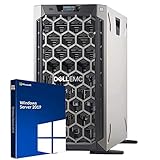
- 3.5 Inch Hot Plug Hard Drive PowerEdge T340 Tower Server Chassis
- Microsoft Windows Server 2019 Standard Operating System
- Processors: Intel Xeon E-2124 Quad-Core 3.3GHz 8MB CPU, Up To 4.3GHz Turbo
- Memory: 32GB (2 x 16GB) DDR4 PC4-21300 2666MHz Unbuffered Memory
- Hard Drive: 8TB (4 x 2TB) 7.2K RPM 6Gb/s SATA 3.5 Inch HDDs in RAID
Select an India-region VPS and check availability
Choose a provider and region based on the architecture above, then confirm the exact VM size is currently available in that region. A provider having a data centre in India does not mean every GPU VM family is offered there. For an India-hosted VPS, also test the route from that region to YouTube’s ingest service; regional proximity alone does not guarantee a stable upload or the lowest latency.
Microsoft announced general availability of its India South Central region in Hyderabad on August 6, 2026. That announcement establishes regional presence, not availability of any particular GPU VM size. Check Microsoft’s announcement, then check the provider’s live regional SKU listing before selecting a VM.
Rank #2
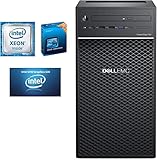
- Windows server license is not included
Azure is an example, not a universal recipe
Microsoft’s Azure Virtual Desktop documentation lists NVv3, NVv4, NVadsA10 v5 and NCasT4_v3 for graphics rendering and remote frame encoding. Its guidance is specifically for Azure Virtual Desktop: remote sessions default to CPU rendering unless GPU acceleration is enabled, and the suitable size depends on workload, desired quality and cost. Microsoft also notes that some NC families are aimed at compute or machine learning and generally are not suitable as session hosts. Do not apply that Azure Virtual Desktop guidance automatically to a general Azure VM or another cloud provider. Read the Azure GPU acceleration documentation and verify the chosen family’s drivers and regional availability.
Include access licensing and running costs
Before creating the VM, confirm the applicable Windows Server remote-access licensing for your deployment and users. Azure Virtual Desktop pricing guidance describes RDS CALs with active Software Assurance or eligible subscription access rights for Windows Server desktop access, and lists VM, storage and networking as separate infrastructure costs. Applicability depends on deployment and access method; treat this as a check with your provider or licensing adviser, not legal advice. Azure’s Virtual Desktop pricing page describes its own licensing and cost components. Also account for storage and outbound data charges, and whether the VM will run continuously or only during scheduled streams. Current India-region GPU prices and equivalent availability across providers are not established here.
Rank #3

- MODEL P74439-005: Compact and affordable HPE ProLiant MicroServer Gen11 powered by Intel Pentium Gold G7400 3.7GHz processor, ideal for file sharing, NAS, and basic business workloads
- READY OUT OF THE BOX: Includes 16GB DDR5 UDIMM memory (expandable to 128GB), one 1TB SATA 6G Business Critical HDD, embedded Intel VROC SATA, dedicated iLO-M.2 port kit, 180w external power adapter and 1/1/1 warranty for dependable plug-and-play server operation
- WHISPER-QUIET & SPACE-SAVING: Ultra-compact mini tower design fits easily in small office spaces; supports wall, flat, or vertical placement for deployment flexibility
- INTEGRATED REMOTE MANAGEMENT: Comes with HPE iLO 6 and embedded TPM 2.0 for secure, license-free remote server administration through shared port access
- EXPANDABLE DESIGN: Two PCIe slots (including PCIe 5.0) and four LFF-NHP drive bays provide robust options for storage and component scalability. Features new MR408i-p controller support for enhanced storage performance
Configure the Windows Server VPS for the chosen job
Provider dashboards and Windows Server versions differ, so use the provider’s current deployment instructions for creating the VM and connecting with Remote Desktop. The steps below are provider-neutral: they identify what to configure and verify without assuming a particular console layout or that a GPU is included.
- Create the VM in the chosen India region. Select a Windows Server image and a size that matches the architecture. If the VPS must render a game, verify GPU availability, driver support and game compatibility before purchase. If it only relays a feed, size it for the relay and network workload instead. Keep the deployment’s licensing requirements in view.
- Secure and connect to the server. Use the provider’s supported remote-access method and restrict remote desktop access to trusted addresses where the provider’s network controls allow it. Use strong account credentials, apply available Windows updates, and do not expose unnecessary inbound ports. Open only the network access required by the chosen feed or relay software; the exact ports depend on that software and protocol.
- Install the required software for the architecture. For game-on-VPS, install the game and a compatible encoder, then confirm Windows and the encoder detect the intended GPU. For a local-PC feed, configure the chosen receiver/encoder on the VPS and the matching output on the PC. For relay-only use, install relay software that supports the incoming and outgoing stream protocols. Do not assume that the same software settings or ports apply to all three cases.
- Prepare YouTube Live access. In YouTube Studio, create or select the intended live stream and use its stream key and ingest settings in the encoder or relay. Treat the key like a password: do not paste it into public logs, screenshots or chat. Use RTMPS where the encoder and workflow support it; YouTube recommends it as the secure protocol.
- Set the encoder deliberately. Choose a supported codec, resolution and frame rate, set rate control to CBR, and set a two-second keyframe interval. YouTube says the keyframe interval should not exceed four seconds. Configure the bitrate for the selected codec, resolution and frame rate rather than reusing one value for every stream.
- Run a representative test before scheduling a long stream. Include typical gameplay motion and audio, watch YouTube’s stream-health indicators, and check for dropped frames, unstable upload or audio/video problems. A bitrate recommendation is not a guarantee that the VPS’s network or encoder can sustain the stream.
- Start the live stream and confirm the VOD outcome. Verify the preview and audio before going live, then check YouTube after the broadcast to confirm the recording is available as intended. Review the current YouTube live and monetization policies for the content you plan to use; owning or being able to play a game does not by itself establish that every music track, overlay or other included material is cleared for broadcast or reuse.
Use YouTube’s encoder settings as the baseline
YouTube’s live encoder guidance lists RTMP/RTMPS ingest, H.264, H.265 (HEVC) and AV1, frame rates up to 60 fps, CBR, and a recommended two-second keyframe interval (not exceeding four seconds). The recommended bitrate varies by codec, resolution and frame rate. The figures below are YouTube recommendations, not a measured VPS capacity or a promise of trouble-free encoding. See YouTube’s current encoder settings.
Rank #4
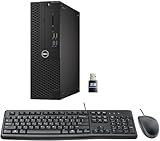
- This Certified Refurbished product is tested and certified to look and work like new. The refurbishing process includes functionality testing, basic cleaning, inspection, and repackaging. The product ships with all relevant accessories, a minimum 90-day warranty, and may arrive in a generic box. Only select sellers who maintain a high-performance bar may offer Certified Refurbished products on Amazon.com.
- Dell Optiplex 3050 SFF Desktop computer PC, Intel Quad Core i5-6500 up to 3.6GHz, 16GB DDR4, 256GB SSD
- Includes: USB Keyboard & Mouse, USB WiFi adapter, Microsoft office 30 days free trail.
- Port: Front: USB 3.0(2), USB 2.0(2); Rear: DP, HDMI, USB 3.0(2), USB 2.0(2), RJ-45.
- Support 4K (3840x2160) Dual display, makes it easy to connect two monitors at the same time, and you can expand working Windows, mirror content, or expand a single window across multiple monitors.
| Codec | 1080p30 recommended bitrate | 1080p60 recommended bitrate |
|---|---|---|
| H.264 | 14 Mbps (YouTube recommendation) | 17 Mbps (YouTube recommendation) |
| AV1 or H.265 (HEVC) | 10 Mbps (YouTube recommendation) | 12 Mbps (YouTube recommendation) |
For other resolution and frame-rate combinations, consult YouTube’s encoder table rather than extrapolating these four figures. Leave headroom beyond the video bitrate for audio and network variation, and test sustained upload under the actual workload. If the encoder drops frames while YouTube reports a healthy connection, the machine may be unable to render or encode at the selected settings; if the encoder output is stable but YouTube reports an ingest problem, investigate the VPS network path and ingest configuration.
Independent reader supportYour contribution helps us test, update, and keep practical guides available for everyone.Troubleshoot the common failure points
- The game runs poorly or the encoder is overloaded: determine whether the game or encoder is using the intended GPU. GPU support, virtualization, drivers and the VM family matter; a “GPU” label alone does not prove the exact game and encoder combination will perform adequately. Lower resolution, frame rate or bitrate for a fresh test if necessary.
- YouTube reports unstable or missing ingest: recheck the stream key and ingest protocol, then verify sustained VPS upload capacity and any firewall or network rules required by the selected workflow. Test with representative motion rather than a static screen.
- The picture stutters despite a seemingly adequate bitrate: check encoder load, frame drops and network stability separately. YouTube’s recommended bitrate is a starting point for its ingest settings, not evidence that the VM can sustain that rate.
- GPU options or drivers are unavailable: confirm that the selected VM family supports the needed graphics virtualization and that the required size is offered in the region. Azure Virtual Desktop’s GPU instructions are not interchangeable with general VM setup instructions.
- The stream works but the recording or content use is a concern: check the live stream’s YouTube status and review the applicable current copyright and reused-content policies for the actual footage and audio. Do not assume that a VOD is automatically permissible to reuse or monetize.
Or let it run in the cloud
If your goal is to keep uploaded gaming footage looping as a YouTube live stream, StreamNeo is a more direct alternative to configuring and maintaining a Windows VPS: upload the recording or build a playlist, add your YouTube stream key once, and go live. StreamNeo loops uploaded videos in its cloud; it does not stream a live camera feed and supports YouTube only.
Do these 3 things before closing this tab:
1Scan for outdated or missing drivers - takes under a minute2Repair Windows errors before they cause bigger problems3Fix the driver behind crashes, sound loss and screen glitches- Nothing has to stay on at home: your computer and home connection can be off while the cloud stream runs.
- One flat price per slot covers the quality of the upload, up to 4K 60fps, without re-encoding or quality tiers.
- StreamNeo automatically recovers if YouTube drops the stream.
- The first day is free with no card, one free day per account. The same product is included on every plan; only the billing period changes. UPI and cards work in India, with card checkout worldwide.
Monthly: $9.99 per month. See StreamNeo or start the free day.
Quick Recap
Product prices and availability are accurate as of the date/time indicated and are subject to change. Any price and availability information displayed on Amazon at the time of purchase will apply.

