
The safest useful answer is a controlled, repeatable workflow: execute the sample in a disposable isolated environment, collect full packet and host telemetry before launch, inspect DNS and ordinary web traffic for command-and-control (C2) patterns, and preserve the original evidence with clear confidence labels. A sandbox that is merely virtualized is not automatically safe; REMnux documentation says to “Always run REMnux in a disposable VM or container when analyzing malware, regardless of whether you use AI tools.”
1. Define the sandbox boundary before execution
Use a disposable virtual machine or container and decide exactly what the guest can reach. Keep the host, corporate network, personal accounts and unrelated credentials outside the sample’s reach. The correct topology depends on your hypervisor, operating system, lab policy and experience; there is no universal safe network diagram.
- Use a disposable environment that can be destroyed and rebuilt after the run.
- Choose in advance whether the guest is disconnected, connected only to an emulated network, or permitted to reach external infrastructure under an authorized lab policy.
- Do not treat a failed connection in a disconnected or simulated lab as proof that the sample has no network behavior.
REMnux documents INetSim and FakeNet-NG for controlled service emulation. These can expose attempted interactions without giving the sample unrestricted access to production or public systems.
2. Prepare collection before running the sample
Start capture and logging before execution. Short-lived DNS lookups and brief connections can otherwise disappear before you begin recording.
What’s actually slowing this PC down?
Pick the symptom - the matching free tool is one click away.
#1 Best Overall

- Multifunctional NOYAFA NF-8508 Network Cable Tester: There are nine features to meet your needs. Continuity Testing, Cable Scan, Port Flash, Length Measurement, POE Power Supply Test, QC testing, Optical Power Meter, VFL and NVC function.It is perfectly suited for various engineering cabling projects, network troubleshooting, network equipment maintenance and testing scenarios. Its precise cable scanning and fault localization capabilities help you effortlessly pinpoint the root cause of issues.
- 7 WAVELENGTHS OPTICAL POWER METER: NF-8508 network cable tester can measure 7 standard wavelengths, 850/1300/1310/1490/1550/1625/1650, power detecting range(dBm): -70 ~ +10. Its power detection range spans from -70 dBm to +10 dBm, supporting FC/SC/ST connectors. It enables precise fiber optic power measurement, helping users efficiently assess fiber signal strength and ensure healthy fiber link operation. It effortlessly detects attenuation issues within fibers, thereby safeguarding fiber network stability.
- High Efficiency Visual Fault Locator: Easy identification of fiber breakpoints, poor connections, bending or cracking. Excellent for finding the right fiber to splice or quickly finding a break. Emmiting Energy: standard wavelenth: 650nm. Fast flashing, slow flashing, high precison.The built-in self-calibration ensures stable long-term performance, and Class IIIa laser (output<5mW) ensures safe daily operation.
- PORT FLASHING:The indicator light on the connection port in the NF-8508 device flashes to help accurately locate the cable. Displays port information, including operating speed, duplex mode, and negotiation settings. Port lights flash on the same screen to show the port's operating speed, making it easy to pinpoint lines and ports.
- PoE Testing and Cable Length Test: PoE testing can check cable mapping polarity and voltage of PoE network switches, withstand 60VDC. Automatically detects and switches between 10M/100M/1000M modes, Includes cable tracking, short circuit test, interruption of circuit test and etc The RJ45 cable tester can quickly measure the length of the cable with a range of 200m. Not only network cables, but also phone lines and BNC cables.
Record the run conditions
- Sample hash and file identity.
- Guest operating-system and sandbox configuration.
- Start and end times, with synchronized clocks or a documented time source.
- Whether responses came from an emulator, a disconnected network or an external service.
Collect packet and host evidence
Full PCAP preserves packet headers and, when available, payload content for later inspection. Wireshark, tshark and tcpdump can capture or inspect packets. Zeek can produce searchable protocol records, while Suricata or Snort can add inspection and alerting. Host-side DNS and network-connection records are valuable because they may associate a connection with the process that made it.
Capture emulator logs alongside packets. A request in a PCAP is more useful when you can show the response that INetSim or FakeNet-NG returned.
Rank #2
![[Upgraded] AURSINC NanoVNA-H Vector Network Analyzer 9KHz -1.5GHz Latest HW V3.7 HF VHF UHF Antenna Analyzer, Measuring S Parameters, SWR, Phase, Delay, Smith Chart](https://m.media-amazon.com/images/I/41hseV6xSbL._SL160_.jpg)
- [UPGRADED NanoVNA-H] New HW Version V3.7. It is upgradeable as new firmware is developed. With MicroSD card port now can have the measurement data or the screenshots saved in the it at anytime. Added battery circuit management, more secure. Redesigned PCB, you can connect to mobile phone with Type C-Type C cable (original PCB needs OTG cable), see a clear HD image on your phone. Added a ABS case, which is protective and dust-proof. Disply: 2.8 inch TFT (320 x240).
- [IMPROVED FREQUENCY ALGORITHM] The improved frequency algorithm can use the odd harmonic extension of si5351 to support the measurement frequency up to 1.5GHz. The 9KHz-300MHz frequency range of the si5351 direct output provides better than 70dB dynamic, The extended 300M-900MHz band provides better than 60dB of dynamics, and the 900M-1.5GHz band is better than 40dB of dynamics.
- [MULTIPLE FUNCTIONS] The default firmware main function is used for antenna performance measurement. The TX/RX method can measure the complete S11 and S21 parameters. If you need to obtain S12 and S22, you need to manually replace the transceiver port wiring. The CH0 output level is increased to 0dBm when using the fundamental wave, resulting in more accurate reflection measurement.
- [SUPPORT ANDROID PHONE & PC SOFTSARE CONTROL] Designed a practical and simple control application on PC, you can download touchstone(SNP) files for radio design and simulation software. There is a PC interface that adds functionality and lets you work interactively on a bigger screen. Supports time domain analysis function (TDR). Compatible with most Android mobile phones, convenient for connecting to mobile phones. Support Windows Computer Control.
- [STRONG AND SECURE POWER SUPPLY] This VNA is battery powered or USB powered. Built in 650mAh battery, could work for 2 hours continuously. For longer measurement time, kindly connect an external power source. The product interface displays battery usage, providing a clear understanding of the power status.
3. Choose controlled or external networking deliberately
Controlled service emulation
For an initial pass, emulate common services such as DNS, HTTP or SMTP when that fits the question. This often reveals what the program attempts to request and how it reacts to responses while limiting contact with uncontrolled infrastructure.
An emulator is not the real C2 server. A response accepted in FakeNet-NG or INetSim does not establish how the malware would behave when talking to its actual operator-controlled endpoint.
Rank #3
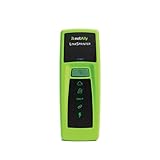
- Rapid Network Testing: One-button, 10-second pass/fail test verifies PoE, Link, DHCP, Gateway, and Internet connectivity
- Network Discovery: Shows nearest switch name/port and VLAN via CDP/LLDP/EDP protocols for comprehensive network mapping
- Wireless Connectivity and Cloud Integration: Built-in Wi-Fi hotspot for mobile UI; automatically uploads results to Link-Live cloud portal
- Portable Design: Pocket-sized, PoE or AA battery powered, designed for frontline and helpdesk teams as a pre-check tool before escalating to advanced testers
- Visual Feedback System: Lighted Indicator Icons provide instant status updates (Does not have a display or touch screen)
External connectivity
If the analysis requires real-world behavior, make that decision inside an authorized, isolated lab policy. The reviewed guidance does not provide a one-size-fits-all recipe for safe live-internet execution. Document the decision and its scope before launch.
4. Triage the capture from broad patterns to protocol detail
Build a timeline first
- Identify the first DNS names, IP addresses and connection attempts.
- Note destination ports, connection duration, bytes in each direction and repeated intervals.
- Compare those events with process telemetry to determine whether the sample, a child process or another guest component made the connection.
- Only then inspect protocol fields and payloads in detail.
Full-content capture supports deeper decoding than metadata-only records, but encryption can leave application content unreadable unless you have suitable, authorized visibility.
Rank #4
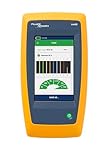
- Cable Performance testing up to 10GBASE-T via frequency-based measurements
- Network features including: IPv4 and v6 ping, nearest switch diagnostics (IP address, name, port / VLAN number, and advertised data rates)
- Ethernet Alliance certified PoE Verification – Detects the PoE class (1-8) and power, and performs a load test of available PoE from the connected switch
- Displays cable length, wire map, and distance to open or short
- Manage results and print reports from LinkWare PC
Inspect DNS for tunneling and beaconing
DNS can carry C2 traffic rather than merely resolve a hostname. Commands or results may be embedded in DNS exchanges, including TXT or A records. Useful leads include unusually long or encoded-looking labels, frequent queries, high query volume, and repeated low-frequency lookups. None of these observations alone proves maliciousness; compare them with process identity, timing, responses and other evidence.
Look beyond unusual ports
Malware can mimic expected traffic or hide DNS inside HTTPS through DNS-over-HTTPS. A port-only summary can therefore miss tunneled or disguised activity. Examine protocol behavior, destination consistency, request structure, timing and payload characteristics instead of treating a familiar port as benign.
Do these 3 things before closing this tab:
1Fix the driver behind crashes, sound loss and screen glitches2Clear out junk files and repair common Windows errors3Scan for outdated or missing drivers - takes under a minuteBest Value
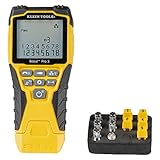
- VERSATILE CABLE TESTING: Cable tester tests voice (RJ11/12), data (RJ45), and video (coax F-connector) terminated cables, providing clear results for comprehensive testing on unenergized Ethernet cables (not designed to test PoE)
- EXTENDED CABLE LENGTH MEASUREMENT: Measure cable length up to 2000 feet (610 m), allowing for precise cable length determination
- COMPREHENSIVE FAULT DETECTION: Test for Open, Short, Miswire, or Split-Pair faults, ensuring thorough fault detection and identification
- BACKLIT LCD DISPLAY: Backlit LCD screen displays cable length, wiremap, cable ID, and test results, ensuring easy readability in various lighting conditions
- EFFICIENT CABLE TRACING: Trace cables, wire pairs, and individual conductor wires using the multiple style tone generator (requires analog probe Cat. No. VDV500-123, sold separately), simplifying cable tracing tasks
5. Correlate observations with the executing process
For every potentially important event, preserve the timestamp, process (if known), queried name, destination address, port, protocol, request and response pattern, and the exact capture or log that supports it.
Separate observation from interpretation. “The sample queried a name every five minutes” is an observation. “That name is the C2 server” is a conclusion that requires corroboration such as consistent beaconing, matching process attribution, distinctive responses or additional host evidence. A domain, address or periodic connection should not be labeled confirmed C2 on that fact alone.
6. Compare collection approaches
| Approach | Best suited to | Important limitation |
|---|---|---|
| Full packet capture with Wireshark, tcpdump or tshark | Packet-level protocol and payload inspection | Creates more data to retain and analyze; encrypted content may remain unreadable. |
| Structured network logs such as Zeek | Searchable, repeatable protocol triage | Structured fields are not equivalent to complete payload evidence. |
| Host-side DNS and connection records | Associating activity with a process | Coverage depends on host logging configuration and may omit packet detail. |
| INetSim or FakeNet-NG | Observing requests and responses in a controlled lab | Emulator behavior may differ from a real remote server. |
| Managed sandbox service, such as CIS’s Malicious Code Analysis Platform | Organizations wanting external analysis and report output | Verify current capabilities, access requirements, terms and operational fit directly. |
7. Preserve evidence and report confidence
Keep the original PCAP files and relevant host, emulator and sandbox logs with the sample hash and run conditions. Preserve volatile evidence when your incident-response process requires it; CISA specifically discusses retaining logs and preserving items such as memory and firewall-log buffers.
Use an evidence-focused finding format
- Observation: what was seen, with timestamp and source record.
- Attribution: which process or guest component appears responsible, and how certain that link is.
- Interpretation: the behavior it may represent, such as beaconing, tunneling or exfiltration.
- Confidence: why the evidence supports the interpretation and what remains unknown.
- Artifact: the PCAP frame, protocol record, emulator response or host log another analyst can review.
Map behavior to MITRE ATT&CK only when the evidence supports the technique. ATT&CK is a common knowledge base, not a substitute for documenting the underlying packet and host evidence.
Common analytical mistakes
- Starting the sample before capture, losing the initial DNS and handshake activity.
- Assuming virtualization alone prevents escape or data leakage.
- Calling every unfamiliar domain or periodic connection C2.
- Using only port counts and missing DNS-over-HTTPS or other tunneled traffic.
- Confusing an emulator’s response with proof of real-server behavior.
- Saving only a screenshot or alert instead of the original PCAP and supporting logs.
- Ignoring encrypted payload limitations and presenting inferred content as directly observed.
The Bottom Line
A defensible malware-traffic analysis ties packet evidence to the executing process and the run conditions. Capture before launch, use emulation when it answers the question, inspect DNS and ordinary protocols for concealed C2, distinguish observations from conclusions, and preserve the original artifacts so another analyst can reproduce your reasoning.
Quick Recap
Product prices and availability are accurate as of the date/time indicated and are subject to change. Any price and availability information displayed on Amazon at the time of purchase will apply.

