
Do these 3 things before closing this tab:
1Scan for outdated or missing drivers - takes under a minute2Repair Windows errors before they cause bigger problems3Fix the driver behind crashes, sound loss and screen glitchesStarship can create sonic booms when the vehicle travels faster than sound, because its motion produces shock waves in the atmosphere. The boom is not simply engine noise. Supersonic ascent and the return and landing phases are distinct cases: at Boca Chica, the FAA says the ascent boom it assessed occurs over water, while descent and landing booms may reach communities. Their potential reach depends on the site, flight path, vehicle event and atmospheric conditions. Management relies on modeling, flight and hazard-area planning, access controls and advance notices—not on eliminating the boom whenever a vehicle flies supersonically.
What causes a Starship sonic boom?
A sonic boom is the sound associated with shock waves created when an object travels through air faster than sound. The FAA describes a boom trace as an impulsive event lasting less than 300 milliseconds. The shock waves are the cause; rocket engines also make noise, but that is not what defines a sonic boom. The FAA’s April 2025 Boca Chica environmental assessment explains the physics and evaluates site-specific boom exposure.
A boom can occur during different supersonic portions of a flight. It is therefore misleading to assume that every Starship launch produces the same boom over the same places. In the Boca Chica assessment, the FAA says the modeled ascent boom occurs over water and does not affect land; it separately evaluates booms associated with orbital launches and with Starship and Super Heavy returning toward their landing locations.
Could a Starship boom reach my area?
There is no single distance that applies to every Starship flight. The FAA’s modeled contours are approximate, and actual exposure at a location can shift with atmospheric, physical and operational conditions. Weather can change where maximum overpressure occurs, and the FAA says a location is unlikely to experience the maximum estimated overpressure more than once across multiple events. A contour is an estimate for a defined site and scenario, not a promise about what every future flight will sound like.
Free tools Windows power users keep installed
One-click scans. No signup required.
#1 Best Overall

- BEGINNER MODEL-ROCKET LAUNCH SET: The Tandem-X rocket-model launch set offers adults and kids ages 10+ hours of fun during the holidays as they complete and launch our Amazon and Crossfire ISX rocket models. This set includes the easy-to-assemble Amazon model parts, the Crossfire ISX model parts, parachutes, and the launch pad system. It requires rocket engines, Starters, Recovery Wadding, and 4 high-quality 1.5-volt AA alkaline batteries for launch use (sold separately).
- 2 SOARING ALTITUDE HEIGHTS: Our Tandem X set offers a high-performing power duo with our giant 30-inch Amazon model (600-foot projected altitude with a C6-5 rocket engine) and our streamlined 15.6-inch Crossfire ISX model (1,150-foot projected altitude with a C6-7 rocket engine). Other compatible Estes model-rocket engines for Amazon model: B4-2, B4-4, B6-2, B6-4, C5-3, and C6-3. Other compatible engines for Crossfire ISX: A8-3, B4-4, B6-4, and C6-5. All engines sold separately.
- READY TO ASSEMBLE: Our beginner model-rocket launch set comes with 2 build options. The precolored Amazon model features plastic fins and self-stick graphics and can be built in an hour. The Crossfire ISX model comes with laser-cut wood fins, self-stick decals, and aerodynamic parts. Pair the rockets with the included Porta Pad II Launch Pad and Electron Beam Launch Controller for a hands-on educational activity or a unique Christmas gift for a budding scientist or a space aficionado.
- SAFETY FIRST, FUN ALWAYS: Our rockets and rocket launch accessories are designed to be used with the NAR (National Association of Rocketry) model-rocket safety code. Always ensure you have an appropriate launch site, stand back at least 15 ft., insert the safety key, issue a countdown, and then you can let your rocket fly!
- WE IGNITE IMAGINATIONS: Since 1958, Estes has created educational rocket kits and displays designed for an unforgettable aerospace experience. As a family-owned company, we have grown to offer exciting STEM products that engage aspiring rocketeers and the future minds of aerospace.
Boca Chica: modeled Super Heavy landing boom
For the proposed Boca Chica action, the FAA used PCBOOM to estimate single-event descent levels. Its assessment reports that the modeled 1-pound-per-square-foot (psf) contour for a Super Heavy landing could extend about 24 miles from the launchpad. The modeled 6 psf contour extended about 10 miles from the pad; estimates could reach 10 psf at the southern tip of South Padre Island, Port Isabel, Tarpon Bend and northeast Tamaulipas. These are scenario-specific modeled values in the FAA’s April 2025 assessment, not measurements of every flight. See the FAA assessment.
The FAA uses the following comparisons to describe how people may perceive different levels: 0.2–0.3 psf might be heard by someone who expects it and is listening, 0.5 psf is more likely to be noticed, and 1 psf or more is certain to be noticed. The assessment compares 1 psf with a clap of thunder. These are the agency’s perception descriptions, not a guarantee of an individual’s experience; weather and operating parameters affect local exposure. The FAA’s assessment discusses the estimates and their limitations.
Rank #2

- BEGINNER MODEL ROCKET LAUNCH SET: The Estes Alpha III launch set lets kids ages 10+ and hobbyists easily build and launch this iconic model rocket. The model rocket kit includes rocket parts, engine mount, decals, a parachute, a launch pad system, and instructions. For blastoff, you’ll need Estes rocket engines, Starters, Recovery Wadding, and 4 high-quality 1.5-volt AA alkaline batteries (not included).
- SOARS UP TO 1,150 FT.: Our Alpha III model rocket is designed for first-time STEM kit builders and climbs up to a projected altitude of 1,150 ft. (351 m). It’s compatible with 1/2A6-2, A8-3, A8-5, B4-4, B6-4, B6-6, C6-5, or C6-7 Estes rocket engines (sold separately).
- READY TO ASSEMBLE: Rocket building sparks creativity and a love for science and outer space! This beginner Alpha III model kit is easily put together with 1 hour of preparation and includes decals. It comes with a Porta-Pad II Launch Pad and Electron Beam Launch Controller for an unforgettable blastoff for first-time rocketeers.
- SAFETY FIRST, FUN ALWAYS: Our rockets are designed to be used with the NAR (National Association of Rocketry) model-rocket safety code. Always ensure you have an appropriate launch site, stand back at least 15 ft., insert the safety key, issue a countdown, and then you can let your rocket fly!
- ESTES EDUCATION: Since 1958, Estes has created educational rocket kits designed for an unforgettable launch experience. As a family-owned, US-based company, we offer exciting and engaging STEM products for all interests, skills, and power levels.
Kennedy Space Center: a separate assessment
The FAA’s May 2025 assessment for the proposed LC-39A action at Kennedy Space Center (KSC) models a different site and mission profile. It places launch booms over the Atlantic about 34 nautical miles offshore and separately evaluates landing booms. Its modeled 1 psf contour reaches 29.6 miles over land for a Starship landing and 24.2 miles for a Super Heavy landing. These KSC distances should not be treated as Boca Chica estimates or compared without keeping the site, vehicle event and contour threshold attached. Read the FAA’s May 2025 KSC biological assessment.
How are sonic booms managed?
Management is about estimating where effects may occur, evaluating exposure, planning the operation and reducing surprise or access to hazard areas. These steps can help manage risk and community disruption, but they do not remove the shock waves produced during supersonic flight.
Quick wins for a faster PC:
Fix the driver behind crashes, sound loss and screen glitchesFind Drivers →Repair Windows errors before they cause bigger problemsFix Now →Scan for outdated or missing drivers - takes under a minuteDriver Scan →Rank #3
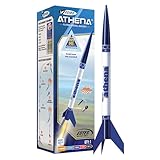
- BEGINNER MODEL ROCKET SET: The Estes Athena model rocket gives kids ages 10+ and beginners an easy way to experience real rocket launches with no building required! This ready-to-fly model rocket kit includes a fully prepared rocket with a parachute. This rocket requires Estes rocket engines, a launch pad system, Starters, Recovery Wadding, and 4 high-quality 1.5-volt AA alkaline batteries (sold separately) for launch use.
- SOARS UP TO 1,125 FT.: Our high-flying Athena rocket features a bright 12-inch parachute for safe recovery and soars up to a projected altitude of 1,125 ft. (343 m) with a C6-7 engine (sold separately). It is also compatible with the A8-3, B4-4, B6-4, and C6-5 rocket engines.
- READY TO FLY: Rocket-building kits are creative, educational gift ideas for Christmas or special-occasion surprises! This beginner-friendly Athena rocket comes fully assembled and just takes 15 minutes of preparation time. This model pairs with the Porta Pad II Launch Pad and Electron Beam Launch Controller (sold separately) for blastoff.SAFETY FIRST, FUN ALWAYS: Our rockets are designed to be used with the NAR (National Association of Rocketry) model-rocket safety code. Always ensure you have an appropriate launch site, stand back at least 15 ft., insert the safety key, issue a countdown, and then you can let your rocket fly!
- SAFETY FIRST, FUN ALWAYS: Our rockets are designed to be used with the NAR (National Association of Rocketry) model-rocket safety code. Always ensure you have an appropriate launch site, stand back at least 15 ft., insert the safety key, issue a countdown, and then you can let your rocket fly!
- ESTES EDUCATION: Since 1958, Estes has created educational rocket kits designed for an unforgettable launch experience. As a family-owned, US-based company, we offer exciting and engaging STEM products for all interests, skills, and power levels.
- Model likely exposure. For the Boca Chica assessment, SpaceX used PCBOOM to estimate single-event descent levels. The FAA presents the resulting contours as approximate because actual conditions vary.
- Evaluate cumulative sound as well as individual events. The FAA assesses exposure using cumulative measures, including C-weighted day-night average noise level (CDNL), against applicable significance criteria. For the proposed Boca Chica action, it reports that the 60 dB CDNL contour extends about 5 miles from the vertical launch area and that no noise-sensitive areas fall within it. This is the FAA’s conclusion under its stated assessment framework; it does not mean no individual outside that contour can hear or be disturbed by a boom. The assessment describes the metric and analysis.
- Plan trajectories, landing regions and hazard areas. Where a vehicle flies and lands shapes potential exposure for people, aircraft and vessels. Environmental reviews assess proposed operations by site and mission profile. The FAA’s project page lists completed environmental reviews, but completion of a review does not by itself guarantee a launch license or modification. Check the FAA Starship project page for current review status and documents.
- Restrict access where operations require it. Flight hazard areas and access restrictions are coordinated with relevant authorities; at Boca Chica, the FAA describes coordination with local authorities over land closures. The FAA’s Starship FAQ explains access restrictions, hazard areas and coordination.
- Give communities advance notice. The FAA’s April 2025 assessment says SpaceX’s public notification plan would announce upcoming launches and landings through news outlets and law enforcement. It notes that a Starship landing boom may occur days or weeks after launch, so a later boom is not necessarily simultaneous with liftoff. The assessment states: “Announcements of upcoming Starship/Super Heavy launches and landings would serve to warn people about these noise events.” See the assessment’s discussion of notifications. In 2022, the FAA also announced more than 75 mitigation actions for the then-proposed Boca Chica program, including advance notice to surrounding communities about potential engine noise and sonic booms; that figure describes the historical announcement, not a count of current requirements. Read the FAA’s 2022 announcement.
What do the assessments say about people and wildlife?
For the proposed Boca Chica action, the FAA says adverse human-health impacts are not anticipated under the modeled scenario. Its assessment also summarizes studies reporting human exposure to sonic booms of up to 100 psf without adverse consequences. That is the FAA’s characterization of the studies it cites, not a universal medical guarantee for every person, exposure pattern or future operation. The FAA assessment sets out its conclusion.
Wildlife effects depend on the animal, setting and exposure pathway. In its KSC biological assessment, the FAA notes that animals can startle and may show behavioral responses. For marine effects, the assessment says little energy from in-air noise is transmitted into water, with surface reflection and attenuation reducing underwater exposure; the associated marine assessment concludes that the evaluated boom levels are not expected to affect species beneath the surface. These conclusions concern the assessed conditions and underwater pathway, not every possible effect on wildlife. See the KSC biological assessment and the associated marine assessment.
Quick Recap
Rank #4

- BUILD IT. COUNT DOWN. LAUNCH IT 10 FEET: Kids build their own realistic rocket and durable launcher from precision-cut wooden parts — then press the red launch button and watch it blast up to 10 feet into the air. No batteries, no electricity — pure mechanical action. Winner of the 2025 Parents Choice Award. Designed for kids ages 6 to 12.
- REAL ROCKET SCIENCE — SERIOUSLY: Every launch teaches Newton's Third Law of Motion — action and reaction — in the most tangible way possible. Kids also discover how rocket propulsion works, what forces keep a rocket on course, and why aerodynamic design matters. These are the same principles behind actual space missions, learned through building and launching.
- SAFE FOR INDOOR LAUNCHING: The rocket's soft foam tip makes it safe to launch indoors — no need for a backyard or outdoor space. Kids can blast off in the living room, bedroom, or classroom without any risk to people or furniture. The launcher is stable, the rocket is lightweight, and the thrill is completely real.
- STEM SKILLS BUILT INTO EVERY STEP: Assembling the rocket and launcher teaches structural engineering, spatial reasoning, and mechanical thinking before a single launch takes place. Kids follow illustrated step-by-step instructions to complete the build independently — developing patience, precision, and confidence in their own ability to make things work.
- RELAUNCHABLE, REPLAYABLE, ENDLESSLY FUN: This isn't a one-shot toy. Kids reload, relaunch, and experiment — adjusting angle, force, and technique to see how high and how far the rocket goes each time. Every launch is a new experiment. Every tweak teaches something new about physics, force, and flight.
Product prices and availability are accurate as of the date/time indicated and are subject to change. Any price and availability information displayed on Amazon at the time of purchase will apply.

