
Spotify uses different audio formats and quality settings depending on your plan and where you listen. Its app offers lossy quality settings up to approximately 320 kbit/s for Premium’s Very high option, while eligible Premium listeners can enable Lossless playback up to 24-bit/44.1 kHz FLAC. Those specifications describe the stream, not a guaranteed audible improvement: whether you hear a difference depends on the recording, playback chain, listening conditions, and level matching.
How Spotify compression works
Audio compression reduces the data needed to store or stream music. With lossy compression, the encoding process discards some audio information to make a smaller stream. Lossless compression reduces file size without discarding source data; Spotify identifies FLAC as the format for its Lossless playback.
These labels do not, by themselves, tell you how good a particular recording sounds. A lossless stream cannot restore detail missing from its source master, and a higher bitrate does not prove that a listener will hear a difference. Spotify processes delivered files internally, and the format a listener receives depends on the playback setup.
Spotify audio quality by plan and playback surface
Spotify’s published settings distinguish app playback from the web player. App bitrates below are approximate service specifications, not independent measurements of every track delivered. Automatic quality can adapt to the network connection.
Do these 3 things before closing this tab:
1Fix the driver behind crashes, sound loss and screen glitches2Clear out junk files and repair common Windows errors3Scan for outdated or missing drivers - takes under a minute#1 Best Overall
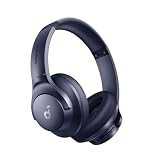
- Block the World, Keep the Music: Four built-in mics work together to filter out background noise — whether you're in a packed office, on a crowded commute, or moving through a busy street — so every beat comes through clean and clear. (Not available in AUX-in mode.)
- Two Ways to Hear More: BassUp technology delivers deep, punchy bass and crisp highs in wireless mode — then step it up further by plugging in the included AUX cable to unlock Hi‑Res certified audio for studio-level clarity.
- 40-Hour Long Battery Life and Fast Charging: With 40 hours of battery life with ANC on and 60 hours in normal mode, you can commute in peace with your Bluetooth headphones without thinking about recharging. Fast charge for 5 mins to get an extra 4 hours of music listening for daily users.
- Two Devices, Zero Hassle: Stay connected to your laptop and phone at the same time. Audio switches automatically to whichever device needs you — so a call never interrupts your flow, and getting back to your playlist is just as easy. Designed for commuters and remote workers who move smoothly between work and personal listening throughout the day.
- Your Sound, Your Rules: The soundcore app puts everything at your fingertips — dials your ideal EQ with presets or build your own, flip between ANC, Normal, and Transparency modes on the fly, or wind down with built-in white noise. One app, total control.
| Playback surface or setting | Free | Premium |
|---|---|---|
| Spotify app: Low | Approximately 24 kbit/s | Approximately 24 kbit/s |
| Spotify app: Normal | Approximately 96 kbit/s | Approximately 96 kbit/s |
| Spotify app: High | Approximately 160 kbit/s | Approximately 160 kbit/s |
| Spotify app: Very high | Not available | Approximately 320 kbit/s |
| Spotify app: Lossless | Not available | Up to 24-bit/44.1 kHz FLAC, for eligible Premium listeners on supported devices |
| Web player: music | AAC, 128 kbit/s | AAC, 256 kbit/s |
Spotify’s current audio quality settings page lists these values. Because formats and rates differ across playback surfaces, bitrate numbers alone are not a sound basis for ranking them.
Spotify’s developer documentation says most tracks in its embedded Media Delivery context use Ogg/Vorbis. That statement applies to that context; it should not be generalized to every Spotify client. Spotify separately lists AAC for web-player music and FLAC for Lossless playback.
Rank #2
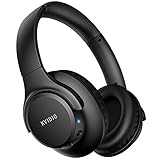
- Stereo sound headphones: KVIDIO bluetooth headphones with dual 40mm drivers, offers an almost concert hall-like feel to your favorite music as close as you're watching it live. Provide low latency high-quality reproduction of sound for listeners, audiophiles, and home audio enthusiasts
- Unmatched comfortable headphones: Over ear earmuff made by softest memory-protein foam gives you all day comfort. Adjustable headband and flexible earmuffs can easily fit any head shape without putting pressure on the ear. Foldable and ONLY 0.44lbs Lightweight design makes it the best choice for Travel, Workout and Every day use by College Students
- Wide compatibility: Simply press multi-function button 2s and the over ear headphones with mic will be in ready to pair. KVIDIO wireless headsets are compatible with all devices that support Bluetooth or 3.5 mm plug cables. With the built-in microphone, you can easily make hands-free calls or facetime meetings while working at home
- Seamless wireless connection: Bluetooth version V6.0 ensures an ultra fast and virtually unbreakable connection up to 33 feet (10 meters). Rechargeable 500mAh battery can be quick charged within 2.5 hours. After 65 hours of playtime, you can switch KVIDIO Cordless Headset from wireless to wired mode and enjoy your music NON-STOP. No worry for power shortage problem during long trip
- Package: Package include a Foldable Deep Bass Headphone, 3.5mm backup audio cable, USB charging cable and User Manual.
Podcasts have separate published rates
Spotify lists podcast quality at approximately 96 kbit/s on most devices and 128 kbit/s on the web player. On mobile and tablet, the Low setting reduces podcast quality to approximately 24 kbit/s. These are Spotify’s published specifications, not measurements of every podcast stream.
What affects what you hear
Listening quality is the result of a chain, not just a number in a settings menu. The delivered master, selected quality, network adaptation, playback software, Bluetooth or other transmission encoding, DAC and speakers or headphones, listening level, and room or environment can all affect the result.
The Tool Desk
Outbyte Driver Updater FREEFix the driver behind crashes, sound loss and screen glitchesFind Drivers →Outbyte PC Repair FREEClear out junk files and repair common Windows errorsFree Scan →Rank #3
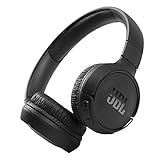
- The Tune 510BT wireless headphones feature renowned JBL Pure Bass sound, which can be found in the most famous venues all around the world.
- With Wireless Bluetooth 5.0 Streaming, you can stream wirelessly from your device and even switch between two devices so that you don't miss a call.
- For long-lasting fun, listen wirelessly for up to 40 hours and recharge the battery in as little as 2 hours with the convenient Type-C USB cable. A quick 5-minute recharge gives you 2 additional hours of music.
- Easily control your sound and manage your calls from your headphones with the convenient buttons on the ear-cup.
- Siri or Hey Google is just a button away: activate the voice assistant of your device by pushing the multi-function button.
- The recording and master: A higher-quality stream cannot improve a source that has limited detail or has already been altered. A 2024 Ethnomusicology Journal study examined nearly 300 songs by 15 artists and identified about 200 low-quality samples within its selected sample. Its selection and methods do not establish how representative those findings are of Spotify’s full current catalog.
- Connection and setting: Automatic quality follows network conditions; a higher setting uses more data and can also increase downloaded-file storage. The best practical setting may depend on whether you are streaming on a constrained connection or saving music to a device.
- Bluetooth transmission: Spotify says Bluetooth does not have enough bandwidth to transmit its Lossless signal as lossless audio, so the signal is compressed before it is sent. Lossless playback at Spotify’s source does not mean a Bluetooth link preserves that lossless transmission.
- Playback surface and hardware: Web playback, app playback, and other connected devices can follow different paths. A comparison is most informative when the same device and playback route are used.
Can you hear the difference between Very high and Lossless?
There is no universal threshold established here for whether listeners can hear Spotify’s lossy compression or distinguish Very high from Lossless. Some listeners may notice differences in some material and conditions; others may not. A reliable claim for an individual requires a controlled comparison, not just the fact that one setting carries more data.
For a useful comparison, use the same recording and device, confirm the selected quality, and match perceived loudness. Avoid switching between different masters or playback routes, since either can confound what seems to be a codec difference.
Rank #4

- EASY TO ENJOY MUSIC: With Tayogo T6, you can stream music from your smartphone directly to your W25 waterproof headphones while swimming. No more cumbersome downloads or conversions; just connect and enjoy seamless music playback.
- Pairs perfectly with waterproof headphones: Tayogo T6 is designed specifically for the W25 to ensure optimal performance in the pool. Whether you're training or swimming at the beach, this transmitter ensures clear audio transmission so you can immerse yourself in your favourite music.
- WATERPROOF DESIGN: Fully waterproof bone conduction headphones with IPX8 rating for swimming. DUAL Mode: Bluetooth & Receiving, for normal use the bluetooth and for swimming, Switch to Receiving Mode to get signal transmitted from your mobile phone.
- LONG TIME PLAY: the Transmitter can plays up to 8 hours and the receving Headphones can play up to 15 hours for Bluetooth and 8 Hours for Receiving Mode.
- EASY OPERATION: Digital display screen with touch-sensitive buttons for easy Channel selection and volume adjustment. Up to 16 Channels avaible, always get your private channels in the pool.
Account for loudness normalization
Loudness is separate from compression quality. Spotify documents a default normalization target of -14 dB LUFS; Premium listeners can choose Loud at -11 dB LUFS or Quiet at -19 dB LUFS. The web player and some third-party devices do not use normalization. For listening comparisons, check the playback path and level-match rather than assuming the two options will play at the same perceived loudness. See Spotify for Artists’ loudness normalization guidance.
Independent reader supportYour contribution helps us test, update, and keep practical guides available for everyone.How to enable Lossless and choose a practical setting
Spotify says Lossless must be enabled manually on each device. The exact menu wording may vary by app version, so use the app’s audio-quality controls and check the playback quality indicator rather than assuming that enabling it once changes every device.
Outdated Drivers Are Slowing You Down
One free scan finds every outdated or missing driver and matches the right update for your exact hardware.Free scan · exact hardware matchPC Slower Than It Used to Be?
A free scan shows the junk files, broken settings and background clutter dragging Windows down - then fixes them in one click.Free scan · Windows 10 & 11- Check eligibility and device support. Lossless is for eligible Premium listeners and supported devices. Availability can change; confirm the option in your own Spotify app.
- Open the audio quality controls in the app. Choose Lossless for the relevant streaming or download setting, as applicable. Repeat on each device where you want to use it.
- Choose a suitable connection. Spotify recommends Wi-Fi and wired headphones or speakers connected without Bluetooth for the smoothest Lossless playback.
- Check data and storage needs. Spotify says higher streaming quality uses more data, and downloads use storage. Consider a lower setting when bandwidth or device space is limited.
- Verify playback before comparing. Confirm the active quality and keep the same track, device, route, and loudness when evaluating settings.
Spotify announced a rollout to more than 50 markets through October 2025, with an October 6 update saying it was then available to Premium users in more than 50 markets. That is a dated rollout update, not a reliable statement of current availability in every market or on every device.
Quick Recap
Product prices and availability are accurate as of the date/time indicated and are subject to change. Any price and availability information displayed on Amazon at the time of purchase will apply.

