
Free tools Windows power users keep installed
One-click scans. No signup required.
Moving AI workloads from a hyperscale cloud to a modular edge data center can reduce network delay, data-transfer charges and sovereignty risk, but it does not guarantee lower cost or carbon emissions. Keep elastic training and burst capacity in highly utilized central facilities; place latency-sensitive inference, local-data processing or intermittently connected services at the edge when those benefits outweigh the extra power, cooling, security, maintenance and connectivity work.
What a modular or micro data center is
A modular (also called micro) data center is a compact system that combines processing, storage and networking for deployment close to users, machines or data sources. ITU-T Recommendation L.1307, approved on 8 March 2024, describes a micro data center as “a solution designed to provide processing, storage and networking capabilities in a more compact and modular form.”
That compact footprint does not make the site a plug-in appliance. L.1307 calls for the same disciplines expected of any data center, adapted to an edge location:
- Stable utility power, power distribution and UPS protection
- Thermal design and cooling appropriate to the local climate and hardware
- Noise limits and physical protection
- Management systems that monitor utilization, power and environmental conditions
- Virtualization, task offloading and renewable-energy integration where they improve resilience or efficiency
Because an edge site may be unmanned or difficult to reach, monitoring, remote management and a tested recovery path are design requirements rather than optional extras.
#1 Best Overall
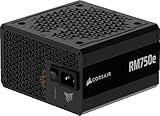
- Fully Modular PSU: Reliable and efficient, low-noise power supply with fully modular cabling, so you only have to connect the cables your system build needs.
- Intel ATX 3.1 Certified: Compliant with the ATX 3.1 power standard, supporting PCIe 5.1 platform withstands 2x transient power excursions from the GPU.
- Keeps Quiet: A 120mm rifle bearing fan with a specially calculated fan curve keeps fan noise down, even when operating at full load.
- 105°C-Rated Capacitors: Delivers steady, reliable power and dependable electrical performance.
- Modern Standby Compatible: Extremely fast wake-from-sleep times and better low-load efficiency.
When edge placement can lower AI costs
Keep elastic workloads in centralized cloud facilities
Large training runs, experimentation and unpredictable bursts usually benefit from shared GPU capacity, specialist operations and high utilization in hyperscale or well-run colocation facilities. A central platform can also absorb demand spikes without leaving a local module with idle accelerators and stranded cooling capacity.
Use modular edge capacity for the right workload
Edge deployment is easier to justify when one or more of these conditions apply:
- Latency: Inference must respond locally, and a round trip to a regional cloud is too slow or variable.
- Data locality: Video, industrial telemetry or other high-volume data can be filtered or analyzed locally instead of being continually transported.
- Intermittent connectivity: The service must continue during a backhaul outage, with synchronization after the link returns.
- Sovereignty or policy: Data must remain within a site, organization or jurisdiction.
- Network economics: Avoided egress, transport or dedicated-link charges exceed the cost of operating the local equipment.
These are workload-specific trade-offs. Compare total cost of ownership (TCO), including hardware utilization, electricity tariffs, cooling, connectivity, maintenance, physical security, software, replacement cycles and the staff or service contract needed at every site. A module that is lightly used can cost more per inference than a shared cloud service even when its network bill is lower.
Centralized cloud, colocation and modular edge compared
| Factor | Centralized hyperscale cloud | Colocation or regional facility | Modular edge site |
|---|---|---|---|
| Latency and locality | Best for workloads tolerant of regional round trips; data leaves the local site. | Can reduce distance while retaining professional facility operations. | Closest to users, sensors and machines; local processing can minimize backhaul. |
| Elasticity | Strongest for variable training and burst demand through shared capacity. | Moderate; depends on contracted racks or available capacity. | Limited by installed GPUs, power and cooling; right-size carefully. |
| Operations | Provider manages facilities and much of the platform. | Facility operations are shared, while the customer manages its equipment. | Distributed power, cooling, security, connectivity and maintenance are the customer’s responsibility or a contracted local operator’s. |
| Resilience | Can use broad regional redundancy, subject to the provider’s architecture and network. | Facility redundancy is available according to the contract and design. | Provides local continuity during backhaul loss, but each site needs UPS, spares, monitoring and a cloud fallback or recovery plan. |
| Sustainability controls | Large facilities can achieve high utilization and invest in efficient cooling and renewable procurement. | Results depend on the facility’s measured PUE, WUE, grid mix and contract. | Allows site-specific renewable, cooling and waste-heat choices, but low utilization or duplicated equipment can erase the benefit. |
| Deployment and scaling | Capacity is available through the provider’s service model. | Expansion follows rack, power and contract availability. | Modules can be added in stages, but every new location repeats civil, power, security and support work; a common lead-time figure is not stated by the cited sources. |
Measure energy and water at the facility
Power Usage Effectiveness (PUE) is total facility energy divided by IT equipment energy. A value closer to 1 means less overhead for cooling, power conversion and other facility functions. Water Usage Effectiveness (WUE) records litres of water used for cooling and humidification per kilowatt-hour of IT energy. Neither metric, by itself, describes carbon emissions, cost or workload efficiency.
Do these 3 things before closing this tab:
1Scan for outdated or missing drivers - takes under a minute2Clear out junk files and repair common Windows errors3Fix the driver behind crashes, sound loss and screen glitchesRank #2
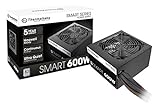
- Delivers 600W Continuous output at plus 40℃. Compliance with Intel ATX 12V 2. 31 and EPS 12V 2. 92 standards
- 80 PLUS Certified – 80% efficiency under typical load. Power good signal is 100-500 millisecond
- Supports (2) PCI-E 6 plus 2pin Connectors. Active (PFC) Power Factor Correction, MTBF: 100, 000 hours
- Industry Grade Protections: (OPP) Over Power Protection, (OVP) Over Voltage Protection, (SCP) Short Circuit Protection
- Hold up time is 16 millisecond minimum within 60 percent load. Input frequency range 50 - 60 in Hz
Microsoft reports a global FY25 PUE of 1.17 and WUE of 0.27 L/kWh for qualifying data centers it fully owns, covering its July 2024–June 2025 operating year. Those are one operator’s measured results, not a universal target or a promise for an edge installation.
Interpret WUE with the site’s climate, water stress, water source and cooling technology. A low water figure can coincide with higher electricity use, while evaporative systems may reduce electricity but consume more water. Report both metrics with the measurement boundary and period, then add:
- IT utilization and energy per inference or training job
- Electricity carbon intensity and the method used to match renewable power
- Temperature, humidity and cooling-system performance
- Water source, discharge and any reclaimed-water share
- Availability, network traffic and avoided data-transfer volume
How AI demand changes the decision
The European Commission projects data-center electricity consumption to exceed 945 TWh in 2030, more than double current levels, with accelerated computing used mainly for AI identified as the primary driver (European Commission, 2026). The International Energy Agency’s 2026 update says AI-factory capacity more than tripled in the preceding 18 months. It also reports that energy use per AI task has fallen by at least an order of magnitude annually in recent years.
Improving efficiency per task therefore does not remove the need for capacity planning: total demand can grow faster than efficiency improves. A practical architecture separates jobs by behavior rather than treating “AI” as one workload.
What’s actually slowing this PC down?
Pick the symptom - the matching free tool is one click away.
Rank #3

- 80 PLUS GOLD CERTIFIED: Provides up to 92% high efficiency, reducing energy consumption and heat while ensuring stable power delivery for high-end systems.
- Fully Modular Design: The psu features fully modular soft dragon-pattern cables to minimize cable clutter, improve airflow, and enhance cooling efficiency for a cleaner, neater PC build.
- ATX 3.1 & PCIe 5.1 Ready: Compliant with ATX 3.1 and PCIe 5.1, supports up to 2x total power excursion and 3x GPU power excursion for stable high-performance power supply. Comes with a dual-color dragon-pattern 16-pin PCIe 5.1 cable with orange connector for easy and secure plug-in confirmation.
- 140MM FDB Fan with Smart Control: Larger 140mm fan design ensures quieter operation and superior heat dissipation. Smart fan control auto-sleeps at low load for silent usage and adjusts speed dynamically under high load for efficient cooling performance.
- Premium Components & Stable Design: Features 100% Japanese 105°C-rated capacitors for exceptional durability and stability. Paired with DC-DC & half-bridge resonant design to deliver higher efficiency, lower heat, quieter operation, and ultra-reliable power output.
A placement workflow
- Measure the workload: Record request rate, response-time target, model size, batchability, data volume, connectivity requirements and accelerator utilization.
- Classify the consequence of delay: Identify which requests can tolerate a regional round trip and which must continue locally.
- Calculate delivered cost: Include compute, storage, transport and egress, electricity, cooling, support, security, hardware renewal and expected utilization.
- Model failure modes: Define behavior during backhaul, utility, cooling or module failure, including queued work and cloud fallback.
- Compare measured efficiency: Use site PUE, WUE, carbon intensity and workload energy rather than a provider-wide average.
- Right-size and stage: Start with the smallest module that meets the measured peak and add capacity only when utilization and service requirements justify it.
Power, cooling and physical design
Power chain
Specify utility service, switchgear, distribution, UPS runtime, generator or other backup, grounding and surge protection as one design. AI accelerators create concentrated and sometimes rapidly changing loads; confirm that the service entrance, rack distribution and cooling plant can sustain the required load without operating permanently at an inefficient oversize.
Cooling choices
Evaluate free-air cooling, air conditioning, direct-to-chip liquid cooling and other liquid systems against climate, water availability, acoustic limits, maintenance skill and leak-management requirements. The right choice depends on rack density and local conditions, not on a universal “greenest” technology. Publish measured site PUE, WUE and temperatures after commissioning rather than relying on a design estimate.
Security and noise
An edge enclosure may sit in a factory, retail site or telecom location. Control physical access, tamper detection, fire protection, asset inventory and secure media disposal. Set a noise limit that is compatible with occupants and neighbors, and include it in procurement acceptance tests.
Connectivity and workload portability
Use encrypted management and data links, redundant paths where the service requires them, and a tested local-inference mode for link loss. Keep models, containers and data formats portable enough to move selected jobs to a regional cloud or another module during maintenance or an outage.
Rank #4

- 80 PLUS GOLD CERTIFIED
- 10-year limited warranty, guaranteeing long term reliable operation
- Fully modular design
- ATX 3.1 & PCIE 5.1
Operational controls that make edge efficiency real
- Continuous telemetry: Collect IT load, accelerator utilization, facility energy, PUE, WUE, temperature, humidity, water use and electricity carbon intensity.
- Utilization management: Use virtualization, scheduling and task offloading to consolidate work and avoid idle GPUs.
- Remote operations: Alert on thermal drift, water leaks, UPS state, unauthorized access and connectivity loss; maintain remote restart and secure update procedures.
- Resilience tests: Exercise utility transfer, UPS autonomy, cooling failure, backhaul loss and cloud fallback under controlled conditions.
- Lifecycle planning: Budget for spare parts, technician visits, firmware support and accelerator replacement. A module’s embodied equipment and replacement schedule belong in the TCO review.
Renewables, grid flexibility and procurement
Local solar, storage or renewable contracts can reduce carbon exposure, but match their output profile to the workload and retain a reliable power path. The European Commission identifies flexible data-center operation as a way to lower system costs, support grid stability, integrate renewables and reuse waste heat. Controls can shift non-urgent training or batch processing while preserving latency-critical inference.
For equipment and facility purchases, the U.S. Department of Energy’s Federal Energy Management Program (FEMP) updated data-center design guidance in 2024; it describes data centers as offering substantial energy and cost-saving opportunities. Use that guidance as an efficiency baseline, then apply UNEP sustainable-procurement criteria to servers and infrastructure, especially energy performance and operating conditions.
A procurement checklist for an AI edge module
- Measured workload profile, peak and average utilization, and a documented growth assumption
- Power capacity, UPS and backup behavior, power-quality requirements and commissioning tests
- Cooling method, rated thermal envelope, water source and leak controls
- Target and measurement method for PUE, WUE, carbon intensity and workload energy
- Physical access, tamper detection, fire protection, noise and environmental limits
- Network redundancy, offline behavior, encryption and cloud-fallback procedure
- Remote monitoring, software-update process, spare-parts policy and response times
- Model and workload portability across local modules, colocation and cloud
- Renewable-energy, storage, demand-response and waste-heat opportunities
- End-of-life, refurbishment and responsible disposal requirements
Bottom line
Modular edge data centers are a control and locality strategy, not an automatic replacement for cloud computing. They are most defensible for measurable latency, locality, connectivity or sovereignty needs. Keep elastic training centralized, place only the workloads that benefit at the edge, and judge the result with site-level TCO, utilization, PUE, WUE, carbon and resilience data.
Quick Recap
Product prices and availability are accurate as of the date/time indicated and are subject to change. Any price and availability information displayed on Amazon at the time of purchase will apply.
The Tool Desk
Outbyte Driver Updater FREEScan for outdated or missing drivers - takes under a minuteDriver Scan →Outbyte PC Repair FREEClear out junk files and repair common Windows errorsFree Scan →
