
iTechGuides is reader-supported. When you buy through links on our site, we may earn an affiliate commission. As an Amazon Associate I earn from qualifying purchases. Learn more
DNS was created because a single shared host-name file could no longer be kept current and distributed efficiently as the Internet grew. Before DNS, computers already used names: a centrally maintained file called HOSTS.TXT mapped host names to numeric addresses. DNS replaced that increasingly difficult arrangement with a hierarchical naming system whose information is maintained across many name servers.
What did computers use before DNS?
Early Internet hosts used HOSTS.TXT, a centrally maintained table that paired host names with network addresses. People could use a name rather than remember a numeric address, and a name could remain useful when an address changed. DNS did not invent the idea of giving computers names; it changed how those names and their associated information were organized and distributed.
In the arrangement described by Paul Mockapetris in the November 1987 RFC 1034, the Network Information Center (NIC) maintained HOSTS.TXT, and hosts retrieved it by FTP. Each copy had to be updated when the central file changed.
PC Slower Than It Used to Be?
A free scan shows the junk files, broken settings and background clutter dragging Windows down - then fixes them in one click.Free scan · Windows 10 & 11Outdated Drivers Are Slowing You Down
One free scan finds every outdated or missing driver and matches the right update for your exact hardware.Free scan · exact hardware matchWhy did the shared host file stop scaling?
As the number of connected hosts grew, distributing a new complete copy became more costly. RFC 1034 states that “The total network bandwidth consumed in distributing a new version by this scheme is proportional to the square of the number of hosts in the network.” This is the specification’s 1987 description of the HOSTS.TXT distribution model, not a measurement of today’s DNS traffic. The NIC also faced a substantial outgoing FTP load.
#1 Best Overall

- 【AMD Ryzen 5 3501U Mini PC For Enhanced Daily Performance】Powered by AMD Ryzen 5 3501U processor with 4 cores and 8 threads, this mini pc provides responsive performance for office applications, home entertainment, online learning, media playback, and everyday computing.
- 【16GB Memory & 512GB Storage With Expansion Options】Built with 16GB DDR4 RAM and 512GB PCIe 3.0 NVMe SSD, this mini computer provides more space for applications, files, videos, and daily content. Upgrade memory up to 32GB, expand SSD storage up to 2TB, or add a 2.5-inch HDD.
- 【Flexible Small Desktop Computer For Home Applications】This small desktop computer is designed for home office, streaming, personal server setups, digital entertainment, and light gaming. The upgraded memory helps support smoother operation when using more applications.
- 【Triple Display Setup & Flexible Connectivity】Dual HDMI ports and a full-function USB-C port support up to three displays. This micro pc offers convenient connectivity with WiFi 6, Bluetooth 5.3, Gigabit Ethernet, and multiple USB ports.
- 【Compact Mini Desktop With Space-Saving Design】Measuring only 5.0 × 4.4 × 1.6 inches, this small pc saves valuable desk space. VESA mount support allows installation behind compatible monitors, making it suitable for home offices and compact workspaces.
Updates created an administrative bottleneck, too. Organizations could manage names and addresses locally, but changes were not visible across the network until the NIC updated HOSTS.TXT and the revised file was redistributed. Local administrators wanted more control over their own part of the name space, while newer Internet applications needed a more general naming service than a flat host-to-address list.
| Question | HOSTS.TXT | DNS |
|---|---|---|
| Where is information administered? | The NIC maintained one central host file, while local organizations managed their own names and addresses. | Information is organized into a hierarchy and maintained by responsible administrators across name servers. |
| How do changes become available? | Changes depended on the central file being updated and its new version being distributed. | Responsible administrators maintain the relevant data in the distributed system; resolvers can obtain answers or referrals from name servers. |
| How do lookups scale? | Hosts retrieved copies of the complete file, making distribution increasingly costly as the network grew. | Resolvers request particular information; referrals, redundancy and caching avoid repeatedly distributing a complete master list. |
| What do names do? | Names spare users from relying directly on numeric addresses. | Names retain that abstraction while supporting a larger, hierarchical and distributed namespace. |
What did DNS change?
DNS divides the name space into a hierarchy, with dots marking boundaries, and distributes responsibility for the associated data among name servers. The hierarchy can reflect organizational structure, so an organization can administer its part without relying on one operator to edit and send out a universal file.
Rank #2

- 【1-Year Worry-Free Warranty】Your satisfaction is our priority. Glorlin provides a 1-year warranty covering any hardware malfunctions. We support returns or exchanges to ensure a 100% worry-free shopping experience. Have a question? Reach out to us through our official after-sales email for a prompt solution.
- 【Reliable Performance with Ryzen 7 Processor】Powered by AMD Ryzen 7 8745HS (8 cores, 16 threads, up to 4.9GHz), this mini pc delivers stable performance for daily workloads. Suitable for office tasks, programming, and multitasking, it works well as a ryzen mini pc for both home and business use.
- 【Radeon 780M Graphics for Media and Light Gaming】Equipped with integrated Radeon 780M graphics, this mini gaming pc supports smooth 4K video playback and handles many popular games at adjusted settings. A practical mini computer for media, editing, and casual gaming.
- 【Mini PC 16GB RAM and Fast Storage】This mini pc 16gb ram configuration includes single 16GB DDR5 memory (4800MHz,3GB is assigned to VRAM by default) and a 1TB NVMe SSD, offering quick boot times and responsive system performance. Dual M.2 slots allow storage expansion up to 4TB for growing files and projects.
- 【Quad 4K Display Support for Productivity】The mini desktop computer supports up to four 4K displays via HDMI, DisplayPort, and dual USB-C ports. Ideal for multi-screen workflows such as coding, trading, or content creation with improved efficiency.
RFC 1034 describes its central aim as “a consistent name space which will be used for referring to resources.” A DNS name is not meant to encode the network address or route needed to reach a resource. Keeping the name separate from those details means the underlying address or network arrangement can change without requiring the name itself to change.
What’s actually slowing this PC down?
Pick the symptom - the matching free tool is one click away.
DNS also supports different kinds of information associated with a name, not only a host’s address. That generality made it useful to multiple applications, rather than limiting it to reproducing a single host table.
Rank #3
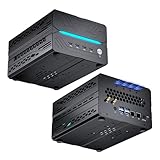
- [Powerful Processor] Mini Gaming PC equipped with Core i9-14900F, 24 Cores 32 Threads, 36M Cache, Max Turbo Frequency: 5.8GHz, Windows 11 pro (64 Bit).64G DDR5-5600 RAM| 4T M.2 NVME PCIE4.0 SSD| 4T SATA SSD. With GeForce RTX 50 Series GPUs. supporting ray tracing and AI cores. Delivering AI-acceleration in top creative apps. Whether you’re rendering complex 3D scenes, editing 4K video, or Gaming livestreaming with the best encoding and image quality.
- [Powerful Capacity & Storage Expansion] The mini desktop computer is equipped with Dual-DDR5 RAM (dual channel DDR5 high-speed memory, which can support up to 96G RAM), 1 x M.2 2280 PCIE4.0 high-speed SSD, and support add 1 x 2.5-inch SATA HDD/SSD is enough to accommodate system files and massive games, Excellent reading and writing speed greatly shortening your boot time.
- [8K@60Hz Four-Display] Mini PC equipped with GeForce RTX5060Ti 16GB GDDR7 discrete graphics card, supporting ray tracing and AI cores. easy connect 4 monitors, 1×HDMI 2.1b and 3×DisplayPort 2.1b(All Support 8K@60Hz display), It can provide you with a first-class TV experience and realistic picture quality, for your visual home entertainment, streaming video, web browsing, work design and 3D games create a very smooth experience.
- [Functional Interfaces] Mini computer is equipped with 4 x USB 3.2, 4 x USB2.0, 1 x HDMI2.1 port, 3 x DP2.1 ports, 2xRJ-45 Gigabit Network Ethernet, 1 x Fiber Optic PORT, 1 x Audio in/out. Built-in Bluetooth 5.4 and IEEE 802.11be wifi 7, Higher transfer rates and lower latency. Mini PC supports multiple device connection and can be used with servers, monitoring equipment, office equipment, projectors, televisions, etc, Mini desktop computer support automatic power on and Wake On Lan.
- [Warranty & heat dissipation] Warrant: 2 year/24 months. The compact computer size: 8.6*6.6*4.5in, 5.5lb, Inside the chassis are four all-copper turbo fans and eight vacuum heat pipes for powerful cooling performance. Make it can work smoothly and will not cause too much noise.
How does DNS find an IP address?
A user program asks a local resolver for a particular kind of information associated with a name. The resolver contacts a name server it knows about. That server may return the requested answer or refer the resolver to another server responsible for the relevant part of the name space.
- A program requests information. It asks its local resolver for a record type associated with a domain name—for example, address information.
- The resolver asks a name server. It uses a server it already knows about; the request does not necessarily begin with the root.
- The response supplies an answer or a referral. If the server does not have the requested information, it can direct the resolver toward another server.
- The resolver uses the result. It returns the information to the program and can retain cached data for later requests until that data expires.
Because servers can hold redundant copies, the system can also cope better with failures than a directory that depends on one central machine. RFC 1035 explains that “To the user, the domain tree is a single information space; the resolver is responsible for hiding the distribution of data among name servers from the user.” In practice, caching and the resolver’s existing knowledge can shorten a lookup; not every lookup contacts every level of the hierarchy.
Rank #4

- 12th Intel Alder Lake N95 Processor – The GMKtec G3 S Mini PC is powered by the 12th Gen Intel N95 processor with 4 cores, 4 threads, 6MB cache and a burst frequency up to 3.4GHz. Compared with N100/N5105/N5100/N5095, the N95 delivers up to 36% overall performance improvement. Perfect for routine tasks, office work, and home entertainment, this compact mini desktop is more convenient than traditional bulky PCs.
- 8GB RAM & 256GB SSD Storage – Pre-installed with 8GB DDR4 memory and a fast 256GB M.2 2242 SSD, the G3 S mini desktop offers quicker startup, smoother multitasking, and faster file transfers. Enjoy seamless performance whether you’re working on multiple applications, browsing, or streaming content.
- Rich Interfaces & Connectivity – The G3 S mini computer comes equipped with USB 3.2 (up to 10Gbps), dual HDMI 2.0 (4K@60Hz), and a 3.5mm audio jack. With support for WiFi 5, Bluetooth 5.0, and Gigabit Ethernet (RJ45 1000MbE), it connects easily with monitors, projectors, printers, office equipment, and other peripherals, making it versatile for both home and business use.
- Dual 4K Display Support – Featuring upgraded Intel UHD Graphics (up to 1000MHz), the G3 S supports 4K video playback and AV1 decoding for a smooth viewing experience. With dual HDMI outputs, you can connect two 4K@60Hz displays simultaneously, enabling efficient multitasking for work and entertainment.
- GMKtec WARRANTY - GMKtec offers a 1-year limited GMKtec's warranty for each mini PC, starting from the date of the purchase. All defects due to design and workmanship are covered. With a professional after sales team always ready to attend to your needs, you can simply relax and enjoy your mini PC.
Why keep names separate from addresses?
Names make network resources easier for people to refer to, but their usefulness goes beyond convenience. RFC 3467, an informational historical analysis published in February 2003, notes that a name could remain stable as connectivity or topology changed. It also describes names associated with multiple addresses for different forms of connectivity.
Free tools Windows power users keep installed
One-click scans. No signup required.
That stability is distinct from DNS’s original scaling answer. HOSTS.TXT already let people use names instead of numeric addresses. DNS preserved that benefit while making naming and updates workable across a much larger network.
Best Value
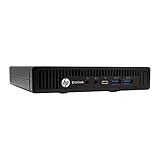
- This Certified Refurbished product is tested and certified to look and work like new. The refurbishing process includes functionality testing, basic cleaning, inspection, and repackaging. The product ships with all relevant accessories, a minimum 90-day warranty, and may arrive in a generic box. Only select sellers who maintain a high performance bar may offer Certified Refurbished products on Amazon.com
- Intel Quad-core i5-6500T up to 3.1G,16G DDR4 memory(2 slots,supports up to 32GB),240G SSD
- Includes USB Keyboard(English Keyboard & Mouse Included)
- I/O ports:Front:2 USB 3.0 ,microphone,headphone ,USB Type-C port Rear:4USB 3.0 ,VGA DP port,RJ-45
- Operating System:Win10Pro64bit
When was DNS created?
There is no single creation moment established by these historical sources. RFC 3467 describes DNS as evolving through design and initial implementation, rather than identifying one definitive year in which it was “created.” The enduring core specifications RFC 1034 and RFC 1035 were both published in November 1987. RFC 3467 is a later historical reconstruction, and it notes that some reasons behind the original design were not fully documented.
DNS is not one global phone book
A phone-book analogy can help: imagine a directory divided into branches, where one branch can direct a lookup onward instead of requiring everyone to download and maintain the same complete list. But DNS is a protocol and distributed data system, not a literal book or a central directory staffed by a clerk. Different name servers hold responsibility for different parts of the hierarchy, and resolvers follow answers or referrals as needed.
Also, “domain name” can be used in contexts that have no connection to DNS. In DNS, the term refers to a name within the DNS hierarchy; it does not mean that every use of the phrase refers to a DNS lookup.
Quick Recap
Product prices and availability are accurate as of the date/time indicated and are subject to change. Any price and availability information displayed on Amazon at the time of purchase will apply.

