
The Best Reverse Image Search Tools: 10 Top Picks depend on the job: Google Lens is the best first choice for everyday images, TinEye is strongest for exact copies and reuse history, and trace.moe, SauceNAO, IQDB, and face-search services handle narrower cases better. No single index proves an image’s origin, ownership, permission to reuse, or a person’s identity.
Reverse image search covers several different tasks: identifying an object, finding visually similar products, locating a larger or earlier copy, checking image reuse, identifying an anime screenshot, tracing fan art, and searching for a face. The ten tools below are ranked by those use cases rather than by a single claim that one service wins every query.
Key takeaways
- Google Lens is the best first choice for ordinary photos, objects, landmarks, plants, products, text, and screenshots.
- TinEye is the specialist choice for finding exact or altered copies, higher-resolution versions, image reuse, and possible earlier appearances.
- Bing Visual Search and Pinterest Lens are especially useful when a search involves products, shopping, visual similarity, or inspiration.
- trace.moe is for identifying an anime scene from a video screenshot, while SauceNAO and IQDB are better for anime artwork, manga pages, and fan art.
- A failed reverse image search does not prove that an image has no source, and a match does not automatically prove authorship, ownership, identity, or permission to reuse.
Which reverse image search tool should you use?
Choose the tool according to the question you are trying to answer rather than looking for one universal winner. Start with Google Lens for an unknown everyday image, use TinEye for exact-copy and reuse research, use Pinterest Lens or Bing for visual shopping, and switch to anime- or face-focused services when the image demands a specialist index.
| Tool | Best for | What the results can include | Main limitation or caution |
|---|---|---|---|
| Google Lens | Everyday images, objects, landmarks, plants, products, text, and screenshots | Object information, similar images, and pages containing the image | A strong visual match is a lead, not proof of ownership or origin |
| Bing Visual Search | Broad second opinions, products, shopping, and object identification | Similar images, products, pages using the image, and recipes | Results differ from Google because the service uses a different index |
| TinEye | Exact copies, altered copies, image history, higher-resolution versions, and reuse audits | Cropped, resized, edited, rotated, and other altered versions | It generally does not identify the subject or return merely similar pictures |
| Yandex Images | A general-purpose second opinion when other services produce little | Image and photo search results | The available documentation does not support precise current performance claims |
| Pinterest Lens | Style inspiration, clothing, décor, products, and shoppable discovery | Visually similar ideas, focused objects within a Pin, and merchant items where available | It is a discovery and shopping tool, not a forensic source-tracing engine |
| Lenso.ai | Categorized AI search for duplicates, places, people, similar images, and related images | Source-page links, filters, sorting, categories, and Research Mode results | Face-search availability depends on the reader’s region |
| PimEyes | Face-focused searches conducted for lawful, ethical purposes | Face-oriented image-search results and, through its OSINT product, investigative workflows | Use strong consent and privacy safeguards; do not use it to track or identify private strangers |
| SauceNAO | Anime, manga, illustrations, fan art, and artwork-source research | Possible artist, source post, manga page, or related illustration records | It is aimed at anime-related and illustration databases rather than ordinary photographs |
| IQDB | Anime-art searches across multiple image-board ecosystems | Matches from boards including Danbooru, Konachan, yande.re, Gelbooru, Sankaku Channel, and Zerochan | Coverage depends on whether the likely source belongs to one of its indexed boards |
| trace.moe | Identifying an anime show and scene from a screenshot | The show, episode, and scene time from indexed anime footage | Its documentation says it is not intended for anime-style artwork or wallpapers |
1. Google Lens: the best overall starting point
Google Lens is the best first attempt when you do not yet know whether an image shows an object, product, landmark, plant, text, or a person. Google’s documented desktop workflow supports uploading an image file, dragging and dropping an image, pasting an image URL, or searching with an image found on a webpage. Results may include information about an object, similar images, and webpages containing the image.
#1 Best Overall
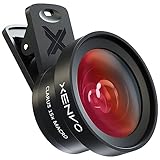
- ✔ COMPATIBLE WITH ALL SMARTPHONES, TABLETS, and LAPTOPS including ALL iPhone models, Samsung Galaxy and Note, Google Pixel, Huawei and more. CONTENTS INCLUDE: TruView 0.45x Wide Angle Lens, Clarus 15x Macro Lens, TruGrip Lens Clip, GlowClip Mini Rechargeable LED Light + Charging Cable, Quick-Release Lanyard, DuraCase, EasyClip, and Cleaning Cloth.
- ✔ TRUVIEW 0.45x WIDE ANGLE LENS - CAPTURE 45% MORE PICTURE WITH EVERY SNAP: Shoot stunning photos of people, pets, travel scenery, landscapes, architecture, selfies and more. NO DARK CORNERS (vignetting) like cheaper lenses. Crafted from aircraft-grade aluminum and premium optical glass for durability and clarity. Multi-element, coated glass lenses minimize ghosting, reflections, lens flare, and other artifacts. Xenvo cell phone lens attachment is ideal for hobbyists and photography pros alike.
- ✔ CLARUS 15x MACRO LENS - MARVEL YOUR SENSES. MAGNIFY NEARBY SUBJECTS FOR BREATHTAKING, SUPER CLOSE-UP PHOTOS: Capture all the intricacies and details with precision-focus for razor crisp macro photos every time. (For best results, position macro lens approximately 1/2 inch from subject. Not designed for zooming in on distant subjects.) THE TRUGRIP LENS CLIP offers SUPERIOR GRIPPING POWER to fasten your lenses to your cell phone when you're in action mode, framing your next perfect shot.
- ✔ GLOWCLIP RECHARGEABLE LED FILL LIGHT - The GlowClip LED light clips ANYWHERE on your phone to instantly illuminate your subject and surroundings with warm continuous light. The warm and natural LED light is superior to your smartphone's built in flash—which can be blinding and unnatural—especially in darker settings and venues. FEATURES 3 BRIGHTNESS SETTINGS: Low, Medium and High. Say goodbye to frustrating photo "retakes" and hello to brilliant photos the first time.
- ✔ QUICK-RELEASE LANYARD AND TRAVEL CASE - TRANSPORT AND PROTECT YOUR LENS KIT: Perfect for taking your Xenvo lenses with you on the fly. The travel case stores and protects all lens kit components snugly and safely while the quick-release lanyard is the perfect way to carry your lenses on your next outing. Just drape the lanyard and lens around your neck. The quick-release lanyard head makes it a cinch to access your Xenvo lenses in a flash so you never miss another photo moment.
Google Lens is the most practical default because it handles several kinds of questions in one place. A photograph of an unfamiliar appliance may produce object information and product pages; a landmark photo may return visually related locations; a screenshot may expose text or pages that contain the same image. A crop containing only the relevant object can produce a more focused result than a full screenshot with browser controls, captions, and unrelated background elements.
Use Google Lens first for:
- Unknown household objects, plants, animals, landmarks, and products.
- Images that contain readable text or screenshots from websites and apps.
- A quick search for pages that may contain the same image.
- A broad visual-similarity search before moving to a specialist service.
Google Lens is not a copyright-verification system. A page that appears in the results may be a later repost, an automatically generated page, or another copy rather than the original source.
2. Bing Visual Search: the best broad alternative
Bing Visual Search is the strongest general-purpose second choice, particularly when the image has a shopping or product-identification angle. Microsoft documents support for file uploads, image URLs, drag-and-drop input, and camera images. Results may include similar images, products, pages that use the image, and recipes.
Bing is worth trying after Google Lens because different search indexes can surface different pages. The product-oriented result types are useful for identifying clothing, furniture, kitchen equipment, electronics, food, and other objects. A camera input also makes Bing practical on a phone when the object is in front of you rather than already saved as a file.
Do these 3 things before closing this tab:
1Clear out junk files and repair common Windows errors2Fix the driver behind crashes, sound loss and screen glitches3Repair Windows errors before they cause bigger problemsUse Bing Visual Search when:
- Google Lens returns weak or overly broad results.
- You want comparable products or a shopping lead.
- The image shows food and a recipe result may be relevant.
- You want to compare pages using an image across a second major index.
Bing’s product results should still be treated as leads. A visually similar product is not necessarily the same model, and a page using an image is not necessarily the photographer’s original publication.
3. TinEye: the best tool for exact copies and image history
TinEye is the best choice when the question is “Where else has this image appeared?” rather than “What does this picture depict?” TinEye searches for exact and altered versions, including images that have been cropped, resized, edited, or rotated. TinEye documents uses such as finding possible first appearances, locating higher-resolution versions, tracking reuse, and supporting attribution research in its image-search documentation.
TinEye is materially different from Google Lens, Bing Visual Search, and Pinterest Lens. TinEye generally does not identify the subject of an image or return a different photograph merely because the different photograph shows the same object. TinEye is looking for image relationships and modifications, not just the same visual concept.
When is TinEye better than Google Lens?
TinEye is better when exact or near-exact reuse matters. A photographer checking whether a portfolio image was reposted, a publisher looking for a larger copy, or a researcher comparing image history should begin with TinEye and then use Google Lens or Lenso.ai as a second check.
Free tools Windows power users keep installed
One-click scans. No signup required.
Read the result pages critically. An older-looking result may not prove that the image originated there, because search indexes have different crawl dates and a page may display a copied image with incomplete metadata. Confirm the publication date, page ownership, surrounding text, author information, and the image file itself before calling a page the original source.
TinEye’s official FAQ also warns that most images found online remain protected by copyright. Finding a match does not grant permission to download, publish, sell, or modify the image. Contact the rights holder before reuse.
4. Yandex Images: a useful general-purpose second opinion
Yandex Images is worth testing when Google, Bing, and TinEye do not surface a useful match, but the supplied official documentation does not justify precise claims about current superiority or coverage. Yandex maintains an image and photo search service, making it a reasonable additional general-purpose query.
Rank #2
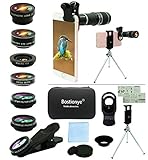
- ★11-in-1 most complete mobile camera lens kit★:Bostionye phone camera lens kit is perfect for exploring more advanced mobile photography and Videography.Includes 8 lenses:20 times telephoto lens,0.63X wide angle Lens, 15X Macro lens, 198°Fisheye lens, 2X telephoto lens,Kaleidoscopes, 4-line star filter, CPL Filter.Auxiliary equipment:universal clip, tripod, eyecup and Bostionye storage bag。 (Note: macro lens and wide angle lens are screwed together).
- ★With unique features★: 20x telephoto lens (fixed focus)-magnifies distant subjects and clearly presents long-distance vision. 198 ° fisheye lens-create interesting and unique circular mysterious effect pictures. 15x macro lens-Alignment lens for shooting flowers, insects and other small objects (optimal shooting distance: 1 to 3 inches).0.63X ultra wide-angle lens-capture a large field of view to get an amazing angle of view (The wide-angle lens should be used with a macro lens).
- ★Create surprise★:The unique functions of each small lenses can be seen in detail in the auxiliary picture display.tripod for easy shooting,An eyecup also allows you to use the telephoto lens as a monocular or a telescope.It is a good companion in the tourism industry and a favorite of animal observers.NOTE: It’s recommended to take off the phone case when using the lens since it may cause unstability while shooting.
- ★The kit is suitable for use on my phone?★:The lens kit works on 99% popular cell phones on the market. If the distance from the center of the camera(the phone has only one camera) or the main camera(two or more cameras) to any edge of your phone is less than 2.2cm, then the kit will work on your phone.How to know which is the main camera: block the camera one by one with the camera app on, the one you see a blockage there is the main camera.
- ★Best Gift Choice & 100% Satisfaction★:A phone lens kit that will provide you an extraordinary experience to capture wonderful moments in your life. The kit is fully equipped and packed in a storage box (can be carried by hand), this lens kit would be a very nice gift choice.Your satisfaction is the most important thing for us. Don’t be hesitate. Thrill your family and friends with Bostionye phone lens right now!
Use Yandex as part of a multi-engine workflow rather than as a guaranteed answer. Search indexes vary by provider, language, region, crawl history, and the kinds of sites they include. A result found by Yandex can be valuable evidence of another page using the image, but it should be verified using the same source-checking process applied to results from other engines.
5. Pinterest Lens: best for inspiration and shoppable discovery
Pinterest Lens is the best pick when the goal is to find similar ideas, styles, décor, clothing, or products rather than establish an image’s original publication. Pinterest’s documentation explains that users can search from an image, focus on an individual object within a Pin, and discover visually similar ideas. Similar items offered by merchants may appear where that feature is available.
The ability to focus on one object is especially useful for lifestyle photos. Instead of searching an entire room, select the chair, lamp, dress, or table that matters. Instead of uploading a whole outfit, isolate the garment whose style you want to reproduce. The resulting ideas can help with inspiration and shopping, but a similar item is not proof that it is the same brand, model, or product.
Pinterest Lens should not be the first choice for a forensic image-origin investigation. Pinterest is designed around visual discovery and saved ideas, so the strongest result may be a collection of similar content rather than a dated source page.
6. Lenso.ai: categorized AI reverse image search
Lenso.ai is useful when you want the search separated into categories such as duplicates, places, people, similar images, and related images. Lenso.ai documents source-page links, filters, sorting, and a Research Mode intended to search more deeply for additional results.
Category separation can make a difficult search easier to interpret. A duplicate result addresses a different question from a similar-image result; a place category is different from a people category; and a related result may be useful for discovery without being an exact copy. Keeping those categories separate reduces the risk of treating visual resemblance as proof of identity or image reuse.
Lenso.ai can complement TinEye in a reuse investigation. TinEye is designed around exact and altered copies, while Lenso.ai provides a broader categorized search that may expose related source pages or visually connected results. The services should be treated as complementary rather than interchangeable.
Face-search availability on Lenso.ai is region-dependent. Do not assume that every category or face-related feature is available to every reader in every country. Check the service’s current FAQ and local requirements before relying on a particular feature.
7. PimEyes: a specialist face-search option with serious privacy limits
PimEyes is a face-focused search service, not a default tool for ordinary reverse image searches. Its face-search focus makes it materially different from tools that primarily match objects, products, illustrations, or exact image files. PimEyes also publishes separate privacy and ethics material and offers an OSINT product for face-oriented investigative use.
Quick wins for a faster PC:
Fix the driver behind crashes, sound loss and screen glitchesFind Drivers →Repair Windows errors before they cause bigger problemsFix Now →Scan for outdated or missing drivers - takes under a minuteDriver Scan →The defensible use case is checking your own public image footprint or conducting an authorized investigation under applicable law and organizational policy. Do not use face-search tools to identify, track, profile, or expose a private stranger. A face match can be wrong, can link to an unrelated person with similar features, and can create serious privacy and safety consequences even when the image result looks convincing.
Before using a face-focused service, ask:
- Is the search about your own image or supported by the person’s explicit consent?
- Do you have a lawful and documented reason for the investigation?
- Are you prepared to verify a possible match through independent evidence rather than treating a face result as identification?
- Will you avoid publishing or sharing sensitive personal information discovered during the search?
Read PimEyes’ privacy and ethics guidance before using the service. A face-search result should never be presented as definitive identity evidence by itself.
Rank #3
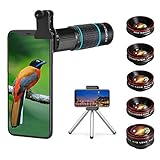
- ◆10-in-1 most complete mobile camera lens kit◆:Bostionye phone camera lens kit is perfect for exploring more advanced mobile photography and Videography.Includes 6 lenses:22 times telephoto lens,0.62 wide angle Lens, 25X Macro lens, 235°Fisheye lens,Kaleidoscopes, Starlight Filter.Auxiliary equipment:universal clip, tripod, eyecup and Bostionye storage bag。
- ◆With unique features◆: 235° fisheye lens-create interesting and unique circular mysterious effect pictures. 25x macro lens-Alignment lens for shooting flowers, insects and other small objects (optimal shooting distance: 1 to 3 inches).0.62ultra wide-angle lens-capture a large field of view to get an amazing angle of view..Kaleidoscope lens: For example, if you shoot at a small angle, you will see another flower pattern.Starburst Lens: like"stars,"streaking outward from a central light source.
- ◆High quality◆: Bostionye mobile phone lens kit: The professional HD lens adopts industrial-grade aluminum and advanced optical glass lens design, which can provide you with a clear lens and reduce glare and reflection. So you can take photos with amazing clarity and detail while being confident that they will last forever. Shooting artwork pictures by using your smartphones with our phone camera lens kit,enjoy the technical image effect.
- ◆The kit is suitable for use on my phone?◆:The lens kit works on 99% popular cell phones on the market. If the distance from the center of the camera(the phone has only one camera) or the main camera(two or more cameras) to any edge of your phone is less than 2.2cm, then the kit will work on your phone.How to know which is the main camera: block the camera one by one with the camera app on, the one you see a blockage there is the main camera.
- ◆Best Gift Choice & 100% Satisfaction◆:A phone lens kit that will provide you an extraordinary experience to capture wonderful moments in your life. The kit is fully equipped and packed in a storage box (can be carried by hand), this lens kit would be a very nice gift choice.Your satisfaction is the most important thing for us. You could still reach out to us even the return window of Amazon has been closed. Don’t be hesitate. Thrill your family and friends with Bostionye phone lens right now!
8. SauceNAO: best for anime, manga, fan art, and illustrations
SauceNAO is the specialist choice when the image is anime artwork, manga, fan art, or another illustration and you want to locate its source. SauceNAO is positioned as an image-source locator connected to anime-related and illustration databases.
Use SauceNAO to look for an artist, source post, manga page, or original artwork record. Crop away unrelated browser chrome, subtitles, borders, and comments before searching. An artwork crop that preserves the distinctive character, composition, or artist signature is usually a more useful input than a screenshot of an entire social-media page.
SauceNAO is not the right first choice for a conventional photograph of a product, landscape, or household object. Start with Google Lens, Bing Visual Search, or TinEye for those cases.
9. IQDB: best for multi-board anime-art lookup
IQDB is useful when the likely source belongs to an anime or manga image-board ecosystem. IQDB searches across multiple anime and manga image boards, including Danbooru, Konachan, yande.re, Gelbooru, Sankaku Channel, Zerochan, and others.
IQDB’s value is its multi-board approach. If you suspect that a cropped anime illustration came from a tagged image-board community, a single-board search may miss it while a multi-service lookup can identify a matching post or related record. Results still depend on whether the relevant board is indexed and whether the image has been altered enough to evade a match.
Use IQDB alongside SauceNAO for artwork. Use trace.moe instead when the input is a frame from an anime episode rather than a standalone illustration.
PC Slower Than It Used to Be?
A free scan shows the junk files, broken settings and background clutter dragging Windows down - then fixes them in one click.Free scan · Windows 10 & 11Outdated Drivers Are Slowing You Down
One free scan finds every outdated or missing driver and matches the right update for your exact hardware.Free scan · exact hardware match10. trace.moe: best for identifying an anime scene from a screenshot
trace.moe is the best specialist tool for identifying an anime scene from a screenshot. The service searches indexed anime footage and can report the show, episode, and scene time.
trace.moe is designed for video frames, so select a clean frame from the episode. A screenshot with subtitles, a playback bar, or a large watermark may be harder to match; cropping to the actual scene can help. Once trace.moe identifies a title, check legal streaming availability in your region because licensing and catalog availability vary by country and date.
Do not use trace.moe for anime-style artwork or wallpapers. Its own documentation specifically distinguishes those cases from anime footage. Send a standalone illustration, manga page, or fan-art image to SauceNAO or IQDB instead. See trace.moe’s documentation for the service’s intended use and limitations.
What is the difference between exact-copy search, visual similarity, and source lookup?
Exact-copy search looks for the same image or an altered version, visual-similarity search looks for images depicting similar content, and source lookup uses a specialist index to connect an image with a page, artwork record, or video scene. These categories overlap, but they answer different questions.
The Tool Desk
Outbyte PC Repair FREEClear out junk files and repair common Windows errorsFree Scan →Outbyte Driver Updater FREEFix the driver behind crashes, sound loss and screen glitchesFind Drivers →| Search objective | Start with | Why | Use a second service when |
|---|---|---|---|
| Identify an unknown object, plant, landmark, product, or text | Google Lens | It can return object information, similar images, and pages containing the image | Try Bing Visual Search if the result is too broad or lacks useful product pages |
| Find exact copies, altered copies, or a higher-resolution version | TinEye | It searches cropped, resized, edited, rotated, and other altered versions | Compare with Google Lens or Lenso.ai for broader related pages |
| Find similar clothing, décor, products, or style ideas | Pinterest Lens | It focuses on visual discovery, similar ideas, and merchant items where available | Use Bing Visual Search for a broader product-oriented alternative |
| Identify an anime episode from a video frame | trace.moe | It can report the show, episode, and scene time | Use another tool only if the input is actually artwork or the frame is too obstructed |
| Find an anime illustration, manga page, or fan-art source | SauceNAO and IQDB | They target illustration databases and anime image-board ecosystems | Try both because their indexed sources and matches can differ |
| Search for a face | PimEyes or Lenso.ai where available | These are face-focused or face-capable specialist services | Only proceed for lawful, ethical, consent-based, or authorized purposes |
How should you search a difficult image?
A difficult image is best handled by cleaning the input, searching the broad indexes first, then switching to a service built for the image’s subject. The following workflow avoids overinterpreting a single weak result.
Rank #4
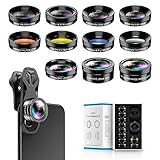
- 📷【11 IN 1 DETACHABLE LENS】:This perfect phone camera lens kit including ND32 filter,kaleidoscope lens,CPL filter,star filter,Fisheye Lens four Grad color lens(Blue, Gray, yellow,orange) for your daily photography use and make your photography more creative. 140°Super wide Angle Lens + Update MACRO Lens show you an wide angle view & a clear photo in detail from the target object.
- 📷【Newly Designed Grad Color Lens】: Four color lens set can give you diversity of creativity. Perfect for changing the mood of a picture. Great for photographing the sky, the sunset, the rosy cloud, the lake water, Take your best coral reef tank photos yet! The smartphone lens filters optimize colors to make your beautiful aquarium colors
- 📷【HIGH QUALITY CELL PHONE LENS】:Very professionally manufactured product made from aluminum,not cheap plastic,to increase the durability of the product,Put the clip install on phone camera and make sure the lens is aligned with phone camera lens. Shooting artwork pictures by using your smartphones with our phone camera lens kit,enjoy the technical image effect.
- 📷【EASY TO USE】Universal detachable clamp design,Just clip on the camera lens with the clamp and make sure the lens is aligned with phone main camera lens. Just a few seconds then to make your phone act more like a professional camera.Let's our smart lens kit for cell phone bring you into a stunning fantasy world.
- 📷【UNIVERSAL COMPATIBILITY & USE GUIDE】: Universal detachable clamp design,work with all kinds of smartphones and tablets, including iPhone 8,7,6,6 plus,6s,6s plus,Samsung Galaxy, iPad and other smartphone like Samsung, Huawei, Sony, LG, xiaomi and many others.
- Keep the original file. Preserve the unmodified image so you can compare later results with the original and retain any visible metadata or context.
- Make a focused crop. Remove borders, browser controls, social-media interface elements, unrelated people, and large areas of empty background. For a product photo, crop around the product; for an artwork, preserve the distinctive illustration; for an anime screenshot, keep the scene frame.
- Run Google Lens. Use an upload, drag-and-drop image, image URL, or webpage-image workflow supported by Google. Record the useful result pages instead of assuming the first visual match is the source.
- Run Bing Visual Search. Use the second index when Google misses the image, when product results matter, or when you want to compare similar pages and objects.
- Use TinEye for reuse questions. Search for exact and altered copies when the concern is theft, reposting, image history, or a larger version.
- Choose a specialist. Use Pinterest Lens for visual inspiration, Lenso.ai for categorized duplicate or related-image research, trace.moe for an anime video frame, SauceNAO or IQDB for anime artwork, and a face-focused service only for a lawful and ethical purpose.
- Try a second crop. A full image and a subject-only crop can lead to different results. For a screenshot, search both the complete frame and a crop without subtitles or interface elements.
- Verify the strongest lead. Check the page date, author, surrounding text, image dimensions, visible credits, and whether the page appears to be reposting another source. Save the relevant URLs and screenshots if the search supports an attribution or reuse investigation.
Why does one reverse image search find a result while another finds nothing?
Different services search different indexes and optimize for different kinds of matches, so a failed result from one provider does not establish that an image has no online source. TinEye emphasizes exact and altered copies; Pinterest emphasizes visual similarity and shopping; trace.moe searches indexed anime scenes; IQDB searches selected anime-image boards; and Lenso.ai organizes results into categories such as duplicates, places, people, and related images.
An image may also fail because the source page is not indexed, the image was recently published, the file was heavily edited, the crop is poor, the original page is inaccessible to the service, or the likely source belongs to a different language or image-board ecosystem. Search again with a clean crop and a different service before concluding that the image is untraceable.
What can reverse image search prove?
Reverse image search can provide leads about matching pages, similar images, possible image history, artwork sources, or anime scenes, but a result is not automatic proof of authorship, ownership, identity, or permission to reuse.
Recommended Free Tools
For an image-reuse investigation, separate the questions:
- Does another page contain the same or an altered image? TinEye is the most directly relevant starting point.
- Which page appeared first in the available search results? Search dates can provide a lead, but they do not automatically prove when the image was created or who first owned it.
- Who owns the copyright? A reposted page, image filename, watermark, or search result does not by itself establish ownership.
- Can the image be reused? Usually not without permission or a valid license, even if a search engine makes the image easy to find. TinEye’s copyright guidance says users should contact the owner before reuse.
- Is a person identified by a face result? A face-search result is not conclusive identity evidence and should not be used to expose or track a private individual.
Privacy and responsible-use checklist
Use ordinary image search for objects and sources, but apply much stronger safeguards when an image contains a face or sensitive personal information.
- Do not search for or publish the identity of a private person merely because a face-search tool returns a possible match.
- Use face-focused services only for your own public-image audit, with consent, or for a lawful and authorized investigation.
- Crop out unrelated faces, documents, addresses, account names, and private messages before uploading an image when those details are not needed.
- Do not treat a visually similar result as confirmation that two people, products, or locations are the same.
- Do not download or republish a found image just because a search engine located it.
- For professional reuse audits, maintain a record of the search date, service, query image, result URL, publication date, and the evidence connecting the image to the rights holder.
When do creators need commercial image monitoring?
Creators, publishers, photographers, rights holders, and researchers who need recurring reuse checks should evaluate commercial image-monitoring software or a reverse-image-search API rather than relying only on one-off consumer searches. TinEye documents image-origin, reuse, higher-resolution, and attribution use cases, while Lenso.ai documents duplicate and source research together with API availability. Current pricing, coverage, access rules, and any partner program should be verified directly before choosing a commercial service.
A practical decision rule
Use this short rule when you want the fastest sensible choice:
What’s actually slowing this PC down?
Pick the symptom - the matching free tool is one click away.
- “What is this?” Start with Google Lens.
- “Where else was this exact image used?” Start with TinEye.
- “What similar product or style is this?” Try Pinterest Lens, then Bing Visual Search.
- “Which anime is this frame from?” Use trace.moe.
- “Who made this anime illustration or where was it posted?” Use SauceNAO and IQDB.
- “Where does my own face appear publicly?” Consider a face-focused service only with appropriate privacy and legal safeguards.
- “Why did nothing appear?” Crop the image, remove interface clutter, and search a different index.
The best workflow is usually not one tool but two complementary searches: a broad engine to identify the subject or related pages, followed by a specialized service to test exact reuse, artwork origin, anime-scene identity, shopping similarity, or another narrower question.
Frequently Asked Questions
Which reverse image search tool is best for finding the original source?
TinEye is the best starting point for finding exact or altered copies, possible earlier appearances, image reuse, and higher-resolution versions. Google Lens or Lenso.ai can complement TinEye by searching for broader related pages, objects, or categorized results.
Can reverse image search identify a person?
Ordinary reverse image search does not reliably establish a person’s identity. Face-focused services such as PimEyes or Lenso.ai should be used only for your own public-image audit, with consent, or during a lawful and authorized investigation; a face match is not conclusive evidence.
What should I do if reverse image search finds nothing?
A failed search means only that the particular service did not return a useful indexed result. Crop the relevant subject, remove borders and interface elements, try the original and a clean crop, and search a different index such as Google Lens, Bing Visual Search, TinEye, or a relevant specialist service.
What is the best reverse image search for anime screenshots and artwork?
Use trace.moe for a screenshot taken from anime footage because trace.moe can identify the show, episode, and scene time. Use SauceNAO or IQDB for anime illustrations, manga pages, and fan art instead; trace.moe is not intended for anime-style artwork or wallpapers.
The Bottom Line
Bottom line: Google Lens is the best first reverse image search for most people, but TinEye is better for exact copies and image history, Pinterest Lens and Bing are better for visual shopping, and trace.moe, SauceNAO, IQDB, Lenso.ai, and PimEyes serve narrower purposes. Treat every result as a lead, verify the source, and respect privacy and copyright.
Quick Recap
Product prices and availability are accurate as of the date/time indicated and are subject to change. Any price and availability information displayed on Amazon at the time of purchase will apply.

