
Use a hacker-style approach to answer uncertain questions quickly when the cost of failure is low and the work is disposable. Use engineering discipline when software affects customers, money, sensitive data, security, uptime, or long-term operations. The key is not choosing an identity: it is choosing the right level of rigor for the software’s risk and lifespan—and making a deliberate transition when an experiment succeeds.
What separates the engineer and hacker mindsets?
The everyday choice is often framed as “build it properly or make it work now.” A hacker-style approach asks what can be made possible quickly with the tools at hand. It is useful for experiments, rough demonstrations, temporary integrations, and learning whether an idea can work.
An engineering approach asks whether the solution can be understood, tested, operated, modified, and trusted later. It emphasizes explicit requirements, documented assumptions, automated verification, code review, security, observability, deployment and rollback plans, and dependency management.
These are working modes, not permanent identities. An infrastructure engineer may write a quick diagnostic script during an outage; a founder who normally improvises may need formal testing when a product starts handling payments or customer data. Context—not job title—should determine the approach.
Recommended Free Tools
#1 Best Overall

- BUILD LARGER BREADBOARD CIRCUITS - Create LED indicators, button inputs, traffic-light sequences, light-activated circuits, RGB effects, buzzer alarms and other electronics experiments on the included 830-point breadboard
- 300+ PARTS FOR REPEATABLE EXPERIMENTS - Includes an 830-point solderless breadboard, power module, rigid and solderless jumper wires, Dupont wires, potentiometer, LEDs, resistors, capacitors, diodes, transistors, buttons and buzzers
- LEARN HOW CORE COMPONENTS WORK - Use the 74HC595 to expand outputs, the 4N35 optocoupler to explore signal isolation, PN2222 transistors to switch compatible loads and 1N4007 diodes for polarity-protection and rectification experiments
- POWER AND REWIRE PROJECTS QUICKLY - Use the breadboard power module for selectable 3.3 V or 5 V rails, with ample board space for ICs and multi-stage circuits; use a suitable 6.5–9 V DC input and do not exceed 9 V
- COMPONENT KIT WITH CLEAR EXPECTATIONS - A controller board, programming cable and wall adapter are not included; use a compatible controller for coded projects and follow the digital tutorial, datasheets and wiring guidance
How do you decide which approach fits?
Assess uncertainty and the consequences of failure together. A quick experiment makes sense when the main danger is spending time on the wrong idea. Engineering rigor becomes more important as the consequences of a defect or outage grow.
| Decision factor | Hacker mode | Engineer mode |
|---|---|---|
| Primary goal | Learn quickly and test whether something is possible | Deliver a dependable, maintainable capability |
| Uncertainty | High; key assumptions still need testing | Lower or bounded; requirements are understood well enough to build and support |
| Expected lifespan | Disposable or explicitly time-boxed | Long-lived and supported |
| Impact | Internal use or a limited pilot | Customer-facing or business-critical |
| Controls | Minimal, with clear limits | Testing, review, monitoring, security controls, and rollback |
| Main risk | Building the wrong thing too slowly | Fragility, outages, security exposure, and maintenance debt |
Choose a prototype when uncertainty is the main risk
Use a fast, rough implementation to validate whether users want a feature, whether an unfamiliar API supports a workflow, whether a data source is useful, or whether a technical idea is feasible. Keep the experiment tied to a specific question; avoid investing in polish before the answer matters.
Rank #2
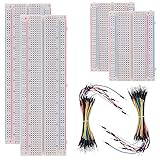
- BOJACK high quality Solderless Breadboard Assortment Kit
- Breadboard is a solderless device for temporary prototype with electronics and test circuit designs. Most electronic components in electronic circuits can be interconnected by inserting their leads or terminals into the holes and then making connections through wires where appropriate.
- The breadboard has strips of metal underneath the board and connect the holes on the top of the board. Note that the top and bottom rows of holes are connected horizontally and split in the middle while the remaining holes are connected vertically.
- The Breadboards Can be Spliced According to the Unit, the Structure is Clear in Color.
- Material: ABS Plastic Panel, Tin Plated Phosphor Bronze Contact Sheet.
Give the prototype a clear owner, limited scope, and expected lifespan. Label it as experimental and isolate it where practical so that users or other systems do not mistake it for supported production software.
Choose engineering discipline when failure has real consequences
Raise the bar when customers depend on the system; it handles revenue, sensitive data, or permissions; it is subject to compliance obligations; it must meet uptime expectations; multiple teams rely on it; or it is expected to run for years. At that point, testing, ownership, observability, documentation, rollback behavior, and dependency review are part of delivering the capability—not optional polish.
Do these 3 things before closing this tab:
1Clear out junk files and repair common Windows errors2Scan for outdated or missing drivers - takes under a minute3Repair Windows errors before they cause bigger problemsRank #3
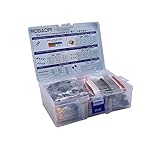
- All products are tested for stability, consistency and reliability,Ensure product excellence
- Save time with this handy box full of the most practical and common electronic components
- Easy to store: Each different component is packaged in a plastic bag, Resistors values are stamped with the according value
- Electronic components set include: diodes, resistors, transistors, LED diodes, electrolytic capacitors, ceramic capacitors
- Electronics component kit: This is a great assortment of components for electronic professionals or enthusiasts
What should change as a prototype becomes a product?
Use visible transition gates instead of letting an experiment drift into production. The controls should grow with the system’s reach and the cost of a failure.
Prototype: make its limits visible
- Label it as a prototype and identify an owner.
- Define its scope and expected lifespan.
- Set an expiration date or a decision point to rewrite, extend, or discard it.
- Keep it isolated from important production systems where possible.
Pilot: prepare for limited real-world use
- Add basic monitoring and a way to roll back changes.
- Protect data and document known limitations.
- Set support expectations and make ownership clear.
Production: make it supportable
- Use maintainable design and automated checks.
- Review security and dependencies.
- Provide operational runbooks, alerts, capacity planning, and a clear support path.
How do you stop a successful hack from becoming a liability?
The common failure is not prototyping; it is allowing a prototype to become production software without acknowledging the change. A weekend script can be a sensible way to test demand. It becomes a different risk when it starts handling customer data, payments, permissions, or operational dependencies.
Rank #4

- Complete and practical package: The package contains more than 400 components, which can help you complete interesting and simple electrical experiments.
- Clear and sturdy packaging: Each component is classified and packaged and placed in a transparent box with clear labels on it, making it easy to find components.
- Humanized design: The package includes a power module and a USB data cable, and the components can be directly plugged into the breadboard, which is more convenient without soldering.
- The quality of components is reliable.
- Compatible with STM32,Raspberry Pi,Arduino and so on.
When an experiment succeeds, schedule time to convert it before expanding its role. Remove brittle shortcuts, add tests and error handling, document assumptions, and make deployment simpler and safer. Decide who will own and support the result. If the experiment is not worth that investment, keep it isolated or retire it rather than silently depending on it.
Independent reader supportYour contribution helps us test, update, and keep practical guides available for everyone.How should teams balance speed and maintainability?
Optimize for learning early and dependable change later. A prototype should answer a bounded question with the least effort needed to get a useful answer. Once the team has evidence that the idea works and people or business operations depend on it, prioritize maintainability and operational safeguards.
Best Value

- 35+ Guided Electronics Projects: Progress from LEDs and buttons to RFID access, real-time clocks, motion and distance sensing, environmental monitoring, motor control and interactive displays for STEM learning, coding clubs and maker projects
- More I/O and Memory for Larger Builds: The MEGA 2560 R3 provides 54 digital I/O pins, including 15 PWM outputs, 16 analog inputs, 4 hardware serial ports and 256 KB flash for projects that combine more sensors, controls and displays
- 200+ Components for Prototyping: Includes LCD1602, RC522 RFID, RTC, DHT11, HC-SR501 PIR, ultrasonic and water-level sensors, GY-521, MAX7219, keypad, joystick, rotary encoder, relay, SG90 servo, stepper motor, DC motor, breadboard and more
- Learn, Modify and Create: Follow 35+ guided lessons with example code, then adjust sensor thresholds, timing, display text, motor behavior and control logic to turn structured exercises into access systems, monitors, alarms and interactive projects
- Organized for Repeatable Learning: Pre-soldered modules, a solderless breadboard, storage case and small-parts box reduce setup time and keep sensors, LEDs, ICs, wires and other components easy to find between projects
This is not a choice between experimentation and engineering. Teams can preserve rapid discovery by keeping experiments small and time-boxed, while reserving explicit conversion time for the ideas that prove valuable. The decision should follow the software’s consequences and expected lifespan, not a blanket rule to move fast or to engineer everything as if it were permanent.
Quick Recap
Product prices and availability are accurate as of the date/time indicated and are subject to change. Any price and availability information displayed on Amazon at the time of purchase will apply.

