
iTechGuides is reader-supported. When you buy through links on our site, we may earn an affiliate commission. As an Amazon Associate I earn from qualifying purchases. Learn more
There is no universally most reliable or cheapest power technology. Natural gas offers dispatchable output and fast ramping; nuclear supplies firm, low-emissions generation; wind and solar provide modular, low-carbon energy but vary with weather. A dependable low-carbon grid usually combines resources with the right mix of storage, transmission, demand response and other firm capacity for its local demand and weather.
The decision in one view
Reliability is a system property, not a label attached to one plant. A gas turbine can start or increase output when demand rises, but its fuel supply and emissions exposure matter. A nuclear unit can run continuously for long periods with very low operational greenhouse-gas emissions, yet new projects require substantial financing, licensing and construction time. Wind and solar have no fuel combustion and low lifecycle emissions, but their output follows weather rather than the dispatch order of the grid.
| Resource | Output behavior | Main emissions issue | Key cost exposure | What a reliable system must add |
|---|---|---|---|---|
| Natural gas | Dispatchable; useful for ramping, reserves and firm capacity | Combustion carbon dioxide and possible methane leakage in extraction and transport | Regional gas prices, carbon prices and fuel infrastructure | Fuel-delivery resilience, emissions controls and a plan for future carbon constraints |
| Nuclear | Firm generation that can supply steady output | Low lifecycle greenhouse-gas emissions; radioactive-waste and safety management remain obligations | Up-front capital, financing, licensing, construction and decommissioning | Long-term governance, cooling-water planning, grid connection and waste arrangements |
| Wind | Variable output determined by wind conditions | Low lifecycle greenhouse-gas emissions | Transmission, balancing and weather correlation with other projects | Transmission, storage, demand response and firm resources for low-wind periods |
| Solar | Variable output, concentrated in daylight and affected by clouds and season | Low lifecycle greenhouse-gas emissions | Transmission, storage and the value of output outside sunny hours | Storage, flexible demand, transmission and firm capacity for nights and prolonged cloudy weather |
What “reliable” means for a power system
Two questions are often mixed together. Resource adequacy asks whether enough capacity and energy exist during the highest-demand or lowest-supply conditions. Flexibility asks whether the system can change output or demand quickly enough when conditions change. A portfolio can have ample annual energy yet fail during a winter evening, a heat wave or a multiday period of weak wind and limited sunlight.
Natural gas: dispatchable flexibility
Gas-fired generators can be scheduled to meet demand and can ramp output to follow changing load or compensate for a sudden decline in renewable production. That makes them useful for reserves, peak periods and balancing. Their reliability is conditional: pipelines, storage facilities and fuel contracts must continue operating, and generators may face fuel-price spikes or supply interruptions. Burning gas also produces carbon dioxide, while leakage before combustion can add methane emissions. The amount of leakage varies by supply chain, so a plant-level electricity cost does not reveal its full climate impact.
#1 Best Overall

- Whole House Protection: Keep your family comfortable and connected during power outages. Avoid the disruption of losing refrigeration, heating/cooling, lights and connectivity of your devices with a Home Standby Generator that automatically detects an outage and delivers backup power to your home.
- Lowest Total Cost Of Ownership: Electronic fuel & ignition control optimizes fuel use for a more cost-efficient and lower emission back-up power solution* and financing options that offer you solutions that meet your budget *On average versus Generac Guardian Series standby generators
- Remote Monitoring & Control: Built-in Cellular Connectivity allows you to monitor performance and control your generator with Mobile Link app whether you're home or away. Provides real-time updates and maintenance alerts right on your device.* *Requires Mobile Link premium subscription
- Superior Reliability: Oil level sensors monitor oil level to help ensure generator readiness, support in cold climates with improved cold start performance and sloped roof & rear intake to reduce risk of ice or snow intrusion
- Compatible with the Generac Home Energy Ecosystem: Compatible with ecobee by Generac thermostats and Generac PWRcell battery systems to seamlessly monitor & control your home’s energy. Reviews on this project may contain feedback based on the 14 kW Generac Guardian Home Standby Generator.
Nuclear: firm energy
Nuclear plants are designed to provide firm generation, meaning their output is available independently of daily wind and sunlight conditions. Existing units can support a grid with high renewable shares by supplying steady energy while flexible resources respond to short-term changes. A nuclear plant is not a substitute for every type of flexibility: maintenance outages, transmission limits and unplanned shutdowns still need contingency planning. New projects also expose utilities to long schedules and financing risk before the first kilowatt-hour is sold.
Wind and solar: variable but predictable within limits
Wind and solar forecasts allow operators to plan, but forecasts cannot guarantee output at a specific hour. Solar production falls every evening and can be reduced by clouds or snow; wind output can be low over a broad region at the same time. Geographic diversity, stronger transmission and combining wind with solar can smooth some variation, but they do not eliminate the need to cover extended low-renewable events.
Why high renewable shares need a portfolio
At high wind and solar shares, reliability requires a combination of storage, transmission, demand response and firm generation. The International Energy Agency and the OECD Nuclear Energy Agency state: “The lack of reliability requires either dispatchable back-up or, alternatively, flexibility options such as storage or demand response to ensure security of supply at all times.” Read the full methodology in Projected Costs of Generating Electricity 2020.
Rank #2

- Whole House Protection: Keep your family comfortable and connected during power outages. Avoid the disruption of losing refrigeration, heating/cooling, lights and connectivity of your devices with a Home Standby Generator that automatically detects an outage and delivers backup power to your home.
- Lowest Total Cost Of Ownership: Electronic fuel & ignition control optimizes fuel use for a more cost-efficient and lower emission back-up power solution* and financing options that offer you solutions that meet your budget *On average versus Generac Guardian Series standby generators
- Remote Monitoring & Control: Built-in Cellular Connectivity allows you to monitor performance and control your generator with Mobile Link app whether you're home or away. Provides real-time updates and maintenance alerts right on your device.* *Requires Mobile Link premium subscription
- Superior Reliability: Oil level sensors monitor oil level to help ensure generator readiness, support in cold climates with improved cold start performance and sloped roof & rear intake to reduce risk of ice or snow intrusion
- Long Term Assurance: Every Generac Standby Generator comes with a 5-year limited warranty and 24/7/365 customer support
The required combination depends on the duration of the event. A battery rated for four hours can cover an evening ramp or a short outage, but it cannot by itself guarantee supply through several windless, cloudy days unless it is paired with additional energy capacity or another source. Demand response can move activities such as water heating, industrial processing or vehicle charging, but it cannot shift loads that must run continuously. Transmission can import power from a less-affected area, provided that area has surplus energy and the lines have available capacity.
Lifecycle climate impact
Comparing only the emissions at a power plant’s stack misses important differences. Lifecycle accounting includes construction materials, fuel extraction and processing, transport, plant operation, maintenance and end-of-life activities. The IPCC Sixth Assessment Report, Working Group III, Chapter 6, and the International Atomic Energy Agency’s Climate Change and Nuclear Power publication identify nuclear, wind and solar as having much lower lifecycle greenhouse-gas emissions than unabated fossil generation.
Gas emissions include more than combustion
When natural gas is burned, its carbon becomes carbon dioxide. Methane can also escape during extraction, processing and transport. Because methane is a potent greenhouse gas, leakage can materially change the climate comparison, especially when gas supply chains are poorly measured or controlled. Any assessment should state whether it uses measured or assumed leakage rates and whether it covers the complete fuel pathway.
Rank #3

- Whole Home Backup Power: Delivers 14kW of reliable, automatic backup power to keep essentials running during outages.
- Dual Fuel Flexibility: Operates on natural gas or propane to suit your home’s setup and fuel availability.
- Easy Monitoring: User-friendly LCD control panel provides real-time updates in multiple languages.
- Quick & Simple Installation: Includes a composite mounting pad that installs directly on soil - no concrete base needed.
- Built to Withstand the Elements: Durable all-weather aluminum enclosure with enhanced locks protects against harsh conditions.
Nuclear, wind and solar have low lifecycle emissions
Nuclear, wind and solar avoid combustion during generation. Their lifecycle emissions arise mainly from mining or manufacturing, construction, maintenance, fuel processing for nuclear and decommissioning. “Low lifecycle emissions” does not mean zero impact: each technology still has material, land, water and supply-chain requirements that should be evaluated locally.
Costs: why a single “cheapest” answer misleads
Levelized cost of electricity (LCOE) is a plant-level measure that spreads construction, financing, operating and fuel costs over expected generation. It is useful for comparing similar projects, but it does not capture every transmission upgrade, balancing service, reliability requirement, fuel-security risk or environmental externality. A technology with a low LCOE can require expensive system additions when its output does not coincide with demand.
| Cost question | Natural gas | Nuclear | Wind and solar |
|---|---|---|---|
| Capital exposure | Usually lower up-front capital than a large nuclear project, but project-specific and not stated as a universal amount | High up-front capital; financing costs and schedule overruns can dominate total cost | Modular projects can be added incrementally; grid connection and transmission may be significant |
| Operating and fuel exposure | Fuel is a continuing cost and varies by region; carbon prices can add to operating cost | Fuel is a smaller share of lifetime cost than construction and financing for many projects | No fuel purchase for wind or solar generation; balancing and network costs remain |
| System costs outside LCOE | Fuel infrastructure, emissions controls and reserve operation | Grid connection, safety oversight, waste management and decommissioning | Storage, transmission, curtailment, forecasting and firm capacity |
Nuclear lifetime extensions
Keeping an existing nuclear plant operating can avoid much of the cost and schedule risk of building a new reactor. The IEA’s Nuclear Power and Secure Energy Transitions projects capital costs of USD 500–1,100 per kW in 2030 for most nuclear lifetime extensions and a generally below-USD-40-per-MWh levelized cost for those extensions. These are scenario-based projections from 2022, not observed 2026 market prices. Conditions, safety requirements and refurbishment scope differ by plant.
Rank #4
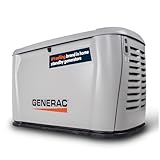
- Whole House Protection: Keep your family comfortable and connected during power outages. Avoid the disruption of losing refrigeration, heating/cooling, lights and connectivity of your devices with a Home Standby Generator that automatically detects an outage and delivers backup power to your home.
- Lowest Total Cost Of Ownership: Electronic fuel & ignition control optimizes fuel use for a more cost-efficient and lower emission back-up power solution* and financing options that offer you solutions that meet your budget *On average versus Generac Guardian Series standby generators
- Remote Monitoring & Control: Built-in Cellular Connectivity allows you to monitor performance and control your generator with Mobile Link app whether you're home or away. Provides real-time updates and maintenance alerts right on your device.* *Requires Mobile Link premium subscription
- Superior Reliability: Oil level sensors monitor oil level to help ensure generator readiness, support in cold climates with improved cold start performance and sloped roof & rear intake to reduce risk of ice or snow intrusion
- Long Term Assurance: Every Generac Standby Generator comes with a 5-year limited warranty and 24/7/365 customer support
The IEA and OECD Nuclear Energy Agency’s 2020 cost study covered 243 power plants in 24 countries. Its results illustrate why financing assumptions, plant age, construction conditions and national regulation must accompany any cost number; they do not establish a universal ranking for every market.
Gas costs move with fuel and policy
A gas plant’s economics can change quickly when regional gas prices rise or when a carbon price is introduced or increased. A plant with inexpensive construction may still have high lifetime costs if it runs often during expensive fuel periods. Conversely, a plant that runs only for peaks may provide valuable capacity even when its annual energy output is modest.
Recommended Free Tools
Renewable project costs are not the whole bill
Wind and solar projects avoid fuel-price volatility, but their value depends on when and where they produce. Curtailment occurs when generation exceeds what the grid or local demand can absorb. Batteries, transmission and flexible demand can raise the useful value of renewable energy, while also adding capital and operating costs that a generator-only LCOE comparison omits.
Best Value

- Remote Monitoring Anywhere: With Generac 7225 14kW Mobile Link Wi-Fi connectivity, effortlessly track generator performance from anywhere. Stay updated on status and maintenance alerts, ensuring peace of mind even when you’re away
- Whole House Protection: Keep your home powered during outages with Generac’s 200 Amp transfer switch, designed for seamless integration with whole house generators. Its durable aluminum enclosure ensures reliable outdoor use and coverage
- Long-Term Assurance: Backed by a 5-Year Limited Warranty, this automatic transfer switch delivers lasting performance and peace of mind, ensuring your investment in a Generac transfer switch will serve you well for years
- High-Quality 14kW Power: True Power Technology delivers clean, stable 14,000 watts with under 5% harmonic distortion. Generac’s low-maintenance engines run quieter and use less fuel for efficient, reliable home power
- Crafted for Excellence: Proudly engineered and assembled in the USA, our generators stand as testament to quality and craftsmanship. The purpose-built G-Force Engine is designed to handle the demands of usage, ensuring reliability and reduced maintenance
Construction speed and modularity
Gas projects
Gas generation is commonly selected when a system needs dispatchable capacity on a shorter development path than a new nuclear project. Actual timing depends on permitting, equipment availability, pipeline capacity, interconnection studies and local environmental rules. A fast project is not automatically a good long-term choice if fuel or emissions constraints are likely to tighten during its operating life.
Nuclear projects and existing units
New nuclear projects require site selection, licensing, detailed engineering, financing, construction, commissioning and a durable plan for safety and waste management. Those steps make development schedules long and sensitive to delay. Extending an existing plant can be more modular from the system’s perspective because the site, grid connection and operating organization already exist, although inspections and major component replacement can still be substantial.
Wind, solar and batteries
Wind and solar are modular: developers can add projects in stages rather than waiting for one very large plant. The practical bottleneck may be transmission or interconnection rather than construction of the generating equipment. Batteries are also modular in power and energy capacity, but a project must specify both. A 100-megawatt battery with one hour of storage provides a different reliability service from a 25-megawatt battery with four hours, even though both contain 100 megawatt-hours of energy.
Technology-by-technology trade-offs
Natural gas
- Strengths: dispatchable output, ramping capability, reserve provision and compatibility with existing gas infrastructure.
- Limits: carbon dioxide from combustion, potential methane leakage, exposure to fuel-price volatility and dependence on pipelines or other fuel-delivery systems.
- Best fit: near-term flexibility or firm capacity where fuel availability and emissions constraints are acceptable.
Nuclear
- Strengths: firm, high-output generation with low lifecycle greenhouse-gas emissions and limited dependence on daily weather.
- Limits: large capital requirement, financing and construction risk, licensing complexity, safety obligations, radioactive-waste management and cooling-water considerations.
- Best fit: systems that need dependable low-emissions energy and can support long development, governance and financing commitments; existing-plant extensions can be especially attractive where safe operation is demonstrated.
Wind and solar
- Strengths: modular deployment, no combustion during generation and low lifecycle greenhouse-gas emissions.
- Limits: weather-dependent output, daily or seasonal production patterns, curtailment risk and the need for balancing resources at high penetration.
- Best fit: low-carbon energy additions paired with transmission, storage, demand response and firm resources sized to local weather and demand.
Storage and demand response
- Storage: shifts energy through time and can provide fast flexibility, but its reliability contribution must be stated in megawatts, megawatt-hours and duration of the event it is expected to cover.
- Demand response: changes when customers consume electricity, reducing peaks or following renewable output. Its availability depends on customer participation, notice periods and limits on how often or how long loads can be shifted.
- Neither is universal: storage and demand response complement firm generation and transmission; they should not be described as complete substitutes without specifying the low-renewable scenario being addressed.
How to choose a portfolio for a real grid
- Describe the demand first. Measure hourly and seasonal load, expected electrification, peak temperatures and critical services that cannot be interrupted.
- Map weather and geography. Analyze local wind and solar patterns, the correlation of weather across regions, drought or heat risks and the availability of transmission to neighboring systems.
- Separate energy from capacity. Calculate annual energy needs and the megawatts required during the most demanding hours. A resource can provide abundant annual energy without covering the peak.
- Model low-renewable events. Test evenings, multi-day wind lulls, prolonged cloud cover, extreme cold or heat, outages and fuel-supply disruptions. State the duration and probability assumptions.
- Value flexibility. Count existing hydro or thermal units, battery duration, industrial demand response, vehicle charging, interconnection capacity and imports before adding new capacity.
- Use whole-system costs. Add transmission, distribution, storage, reserves, curtailment, fuel infrastructure, financing, decommissioning and environmental obligations to plant-level LCOE.
- Check implementation constraints. Confirm permitting, land, water, cooling, supply chains, workforce, waste arrangements, cyber and physical security, and the schedule for connecting each project.
- Stress-test policy and finance. Compare outcomes under different gas prices, carbon prices, interest rates, construction delays and renewable build rates rather than relying on one forecast.
Common comparison mistakes
- Calling one technology universally cheapest: LCOE does not include every system and external cost, and results vary by location, year and financing assumptions.
- Equating nameplate capacity with dependable output: wind and solar capacity factors and weather conditions determine how much energy is available at a particular hour.
- Treating a battery as an unlimited backup: power rating, stored energy, recharge opportunity and event duration all determine its reliability value.
- Ignoring methane: gas climate analysis must include the fuel supply chain, not only smokestack carbon dioxide.
- Comparing unlike projects: a refurbished existing nuclear unit, a new reactor, a gas peaker and a utility-scale solar plant have different lifetimes, financing structures and services.
- Overlooking transmission: the best wind or solar resource may be far from load, while a local project may have lower output but lower network costs.
Which option is best for each priority?
| Priority | Most suitable starting point | Conditions that still need to be met |
|---|---|---|
| Immediate dispatchable flexibility | Natural gas | Acceptable emissions policy, secure fuel supply, manageable gas prices and a plan for future utilization |
| Firm low-emissions generation | Nuclear, especially safe lifetime extension where available | Long-term financing, licensing, safety oversight, waste management, cooling and construction governance |
| Modular low-carbon additions | Wind and solar | Transmission, forecasting, storage, demand response and firm capacity for low-output periods |
| Very high renewable penetration | A diversified portfolio | Multiple storage durations, geographic diversity, flexible demand, transmission and dependable generation |
Choose gas when near-term dispatchable flexibility is the overriding requirement and fuel and emissions constraints are acceptable. Choose nuclear when firm, low-emissions generation is needed and the region can meet its long development and governance requirements. Choose wind and solar for modular low-carbon additions, but plan their balancing resources at the same time. In most jurisdictions, the defensible answer is a diversified portfolio designed around local demand, weather, financing, fuel infrastructure, grid capacity and policy rather than a single universal winner.
Quick Recap
Product prices and availability are accurate as of the date/time indicated and are subject to change. Any price and availability information displayed on Amazon at the time of purchase will apply.

