
Free tools Windows power users keep installed
One-click scans. No signup required.
iTechGuides is reader-supported. When you buy through links on our site, we may earn an affiliate commission. As an Amazon Associate I earn from qualifying purchases. Learn more
If Oblivion started crashing, showing a black screen, or rendering purple, black, grey, or invisible textures immediately after an update, first determine which edition and storefront you are running, back up your saves and configuration, then test a completely unmodded installation. That sequence separates a damaged base installation or graphics stack from an incompatible mod. Only after the clean game works should you restore mods in small, testable groups.
This guide covers PC installations of classic Oblivion (including Game of the Year and Deluxe releases) and Oblivion Remastered. Console editions do not provide the same file access, driver controls, or mod-loader workflow.


Identify the exact Oblivion build before changing anything
Repair steps are not interchangeable between classic Oblivion and Oblivion Remastered. Record the following in a note before you edit files:
The Tool Desk
Outbyte PC Repair FREERepair Windows errors before they cause bigger problemsFix Now →Outbyte Driver Updater FREEScan for outdated or missing drivers - takes under a minuteDriver Scan →- Edition: classic Oblivion, Game of the Year, Deluxe, or Oblivion Remastered.
- Storefront: the launcher or PC store that installed the game. Each storefront uses different library, verification, and file-location labels.
- Windows version and GPU: include the graphics card model and whether the problem began after a Windows or graphics-driver update.
- Driver version: note the currently installed version and the last version that worked, if known.
- Mod loader: record whether you use a mod manager, OBSE or another script extender, an injector, ReShade, an overlay, or a controller wrapper.
Write down when the symptom first appeared and whether it occurs before the main menu, when loading a save, or only after entering the world. A crash before the menu points toward files, injectors, or drivers; a failure only in one save often points toward a plugin or scripted mod.
#1 Best Overall

- The Elder Scrolls IV: Oblivion Remastered brings the game of the year 2006 up to date with all-new stunning graphics and enhanced gameplay.
- Explore the vast landscape of Cyrodiil like never before in one of the greatest RPGs of all time from award-winning Bethesda Game Studios, preventing the powers from the realm of forgetting from conquering the land.
- The Elder Scrolls IV: Oblivion Remastered - Physical Deluxe Edition includes the main game, unique digital Akatosh and Mehrunes Dagon armor, weapons and horse armor sets, Shivering Isles and Knights of the Nine story expansions, access to the digital artbook and soundtrack app, plus additional content to download. en: Fighter's Stronghold, Spell Tomes, Vile Lair, Mehrune's Razor, The Thieves Den, Wizard's Tower, Orrery and Horse Armor Pack.
- Travels through the magnificent world of Tamriel and struggles on the plains of the realm of oblivion. The hand-crafted details have been meticulously recreated so that your exploration becomes an unforgettable experience.
- Create your own way from the noble warrior to the sinister assassin to the wrinkled wizard or funny blacksmith and play in your way.
| Build | What matters during repair | Typical variables to isolate |
|---|---|---|
| Classic Oblivion | Uses the original renderer, an INI configuration, optional OBSE-based extensions, and archive-based assets. | Window mode, resolution, HDR, OBSE/injectors, archive priority, plugin order, and texture replacers. |
| Game of the Year or Deluxe | These are classic Oblivion distributions with different bundled content and storefront packaging. | Confirm that the launcher verifies the correct installation and that all bundled files remain enabled. |
| Oblivion Remastered | Has different files and mod compatibility. Bethesda advises removing mods when an update is followed by crashes and includes file repair or reinstalling in its troubleshooting guidance. | Disable mods and injectors first, repair or reinstall the base game, then test drivers and configuration. |
Do not copy a classic-edition fix into Remastered or assume that a classic mod loader is supported by Remastered. Keep notes for each installation if you have more than one copy.
Back up a rollback point
Verification, reinstalling, and configuration regeneration can remove or overwrite files. Make a separate backup before doing any of them. A second internal disk, external drive, or portable SSD is preferable to a folder on the same drive as the game.
- Close Oblivion, its launcher, the mod manager, and any overlay that may still be attached.
- Copy every save directory to the backup location. Include manual saves, autosaves, and quicksaves; do not rely on cloud synchronization as your only copy.
- Copy the Oblivion INI or equivalent configuration file. If your launcher maintains more than one profile, copy each profile’s configuration.
- Export or copy the mod list, enabled-plugin list, and load order. Preserve the exact profile name used to launch the game.
- If you use custom archives, texture packs, or an injector, record their filenames and versions. A screenshot of the mod manager’s enabled list is useful when a text export is unavailable.
Keep the backup unchanged. Perform repairs on the live installation, and restore individual files only after you have identified what the clean game requires.
Quick wins for a faster PC:
Scan for outdated or missing drivers - takes under a minuteDriver Scan →Repair Windows errors before they cause bigger problemsFix Now →Establish a clean, unmodded baseline
The fastest way to tell whether an update broke the game or a mod did is to remove every external variable for one test launch. This is a diagnostic step, not a permanent recommendation to play without mods.
Rank #2
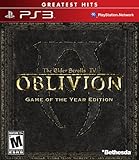
- Live another life in another world, create and play any character you can imagine
- An all-new combat and magic system brings first person role-playing to a new level of intensity
- Groundbreaking AI system gives characters full 24/7 schedules
- New lands to explore in the Shivering Isles expansion
- Challenging new foes, hideous insects, Flesh Atronachs, skeletal Shambles, amphibeous Grummites and more
- Disable all plugins and archives. Use your mod manager’s profile or disable controls rather than deleting files. Include texture replacers, weather and lighting overhauls, interface mods, script-heavy quests, and unofficial patches.
- Disable OBSE and other injectors. Rename or disable the loader entry only through the method recommended by its manager. Do not leave a script extender DLL or graphics injector attached while testing the base game.
- Turn off ReShade and overlays. Disable store overlays, chat overlays, hardware-monitoring overlays, capture tools, and frame-rate limiters. These can hook the renderer before the game displays a menu.
- Remove controller wrappers temporarily. Test with a keyboard and mouse if possible. A wrapper that was built for an older executable can cause a launch crash after an update.
- Launch a new game or an untouched test save. Do not use a heavily modded save for the first test. If the menu and a short walk in a new game work, the base executable and renderer are probably functional.
For Remastered, Bethesda specifically recommends removing mods when crashes begin after an update. If the unmodded game still fails, continue with base-file repair and graphics troubleshooting rather than re-enabling mods.
Repair the base installation
Use the storefront’s built-in repair or verification function before deleting individual files. The exact label varies, but it is normally found by opening the game’s library entry, choosing a properties or manage screen, and selecting an installed-files option such as Verify, Repair, or Scan and repair.
- Open the installed-files tool for the correct Oblivion edition.
- Run verification and wait for it to finish. Do not launch the game while the check is running.
- Allow the storefront to reacquire files it reports as missing or corrupted.
- Restart the launcher and test the unmodded game before restoring any configuration or mods.
Verification normally addresses files owned by the storefront. It may not remove an obsolete DLL, a loose texture, a manually installed archive, or an injector left by a mod. If a Remastered installation still crashes after mods are removed and files are repaired, Bethesda’s guidance includes reinstalling the game. Back up saves and configuration first, then reinstall only the affected edition.
Test the graphics driver and renderer
An update can expose a driver or renderer problem even when the game files are intact. Install the current driver supplied for your GPU, reboot, and test the clean game. If the fault began immediately after a driver update, test the previous known-good release instead; a rollback is a diagnostic comparison, not proof that every newer driver is defective.
- Use the GPU vendor’s clean-install option when available so an old display profile is not carried forward.
- Disable GPU overlays, recording hooks, and tuning utilities for the test.
- Do not change the driver, INI, and mod list at the same time. Change one variable, record the result, and then proceed.
- If the game works only after a rollback, keep the working driver version in your notes and re-test future driver updates separately.
Regenerate the INI or configuration safely
A stale resolution, renderer flag, or display mode can survive an update and produce a crash or black screen. Rather than deleting the file, move the current INI/configuration to your backup folder and let the launcher create a fresh one.
- Exit the launcher and game completely.
- Move the active Oblivion INI/configuration file aside; do not overwrite your backup.
- Start the launcher so it detects the missing configuration and creates a default file.
- Set only a known-good resolution and basic display options. Leave advanced renderer, HDR, and mod-specific values at their defaults for the first test.
- Launch an unmodded new game. If it works, add your preferred display settings one at a time.
Do not paste the entire old INI into the new one. Copying every setting can reintroduce the flag that caused the failure. Restore individual values only when you know what each one controls.
Fix a black screen
A black screen has several meanings. Determine whether the interface is visible and whether the game responds to keyboard input.
Do these 3 things before closing this tab:
1Clear out junk files and repair common Windows errors2Fix the driver behind crashes, sound loss and screen glitches3Repair Windows errors before they cause bigger problemsBlack screen with no menu or HUD
- Confirm that all mods, OBSE or other injectors, ReShade, overlays, and controller wrappers are disabled.
- Regenerate the configuration as described above.
- Try a known-good resolution and windowed or borderless mode from the launcher. Windowed mode is a diagnostic because it avoids some exclusive-full-screen and display-handshake failures.
- Repair the base files, then test the graphics driver. If the issue started with the driver, compare the previous known-good release.
For classic Oblivion, Bethesda’s support guidance includes testing windowed mode and display settings for black-screen behavior. Do not re-enable an injector merely because it was present before the update; first establish that the unmodded executable can reach the menu.
Black screen with a visible HUD or menu
If the HUD or menus render but the world is black, the interface is loading while the 3D scene is failing. Test windowed or borderless mode, a standard resolution, and a clean driver profile. Then check renderer and HDR settings before changing texture archives. A texture archive problem usually produces missing or discolored objects rather than a uniformly blank scene.
Fix a grey world when menus still work
When the HUD and menus are visible but the landscape is uniformly grey, check HDR first. Bethesda identifies HDR as the usual cause of this classic-Oblivion symptom.
- Close the game and open the launcher display settings.
- Turn HDR off for a test, or switch to the other supported lighting mode.
- Launch without mods or injectors and load a new test area.
- If the world returns, re-enable other display settings one at a time. Leave the setting that produces the grey scene disabled unless a later driver or renderer change resolves it.
Do not confuse a grey-world HDR failure with a single missing texture. The scope of the symptom determines the next branch.
Diagnose missing, purple, black, or invisible textures
Texture symptoms reveal how broad the asset failure is. Classify the problem before rebuilding your load order.
Best Value

- The Elder Scrolls IV: Oblivion Remastered modernizes the 2006 Game of the Year with all new stunning visuals and refined gameplay.
- Explore the vast landscape of Cyrodiil like never before and stop the forces of Oblivion from overtaking the land in one of the greatest RPGs ever from the award-winning Bethesda Game Studios.
- Rediscover Cyrodiil Journey through the rich world of Tamriel and battle across the planes of Oblivion where handcrafted details have been meticulously recreated to ensure each moment of exploration is awe-inspiring.
- Navigate Your Own Story. From the noble warrior to the sinister assassin, wizened sorcerer, or scrappy blacksmith, forge your path and play the way you want.
- An Epic Adventure. Step inside a universe bursting with captivating stories and encounter an unforgettable cast of characters. Master swordcraft and wield powerful magic as you fight to save Tamriel from the Daedric invasion.
| Symptom | Likely area to inspect | First safe test |
|---|---|---|
| One object is purple, black, or invisible | A missing archive, an unmet dependency, or a texture override for that object. | Disable the mod that changes the object, verify its required archive is installed, and test the base asset. |
| One category, such as armor or trees, is affected | A texture replacer, mesh-texture pairing, or archive priority conflict. | Disable that replacer and any dependent mesh package, then test with the original assets. |
| Large areas or many unrelated objects are purple, black, or invisible | Archive registration, archive priority, or load-order problems. | Run the unmodded baseline, repair files, and rebuild the enabled archive/plugin order. |
| Everything is grey while HUD and menus remain normal | HDR or renderer configuration. | Turn HDR off and regenerate the configuration before changing archives. |
Classic Oblivion’s archive system allows multiple packages to contain files with the same path. The winning file can change when an update, mod manager, or new archive alters priority. A texture can therefore be present on disk yet still be overridden by the wrong version. Widespread missing assets are more consistent with archive or load-order trouble than with one damaged texture.
Check a single missing asset
- Write down the object and the location where it appears.
- Disable only the mod that edits that object and its required texture or mesh dependencies.
- Launch a new test game or visit a safe area. Avoid judging a previously saved cell until you have confirmed the object is not cached by the save.
- If the original object returns, reinstall or update the specific mod and verify its dependency list before re-enabling it.
Check widespread missing assets
- Return to the fully unmodded profile and confirm whether the base game renders correctly.
- If the clean game fails, repair the installation and regenerate the configuration.
- If the clean game works, inspect archive and plugin priority in the mod manager. Look for duplicate texture packages, disabled masters, and an archive that was added or reordered by the update.
- Re-enable texture packs in small groups, testing the same location after each group. Keep a working archive order as a saved profile.
Find the mod that broke after the update with binary search
Re-enabling dozens of mods individually is slow, while turning everything on at once hides the cause. Binary search reduces the number of tests.
- Start from the known-good unmodded profile.
- Enable approximately half of your mods, including their required masters and archives, and test the same launch, save, and location.
- If the problem returns, the failing item is in that half; disable it and split that group in half again.
- If the problem does not return, disable the tested half, enable the other half, and repeat.
- Continue until the failing mod or interaction is isolated. Then test that mod alone with its dependencies.
Keep texture replacers, script extenders, injectors, and major overhauls in separate groups. An update can invalidate a dependency without making the mod manager report an obvious error. A mod that works alone but fails with another mod indicates an interaction; record both rather than blaming only the last item enabled.
What’s actually slowing this PC down?
Pick the symptom - the matching free tool is one click away.
Rebuild a stable profile after the repair
Once the game launches and renders correctly, preserve the state that worked.
- Save the mod-manager profile and exact plugin/load order.
- Keep a copy of the working INI/configuration alongside the save backup.
- Record the game edition, storefront, Windows version, GPU driver, mod-loader version, and the date of the test.
- Re-enable one group at a time, starting with essential fixes and ending with texture replacers, injectors, and large overhauls.
- Change one variable per test and use the same controlled scenario so results are comparable.
- After each successful group, make a new backup. If the next group fails, roll back to the last known-good profile instead of repeating the entire repair.
A working profile is more valuable than a large unrecorded load order. Keep the old profile disabled but intact until the new one survives several launches and save loads.
Common mistakes that make the problem worse
- Deleting files before backing up: this removes the easiest rollback path and can erase configuration evidence.
- Testing with a modded save: a save may depend on scripts or plugins that are no longer loaded. Use a new test game to evaluate the executable and renderer.
- Changing several variables together: a driver update, new INI, and reordered plugins provide no way to identify the cause.
- Assuming verification removes mods: storefront verification repairs owned files; it does not necessarily remove loose mod files, injectors, or obsolete archives.
- Restoring the entire old INI: this can reintroduce the display flag that caused the black screen or crash.
- Mixing editions: classic Oblivion instructions, OBSE components, and archive tools may not apply to Remastered.
- Ignoring scope: one purple object calls for dependency and override checks; a purple world calls for archive priority and load-order checks.
When to stop and use a clean reinstall
A reinstall is a later step, not the first response. Consider it when the correct edition still fails after every mod and injector is removed, the configuration has been regenerated, the graphics driver has been tested, and storefront repair reports no lasting fix. Back up saves, the INI, and the mod profile first. After reinstalling, launch once without copying old files back; then restore only saves and mods that are compatible with that edition and update.
If the clean reinstall works but the modded profile fails, the reinstall did not cure the underlying compatibility issue. Use the binary-search method and keep the clean profile as your recovery baseline.
Recommended Free Tools
Quick Recap
Product prices and availability are accurate as of the date/time indicated and are subject to change. Any price and availability information displayed on Amazon at the time of purchase will apply.

